
PSDR Framework: Harnessing Explainable AI for Precision Drug Repositioning
Explainable artificial intelligence in high-throughput drug repositioning for subgroup stratifications with interventionable potential
The paper introduces an explainable AI (XAI) framework for high-throughput drug repositioning specifically designed for patient subgroup stratification. By integrating contrast pattern mining and heterogeneous network analysis, the method identifies druggable homogeneous subgroups within colorectal cancer (CRC) populations and prioritizes candidate drugs using an aggregated DScore.
TL;DR
The "Patient Stratification and Drug Repositioning" (PSDR) framework is a breakthrough in precision medicine that moves beyond "one-size-fits-all" drug discovery. By combining exploratory data mining with complex network analysis, researchers can now identify specific patient subgroups (e.g., CRC patients with MSI-H status) and automatically recommend FDA-approved drugs tailored to their unique genetic and phenotypic signatures.
Academic Positioning: This work bridges the gap between Contrast Pattern Mining and Systems Biology, focusing on the "Explainability" (XAI) of AI—a critical requirement for clinical adoption.
The Precision Medicine Gap: Why Subgroups Matter
De novo drug discovery is notoriously inefficient, with a 98% failure rate and costs exceeding $1.6 billion. While Drug Repositioning (DR) offers a shortcut, most existing methods are too broad. They suggest a drug for a disease rather than for a specific group of people.
The authors argue that the missing link is Explainable Subgroup Stratification. Clinicians need to know why a subgroup is different and how a drug interacts with that specific group's unique molecular perturbations to move beyond the "black-box" nature of traditional AI.
Methodology: The Core Engine
The PSDR framework operates through three sophisticated modules:
1. Exploratory Subpopulation Discovery
Unlike static decision trees, the model uses a "wide and deep" exploratory search. It evaluates combinations of phenotypic variables (Age, Gender, Cancer Stage) and screens for significant genotypic patterns using the Subpopulation Contrast Score (SPCScore).
- The Intuition: If a specific genetic pattern is frequent in a subgroup but rare in the general population, it represents a "Contrast Pattern" that can be targeted.
2. Heterogeneous Knowledge Base (DR-KB)
The framework integrates Hetionet, a massive network containing 11 types of nodes (Genes, Compounds, Pathways, Side Effects, etc.). This allow the model to see not just a gene mutation, but the entire biological "neighborhood" of that mutation.
3. Aggregated Drug Scoring (DScore)
To rank drugs, the authors developed a weighted sum algorithm on rooted graphs.
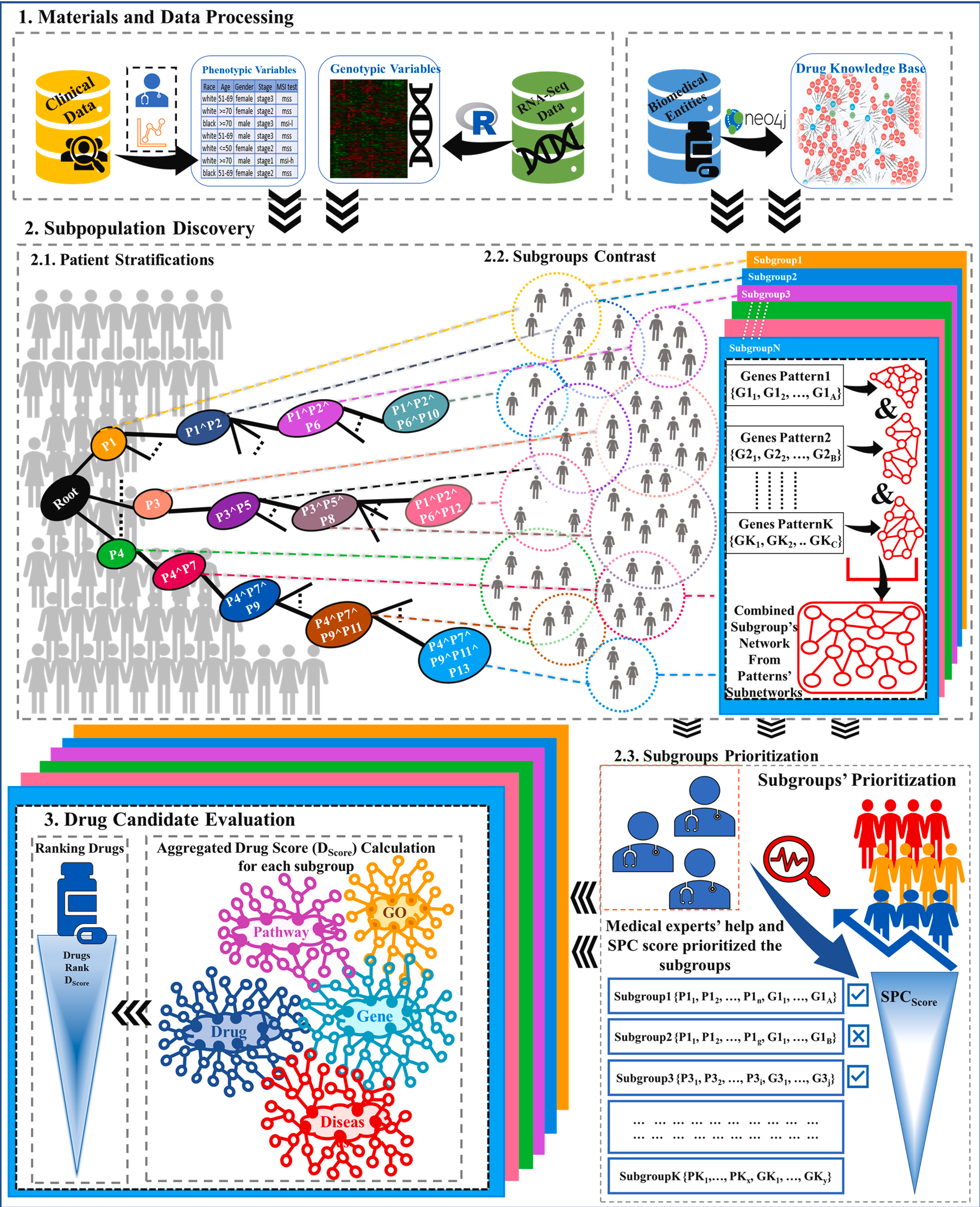 Figure 1: The PSDR framework workflow, from data preprocessing to drug evaluation.
Clinical Case Study: Colorectal Cancer (CRC)
Using TCGA data, the authors identified 130 subgroups. They focused on Microsatellite Instability (MSI), a key biomarker in CRC.
- Key Finding: In subgroups with MSI-H and right-sided colon cancer, the model recommended Crizotinib.
- The "Why": While Crizotinib is traditionally a lung cancer drug, the PSDR framework identified that in this specific CRC subgroup, the MET and SOX13 genes are significantly perturbed—targets that Crizotinib is specifically designed to inhibit.
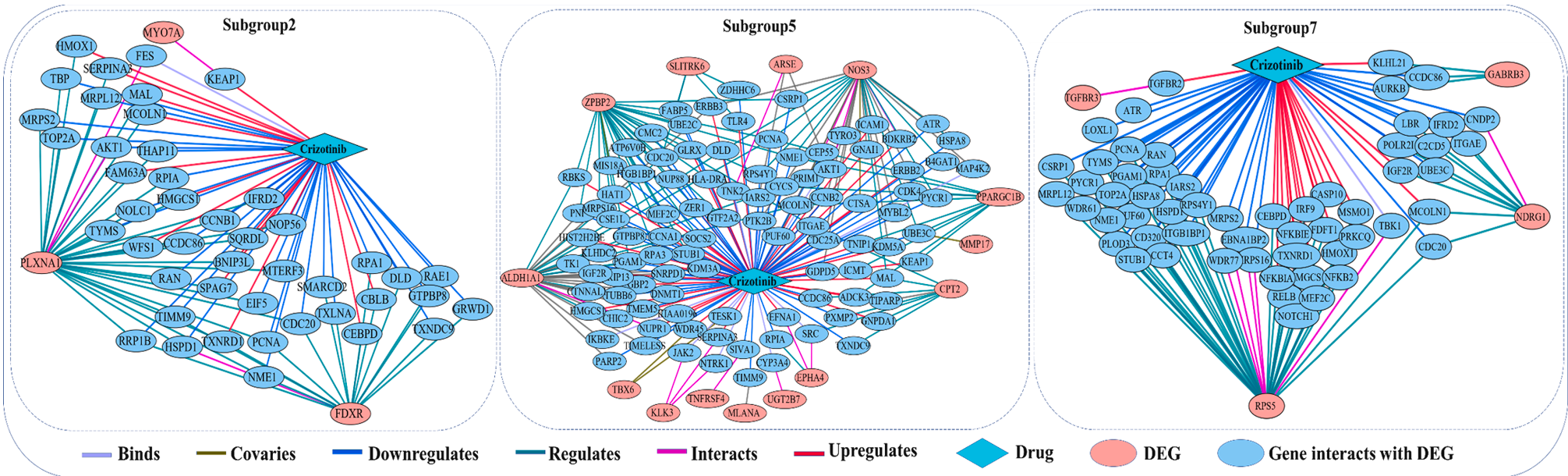 Figure 2: Crizotinib gene interactions across three different subgroups, demonstrating how the drug's relevance is context-dependent.
Evidence of Success: Enrichment Analysis
To prove this wasn't just "pattern matching" by luck, the authors performed a randomized shuffle test and pathway enrichment analysis.
- Pathway Validation: 80% of the repositioned drug candidates targeted the Cell Cycle pathway, and a significant portion targeted the p53 suppressor pathway, both hallmarks of cancer progression.
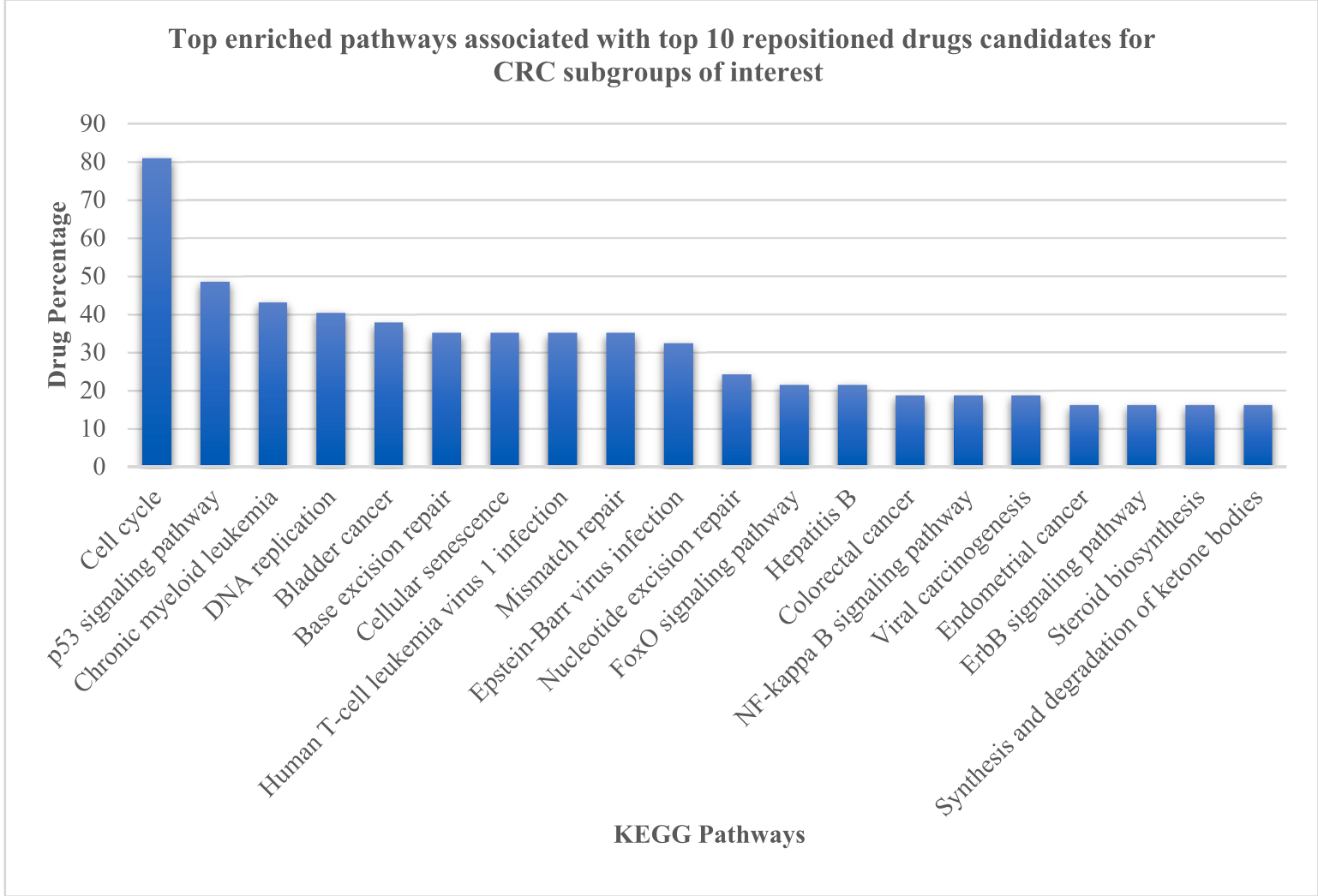 Figure 3: Top pathways targeted by repositioned candidates, validating the biological relevance of the AI's choices.
Critical Insight & Conclusion
Why this works:
The power of this paper lies in its transparent hierarchy. It doesn't just say "Give this patient Drug X." It provides a trace:
- Phenotype (Female, Stage III) → Genotype (Pattern Y) → Network Perturbation (Pathway Z) → Drug Target Match (Drug X).
Limitations:
While the computational logic is sound and validated against literature, the framework remains a hypothesis generator. The "Human-in-the-loop" still requires medical experts to filter results for toxicity and clinical feasibility before moving to wet-lab validation.
Final Takeaway:
The PSDR framework sets a new standard for Explainable AI in medicine. It proves that by strategically searching the combinatorial space of patient data, we can uncover hidden therapeutic opportunities that traditional "broad-brush" drug discovery would likely miss.