
Exploiting Collective Intelligence: The Shift Toward Asynchronous Collaborative Search
Exploiting collective intelligence for asynchronous collaborative search
The paper proposes an asynchronous collaborative search framework designed to harness collective intelligence among groups (e.g., colleagues or friends). By integrating multi-user search histories and providing cross-device synchronization, the system enables efficient information discovery even when collaborators work at different times and locations.
TL;DR
Current search paradigms are often solitary or require everyone to be in the same room. This paper introduces a framework for Asynchronous Collaborative Search, allowing groups to build upon each other’s research across different times and devices. By visualizing the "collective tracks" of a group, it turns search from a fragmented individual task into a cohesive shared intelligence exercise.
Problem & Motivation: The Solitary Searcher’s Paradox
We live in an era of personalized search, but our most important tasks—planning a group trip, researching a team project, or studying for a course—are inherently social. The authors identify a "paradox": while search engines are great at filtering in a single session, they become overwhelming over successive sessions as information accumulates but remains unorganized.
Prior "Collaborative Search" solutions like TeamSearch or CoSearch were limited by the need for participants to be co-located (sitting at the same screen). In a mobile-first world, this is a major bottleneck. The motivation here is to solve the asynchronicity problem: how do I benefit from your search results if you searched at 9:00 AM on a train and I'm searching at 10:00 PM at home?
Methodology: Visualizing the "Search Trail"
The proposed scheme moves beyond simple shared bookmarks. It focuses on several key mechanisms:
- Evaluation and Annotation: Experienced searchers leave "digital breadcrumbs" (comments and ratings) on search results, guiding later teammates away from dead ends.
- Visualized History: Instead of a chronological list, the system generates a dynamic map of the search journey.
- Cross-Device Continuity: Using responsive web design, the system ensures that the search state is preserved whether a user is on a smartphone or a desktop.
Architecture Overview
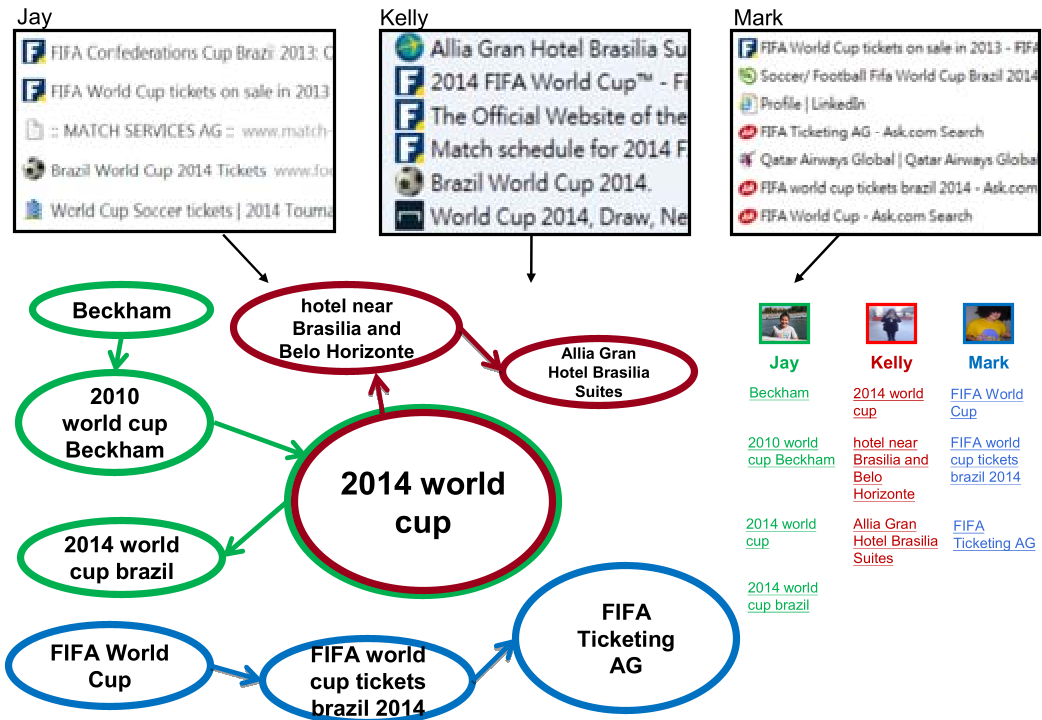 Figure 2: The high-level workflow shows how search experiences are aggregated and pushed across mobile and desktop environments.
Experiments & Results: Sensemaking through Visualization
The core "aha!" moment of the paper lies in its visualization strategy. Rather than reading a log of links, users see a "galaxy" of search sessions.
- Color coding: Distinguishes which teammate found what.
- Circle size: Indicates the "depth" of a search (how many pages were browsed), allowing users to quickly identify high-value research hubs.
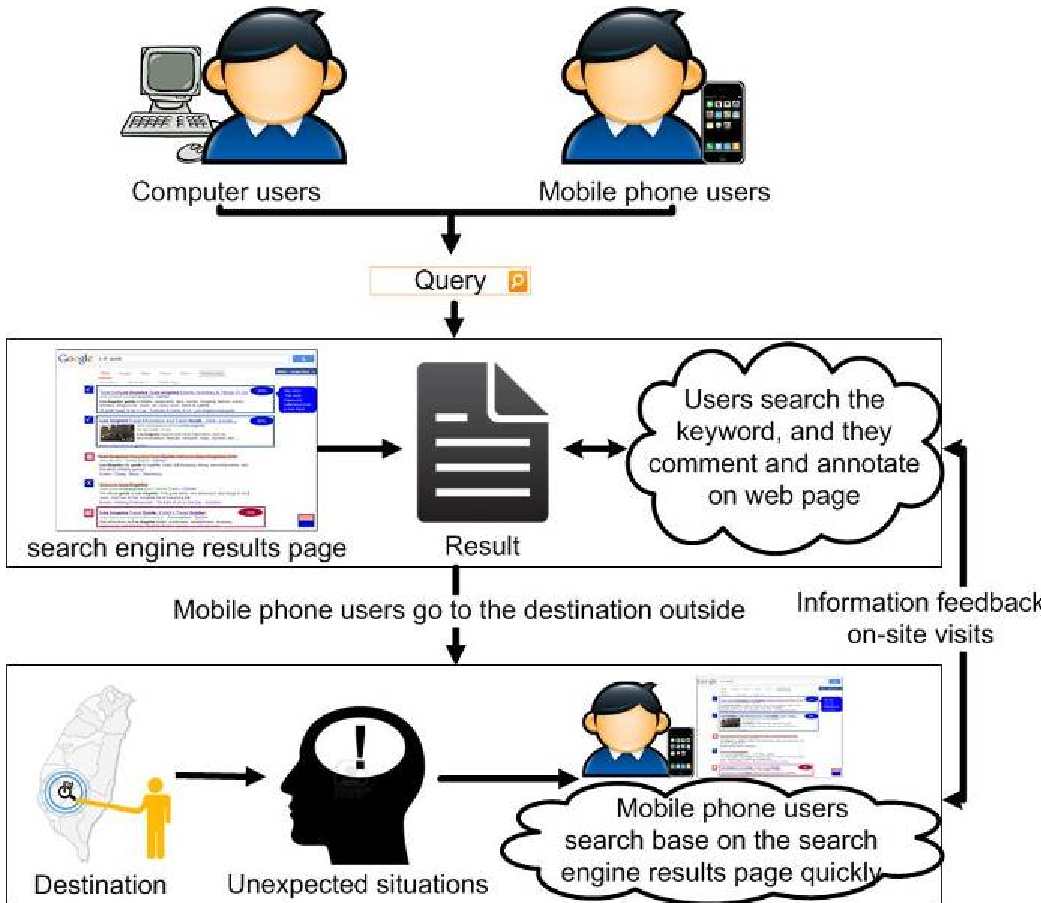 Figure 3: Integrated search history visualization. Large circles represent deep-dive sessions, while different colors track individual user contributions.
By analyzing scenarios like World Cup trip planning, the authors demonstrate that this visualization allows users to "recover" their own past logic (self-promotion) and "discover" new insights from peers (peer-promotion). This reduces the "tedious search process" by preventing collaborators from digging the same hole twice.
Critical Analysis & Conclusion
Takeaway
The value of search is not just in the final link clicked, but in the process—the queries tried, the pages skipped, and the notes taken. This paper effectively argues that for groups, the search process is a form of Collective Intelligence that must be captured and visualized asynchronously.
Limitations & Future Outlook
While the visualization is intuitive for small groups (3-5 people), it might become cluttered (the "spaghetti effect") if applied to larger organizations or highly complex, multi-day research tasks. Additionally, the manual effort required for "leaving comments" is a high bar for user engagement.
Future Prospect: Integrating AI to automatically summarize these "search trails" or identify overlaps in intent could take this collective intelligence to the next level, making the search for information as collaborative as a shared Google Doc.