
Securing the MMSN: Balancing Multimedia Utility with Privacy in Mobile Social Networks
3767_Exploiting multimedia services in mobile social networks from security and privacy perspectives.
The paper defines the architecture of Multimedia-oriented Mobile Social Networks (MMSN) and proposes security countermeasures for content query, service evaluation, and spam filtering. It utilizes techniques like Hidden Vector Encryption (HVE) and social-based filtering to achieve SOTA-level privacy preservation in decentralized mobile environments.
TL;DR
As multimedia consumption shifts from static desktops to dynamic mobile environments, the Multimedia-oriented Mobile Social Network (MMSN) has emerged. This paper provides a comprehensive security framework for MMSNs, addressing the unique challenges of semi-trusted clouds, malicious review forgery, and spam content, primarily through advanced cryptographic primitives like HVE and social-aware trust models.
Background & Motivation: The MMSN Paradox
Modern mobile users consume an astronomical amount of data—millions of YouTube views and Facebook shares every minute. However, this "always-on" connectivity creates a privacy paradox: to get personalized content, users must disclose their location and preferences. In an MMSN, where data is shared not just with servers but with nearby strangers and "local servers" (LS), traditional security perimeters vanish.
The authors identify a critical gap: Online Social Networks (OSNs) rely on Centralized Sybil Defense and long-term behavior statistics. MMSNs are too dynamic for this; nodes appear and disappear, making it easy for attackers to forge identities (Sybil attacks) or inject "SPAM" flyers into a user's feed.
Methodology: A Three-Domain Defense
The paper architecture divides the MMSN into three distinct communication patterns, applying tailored security solutions to each:
1. User-to-CS (Centralized Server)
The goal here is Content Confidentiality. Since cloud servers are "semi-trusted" (honest-but-curious), the authors propose a query scheme based on Hidden Vector Encryption (HVE).
- Mechanism: Content is encrypted with an index vector. Users submit a query token that only reveals the result if it matches the index, effectively "blinding" the cloud server to the search criteria.
2. User-to-LS (Local Server)
This addresses Service Evaluation. How do you trust a review of a store in a mall if the store owner might have deleted negative feedback?
- Mechanism: The system uses aggregate authentication and a "Token Pseudonym List." By dividing time into slots and limiting review frequency per pseudonym, the system detects Sybil attackers attempting to flood the system with fake reviews.
3. User-to-User (Distributed)
The focus here is Spam Filtering.
- Mechanism: Users distribute filters to "social friends" who act as relays. These filters are encrypted using bilinear pairing techniques, and their authenticity is verified via Merkle Hash Trees.
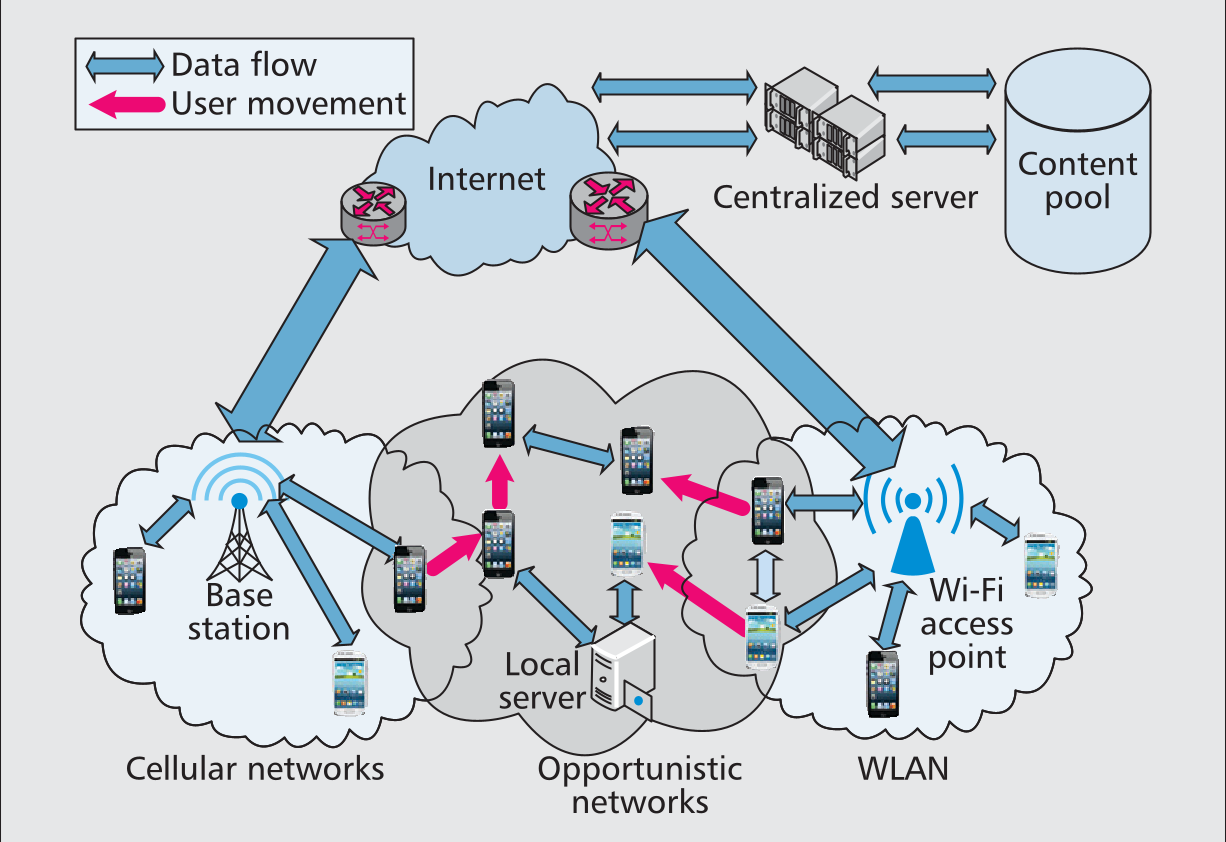 Figure 1: The heterogeneous architecture of MMSN involving CS, LS, and P2P domains.
Experimental Insights
The paper's evaluation of the Social-based Filtering (SAFE) protocol reveals a major efficiency gain. As the number of common social attributes between users increases, the number of required filters decreases while the rate of blocked spam packets increases.
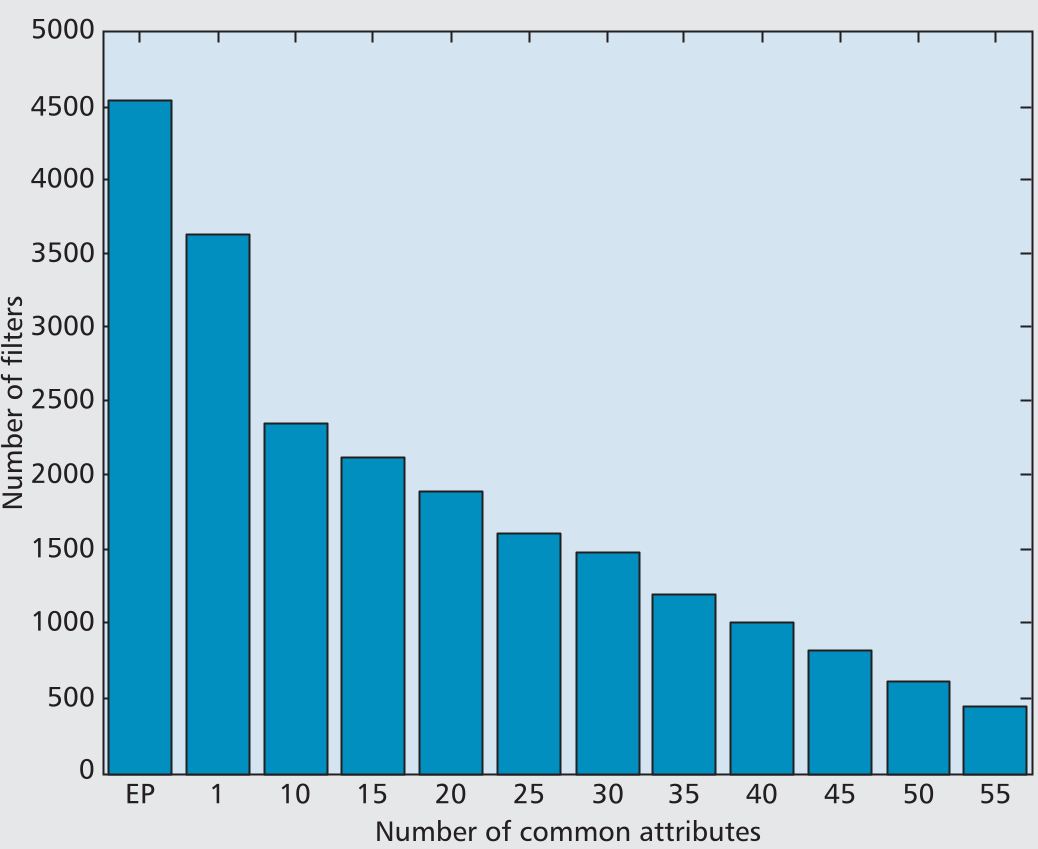 Figure 2: Impact of social attributes on filter efficiency and spam detection.
The comparison between MMSN and OSN highlights the difficulty of the task:
- Dynamics: MMSN is highly dynamic (Yes) vs. OSN (No).
- Sybil Defense: OSN is centralized; MMSN must be decentralized.
Critical Analysis & Future Outlook
While the paper offers robust cryptographic solutions, it acknowledges a lingering frontier: Multimedia Anonymization. Protecting a user's identity is one thing; protecting their face in a video or their voice in an audio file shared across a P2P network is significantly harder.
Takeaway: The move toward "Intelligent Anonymization"—where AI automatically blurs portraits or modifies voice signatures before sharing—is the next logical step for MMSN research. This paper lays the foundational security plumbing, but the "content-aware" privacy layer is still being built.
Conclusion
This work transcends simple encryption by integrating Social Intuition (who do we trust?) with Mathematical Rigor (bilinear pairings and HVE). It provides a blueprint for a future where we can enjoy the serendipity of local social discovery without sacrificing our digital or physical privacy.