
SitIT: Engineering a Precision Ecosystem for IT Research and Collaboration
Exploiting Potential of the Professional Social Network Portal “SitIT”
This paper introduces "SitIT.cz," a specialized professional social network portal designed to bridge the gap between academia, research, and the IT industry in the Czech Republic. The platform employs "Professional Profiles" (PPs) and a "Trust Module" to match research expertise with commercial demand, achieving a more granular networking environment than general-purpose platforms.
TL;DR
The "SitIT.cz" portal is a strategic response to the fragmentation of the Czech IT research landscape. By moving beyond simple text-based searches and adopting structured Professional Profiles (PPs) and an algorithmic Trust Module, it enables companies and universities to find the proverbial "needle in the haystack"—whether that is a J2EE expert with specialized knowledge in RDF data or a research team ready for tech transfer.
The "Communication Void" in Applied Research
The success of any technical project hinges on team composition. However, in the Czech Republic, a prominent gap exists between Market Demand and Academic Supply. Conventional methods for finding collaborators—such as personal networks or Google—suffer from two extremes:
- Narrow Networks: Personal contacts are often limited to immediate circles, missing out on deep academic talent.
- Noise in Search: Search engines return high volumes of irrelevant data, failing to distinguish between a hobbyist and a peer-reviewed researcher.
Methodology: Beyond Keywords to Structured Expertise
The core innovation of SitIT lies in its dual-layered approach to user identity and data credibility.
1. Professional Profiles (PPs)
Instead of relying on fuzzy LinkedIn-style "Endorsements," SitIT utilizes structured hierarchies:
- Scientific PP: Based on the ACM Classification, it uses a tree structure to map expertise. A user isn't just an "AI expert"; they are mapped to specific leaf nodes with a 5-grade expertise scale.
- Knowledge PP: Focused on industry-standard domains (data engineering, process modeling) to bridge the gap between academic theory and vocational skills.
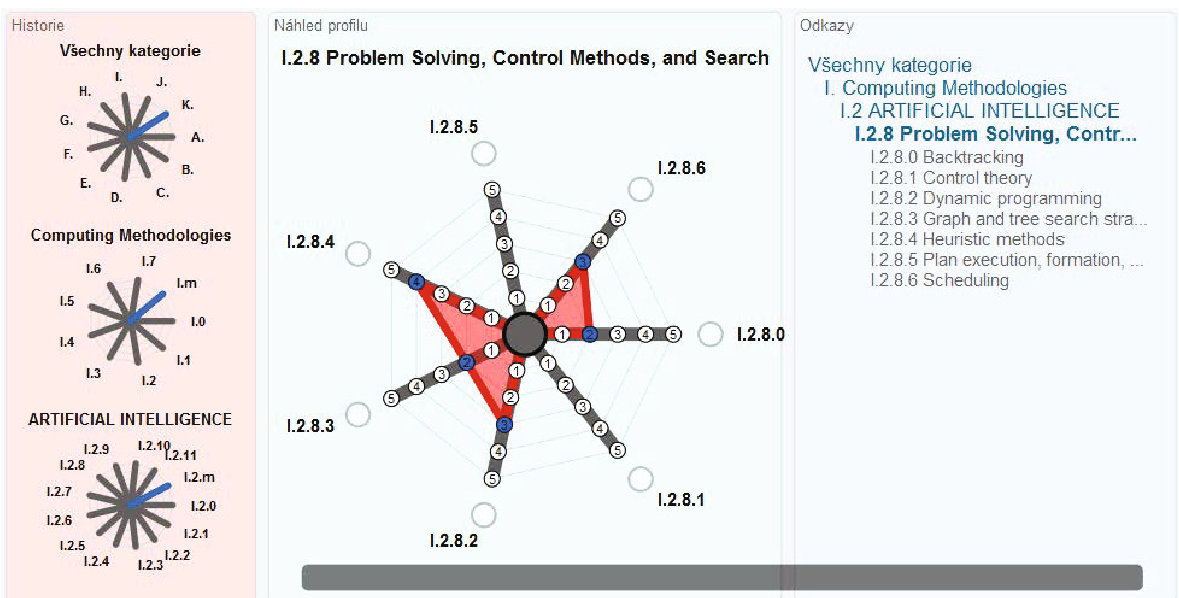 Figure 1: The entity-relationship model of the portal, highlighting specialized homepages for Users, Projects, and Institutions.
2. The Trust Module
To solve the "credibility" issue of self-reported data, the authors implemented a Trust Module. Using an energy-spreading algorithm, the system calculates "honesty" based on:
- Social Proximity: How closely related are the user and the evaluator within the network (e.g., belonging to the same research group)?
- Explicit Evaluations: Peer reviews of news and profiles are interpreted as agreement/disagreement with the data's accuracy.
Experiments and Portal Content
The portal’s effectiveness is demonstrated by its comprehensive data integration. By launch, the platform had indexed:
- 449 Institutions and 65 Companies.
- 224 Projects supported by public funds in the Czech Republic.
- Daily automatic updates from employment offices for IT job vacancies.
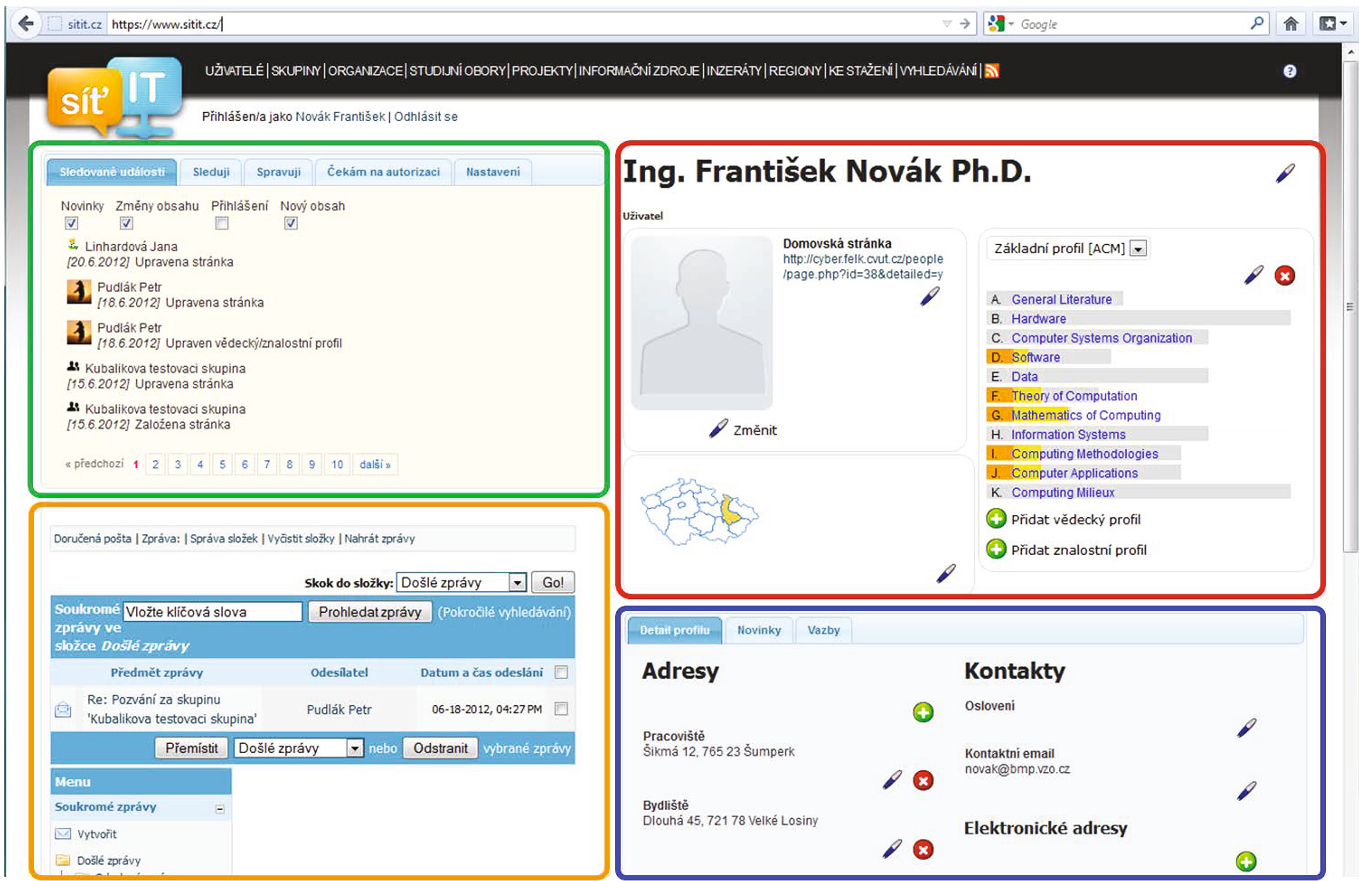 Figure 2: The UI layout emphasizing structured tabs for 'Details', 'News', and 'Bindings' (Social Connectivity).
Critical Insight & Future Outlook
While general social networks like LinkedIn focus on Connectivity, SitIT focuses on Utility. The use of the ACM taxonomy as an Inductive Bias for the search engine allows for "precision matching" that saves hundreds of man-hours in expert recruitment.
Limitations: The current trust model—"honesty"—relies heavily on manual interaction and social proximity. Future iterations should aim to automate trust scoring by integrating external publication databases (e.g., DBLP, Scopus) directly into the PP weighting.
Conclusion: SitIT represents a shift towards "Knowledge-Graph-as-a-Service" for regional development. For researchers and companies, it transforms the "black box" of local R&D into a transparent, searchable, and verifiable directory.