
CoCo Framework: Leveraging Social Ties to Solve the Personalization Crisis in Mobile Sensing
5184_Exploiting Social Networks for Large-Scale Human Behavior Modeling.
The paper introduces the Cooperative Communities (CoCo) framework, a novel approach for personalizing mobile activity classification models by leveraging social network similarities. CoCo shifts the burden of data labeling from individual users to a "socially-informed" community sharing model, achieving high accuracy with significantly less manual effort.
TL;DR
Mobile sensors on our smartphones often fail to recognize activities accurately because everyone moves and lives differently. To fix this, the Cooperative Communities (CoCo) framework proposes a breakthrough: instead of forcing you to label thousands of data points yourself, your phone "borrows" labels or models from people who live, work, or socialise like you. By exploiting social networks as a roadmap for similarity, CoCo boosts accuracy by up to 30% while drastically reducing the time users spend "teaching" their devices.
The Problem: The High Cost of Knowing You
Why do most activity trackers struggle to differentiate between a leisurely stroll and a brisk walk for different people? The culprit is diversity. Differences in age, weight, and gender, combined with varying environments (a quiet office vs. a loud subway), create unique "spectral signatures" in sensor data.
Existing solutions are polarizing:
- Single Global Models: These try to fit everyone but fail to capture individual nuances.
- Isolated Personalized Models: These are accurate but demand that every user manually labels a mountain of data. This "labeling tax" is the primary barrier to mass-market mobile sensing.
The Insight: Your Social Network is a Data Shortcut
The researchers behind CoCo realized that human behavior is not random; it is socially structured. People who are friends, or who frequently co-occur in the same locations and times, often share:
- Contextual Overlap: Coworkers share office acoustics and GPS signatures.
- Behavioral Homophily: Friends often share activity levels (hobbies, exercise habits, or transportation modes).
Instead of a brute-force search through millions of users to find a match, CoCo uses social similarity as a heuristic. If User A and User B share a social tie, there is a high statistical probability that User A's training data will work for User B.
Methodology: The CoCo Architecture
The framework operates in two distinct phases:
1. Constructing the Social-Similarity Graph
CoCo aggregates three types of social information to build a weighted graph:
- Friendship: Binary ties (0 or 1).
- Temporal Co-occurrence: How often do users move at the same time?
- Collocation: How often are users in the same physical bin (GPS/Wi-Fi)?
The system uses a histogram-based similarity score to quantify these connections: This allows the system to build an Overlay Network that identifies which users are the most "compatible" data donors.
2. Guided Data and Model Sharing
Once the graph is ready, CoCo employs two strategies:
- Data Sharing: Directly merging labeled sensor logs from socially similar users to train a robust local model.
- Model Sharing: Evaluating pre-trained classifiers from similar users and "adopting" the one that performs best on a small local validation set.
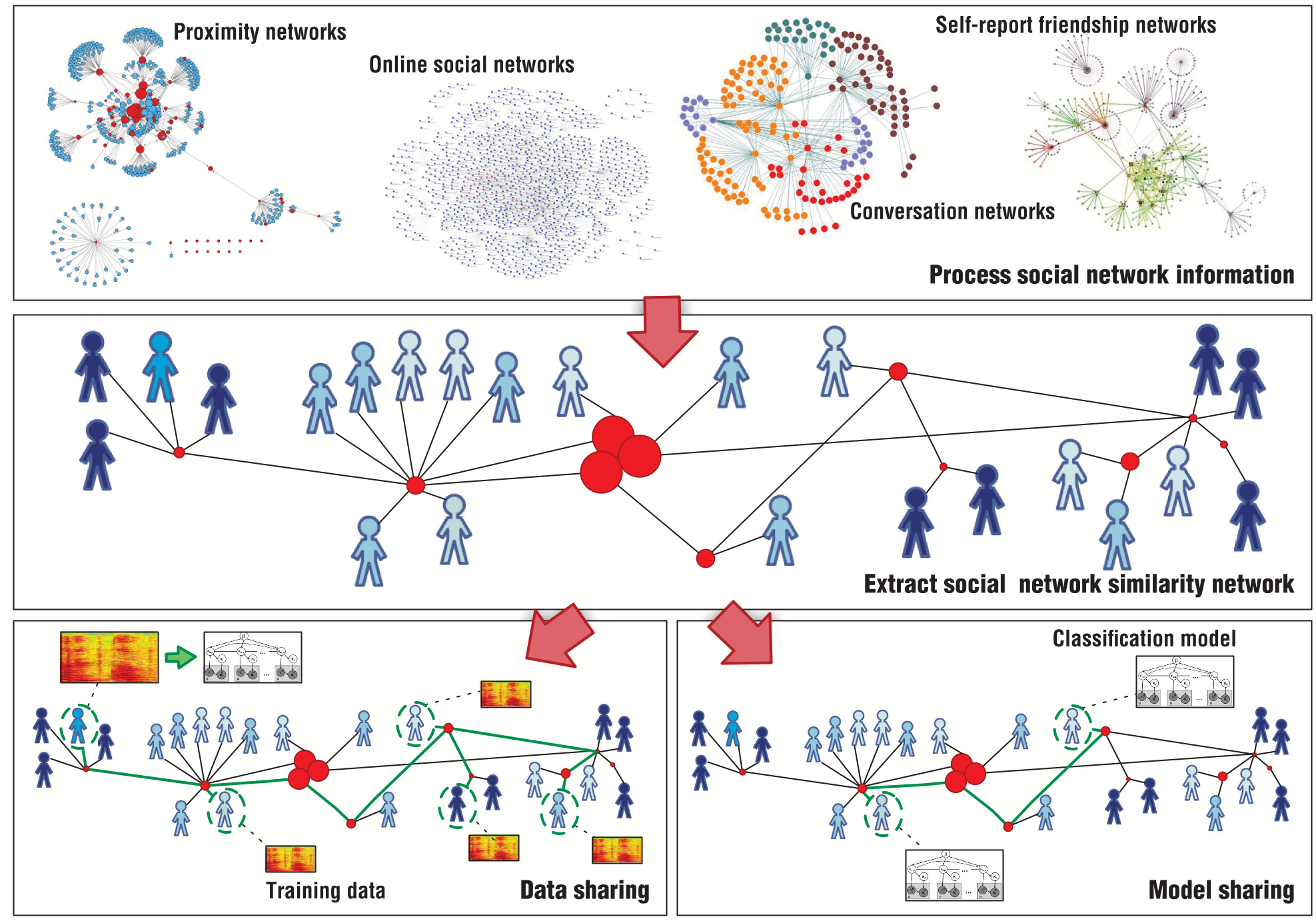 Figure 1: The architecture shows how diverse social inputs are distilled into a weighted graph to guide efficient model/data search.
Experimental Validation
The authors tested CoCo across three diverse datasets: Everyday Activities, Significant Places, and Transportation.
Efficiency vs. Accuracy
The most striking result came from the Transportation dataset. As shown in Figure 5, the CoCo framework (both data and model sharing) consistently outperformed the generic "Single Model" and the "Isolated Model."
- The 75% Efficiency Gain: To reach a specific accuracy threshold, an isolated model required 3,200 labeled vectors, while CoCo achieved the same with only 800.
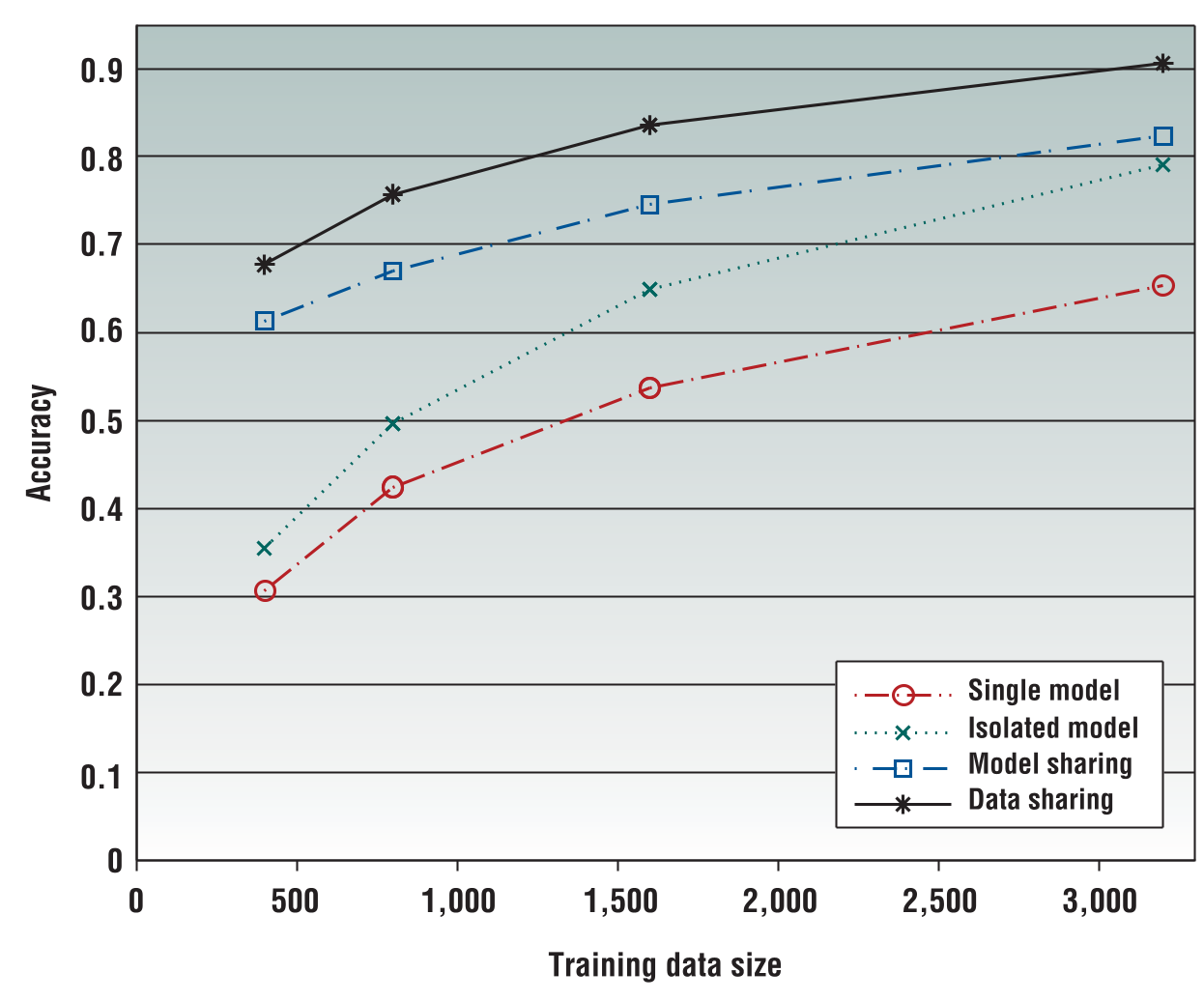 Figure 2: Accuracy comparison in transportation mode inference. CoCo maintains its lead even with minimal user labeling.
The "Labeling Disagreement" Phenomenon
In the "Significant Places" experiment (Figure 4), the researchers observed a counter-intuitive dip in accuracy as more data was added. This was due to semantic disagreement: what one person calls "Home," another might label "Work" or simply "Building." Interestingly, Model Sharing proved more robust to this noise than Data Sharing, as it only adopts models that "prove" their worth locally.
Critical Analysis & Conclusion
Takeaway
CoCo proves that we don't need to model humans as isolated islands. By leveraging the "natural phenomenon" of social networks, we can create AI that adapts to individuals without asking for hours of their time. The computational efficiency is also noteworthy: calculating social similarity took <10 seconds, compared to 20 hours for raw data-driven similarity matching.
Limitations
- Privacy: Sharing data or models within social networks raises significant privacy concerns that the paper acknowledges but does not solve.
- Data Pollution: As seen in the label disagreement case, community-driven systems are vulnerable to noisy or even malicious labels.
Future Outlook
The move toward "Community-Guided Learning" is a precursor to modern Federated Learning and Decentralized AI. CoCo sets a precedent for hybrid sensing systems that treat social context not just as an "extra feature," but as the foundational infrastructure for intelligence.