
Leveraging Social Trust: A New Frontier in Distributed Data Protection
2869_Exploiting Trust-Based Social Networks for Distributed Protection of Sensitive Data.
The paper proposes a distributed framework for protecting average users' sensitive data by exploiting real-life "trust-based social networks" combined with threshold cryptography. It introduces a two-tier secret sharing design that achieves SOTA results in balancing attack-resilience and data availability across diverse network topologies.
TL;DR
This seminal work shifts the burden of data protection from isolated, vulnerable home computers to a collective "trust-based social network." By combining real-world relationships with sophisticated threshold cryptography, the authors create a system where personal secrets—like private keys—survive even when a significant portion of the network is compromised.
Positioning: This paper acts as a bridge between social network topology analysis and applied cryptography, moving beyond simple "node connectivity" to "secret survivability."
The Core Intuition: Friends as Guardians
The authors recognize a fundamental truth: while an average user's PC is an easy target, their real-life social circle is a robust structure. The motivation is to use this inherent trust as a distribution layer. However, simply giving pieces of your key to friends isn't enough—what if your friends are hacked, or they turn against you?
To solve this, the paper introduces two critical concepts:
- Psychological Soundness: The user always keeps a "decisive share." Even if all your friends are compromised, your data remains secure.
- Two-Tier Secret Sharing: A mathematical safeguard that splits keys first between the user and the group, then among the group members.
Methodology: The Two-Tier Defense
The recommended design uses a (2,2) threshold to split a key into two parts: one for the owner and one for the "collective." The "collective" part is then further split among friends using an threshold.
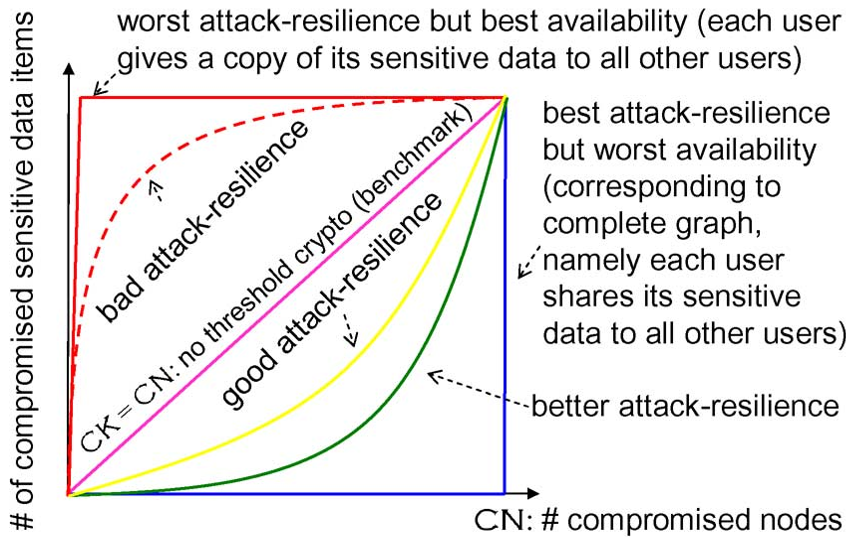 Fig 1. The fundamental comparison between a benchmark design (pink) and the proposed resilient design.
The "Remainder Graph" Attack
The authors don't just test against random failures. They define a highly adaptive adversary who uses a Remainder Graph Strategy. In this scenario, the attacker identifies and compromises the highest-degree nodes. Once a node's key is compromised, it is removed from the "remainder graph," and the attacker recalculates the next best target. This represents a worst-case, NP-hard optimization problem for the attacker.
Experimental Insights: Regularity Wins
Using massive datasets from DBLP and YouTube, the researchers found that:
- Topology Matters: Regular graphs (where everyone has a similar number of friends) are significantly more resilient than Power-law graphs (where a few "super-nodes" exist).
- Anonymity is a Shield: If the social links are hidden from the attacker (Anonymous Social Networks), the attacker is forced to use random strategies, drastically increasing the system's survival rate.
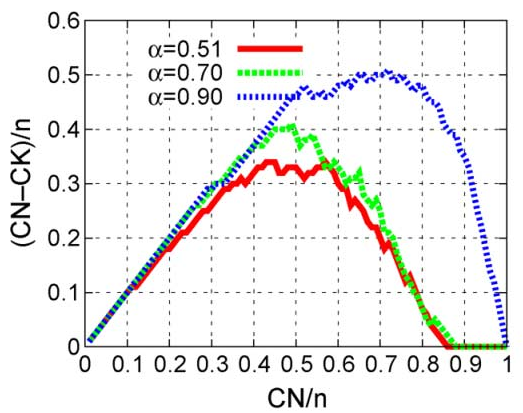 Fig 2. Impact of Topology: Comparing DBLP and YouTube networks under adaptive attacks.
Availability vs. Resilience: The Golden Ratio
A major contribution is the mathematical modeling of Availability (AV). If you set the security threshold too high, you might never be able to recover your data because your friends aren't online.
The paper proves that for most uptime/downtime distributions, there is a "sweet spot" at (where is half the number of neighbors). This provides a robust trade-off where secrets are highly available to the owner but nearly impossible for an attacker to reassemble.
Critical Analysis & Conclusion
Takeaway
The design successfully proves that distributed trust is more than a social concept—it is a measurable, engineering parameter. By ensuring "Psychological Soundness," the system encourages adoption by giving users a sense of control.
Limitations
- The Sybil Threat: While mentioned, a deep dive into how fake accounts (Sybil nodes) could subvert the "trust" links in a purely digital environment remains for future work.
- Dynamic Trust: The model assumes a static graph. In reality, friendships and trust levels fluctuate.
Future Outlook: This framework is a perfect precursor to modern Social Recovery wallets in Web3. It provides the rigorous mathematical backing needed to trust others with our digital lives.