
The Socioware Frontier: How Malware Weaponizes Social Trust and Insider Access
18075_Exploiting Trust Stealthy Attacks Through Socioware and Insider Threats.
This paper introduces "Socioware," a specialized category of malware that exploits the inherent trust within Online Social Networks (OSNs). It proposes a four-class taxonomy (Classes I, S, E, O) and a targeted attack model demonstrating how insider threats can leverage OSNs to compromise organizational security.
Executive Summary
TL;DR: This paper dissects Socioware—a breed of malware designed specifically to exploit Online Social Networks (OSNs). By categorizing these threats into four functional classes and unveiling a stealthy 10-step insider attack model, the authors reveal why traditional firewalls are powerless against threats that enter through the "front door" of trusted social connections.
Positioning: This work serves as a foundational architectural analysis, moving beyond simple behavior tracking to provide a rigorous taxonomy and mechanical blueprint of how OSN trust is technically subverted.
The Core Problem: The "Friend" Vulnerability
Why are OSNs the perfect breeding ground for malware? The reason is psychological rather than purely technical: Trust. Attackers have realized that a user is significantly more likely to click a malicious link sent by a "friend" on Facebook or Twitter than a random email.
The paper highlights a staggering statistic: Insider threats cause ~$40 billion in losses annually, yet 75% of these crimes remain undetected. The methodology of these insiders is evolving from simple data theft to using OSNs as distribution platforms for socioware within an organization.
Methodology: The Socioware Taxonomy
The authors categorize socioware based on its operational mechanism rather than its payload:
- Class-I (In-session Manipulation): Uses Man-in-the-Browser (MitB) techniques to hook into the browser's runtime (via DLL injection or Inline Hooking). It can modify chat messages in real-time, injecting malicious links into legitimate conversations.
- Class-S (Stealing): Focused on harvesting credentials. It bypasses SSL because it captures data before it is encrypted by the browser.
- Class-E (Exploitation): Directly targets OSN vulnerabilities like XSS, CSRF, or SQL injection (e.g., the infamous Samy worm).
- Class-O (Outside/Indirect): Leverages third-party ecosystems, primarily Malvertising through compromised CDNs.
Key Model: The Insider Attack Flow
The most chilling contribution is the 10-step model showing how an insider can infect a colleague.
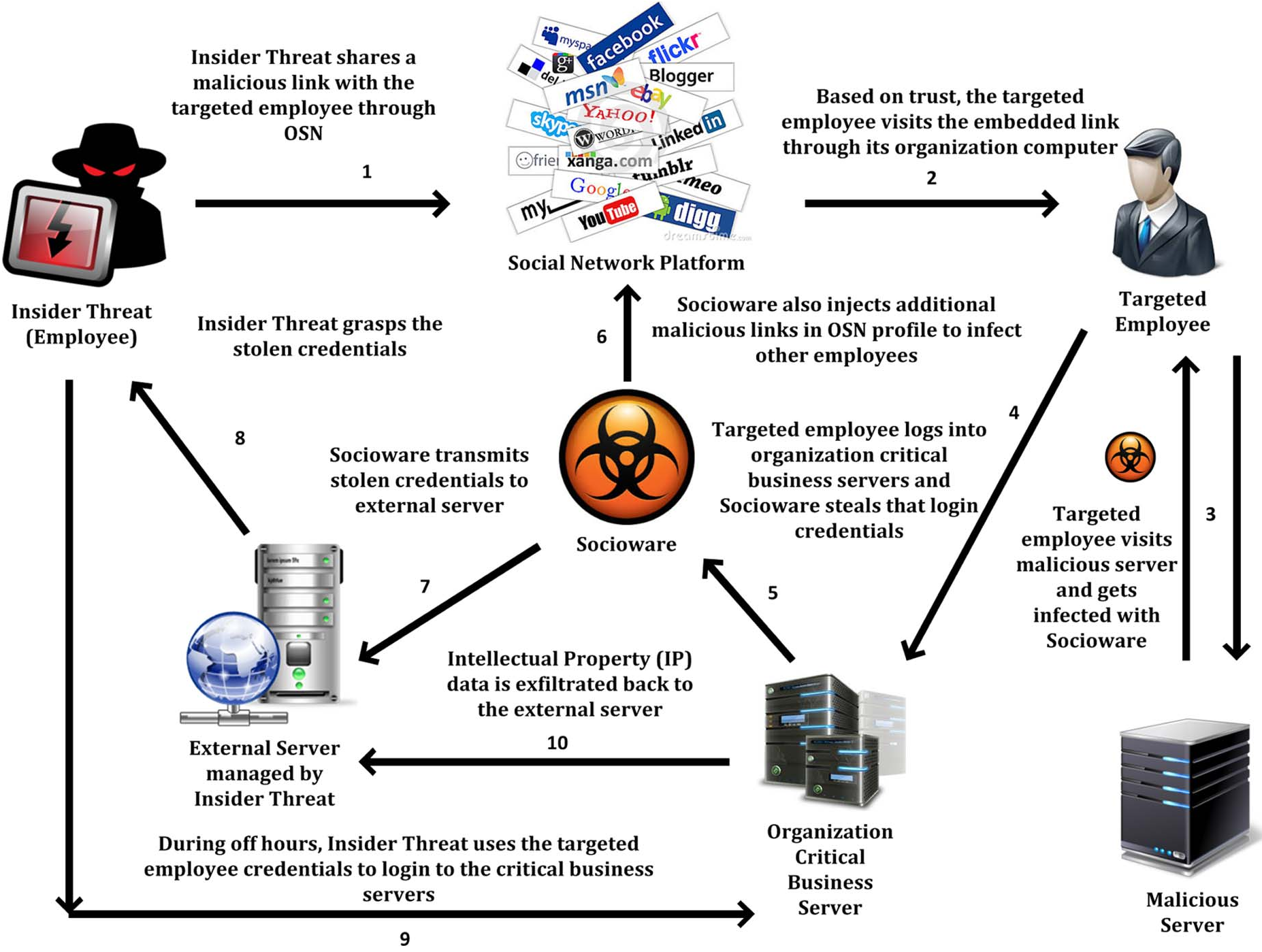 Figure 1: The progression from an initial OSN link to successful data exfiltration from critical organizational servers.
Technical Deep Dive: Man-in-the-Browser (MitB)
The paper explains that MitB is effectively a user-level rootkit. Unlike Man-in-the-Middle (MitM) attacks which happen on the network, MitB happens inside the OS.
- Inline Hooking: The malware overwrites the first few bytes of a system function (the prologue) with a
JMPinstruction to its own code. - IAT Hooking: The malware patches the Import Address Table of the browser process, replacing pointers to legitimate functions with pointers to malicious ones.
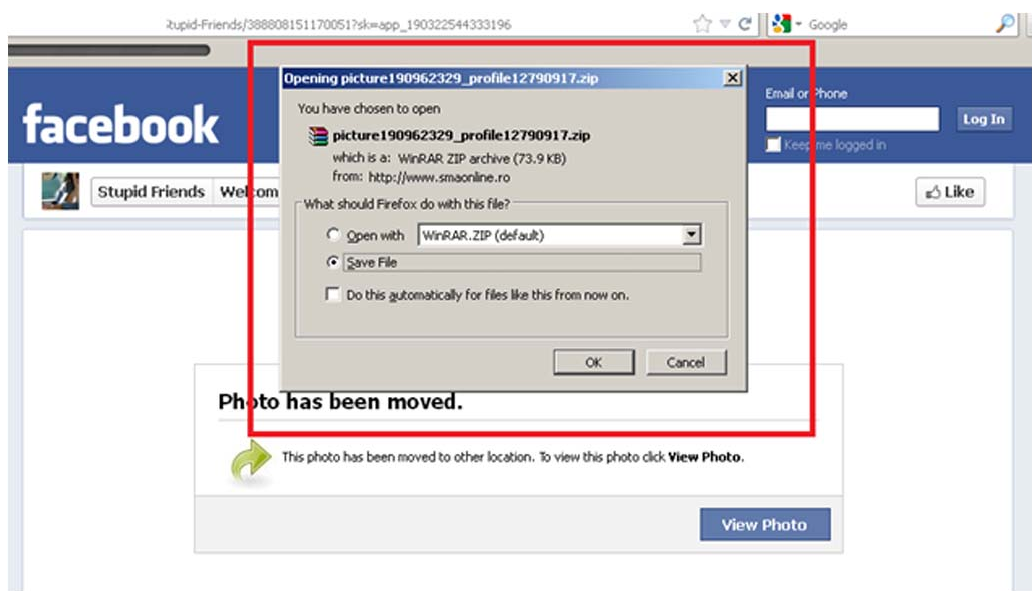 Figure 2: Mechanical detail of how MitB-Agent-E intercepts and modifies Facebook chat traffic to spread infection.
SOTA Comparison & Defenses
The authors argue that current defenses (Two-factor, blacklists) are insufficient. They propose high-entropy solutions:
- Client-side Encryption: Encrypting form data via JS before the MitB agent can hook the POST request.
- Web Page Code Polymorphism: Dynamically changing HTML element IDs (e.g., changing "password" to "bfgy79hfb"). Since socioware looks for specific labels to steal data, this "moving target" defense makes automated harvesting impossible.
| Socioware Class | Proposed Defense Mechanism |
|---|---|
| Class-I | Webpage integrity signatures & Inline URL verification |
| Class-S | Code Polymorphism & Client-side field encryption |
| Class-O | Machine Learning classifiers for CDN traffic analysis |
| Class-E | Rigorous SDLC and Bug Bounty programs |
Critical Insight & Conclusion
The paper’s most vital takeaway is that SSL/TLS is a false sense of security in the context of socioware. Because these agents reside within the browser's memory space, they see the data in its plaintext form.
Limitations: While the taxonomy is robust, the paper primarily focuses on the Windows ecosystem. As OSNs move heavily toward mobile apps (iOS/Android), the hooking mechanisms will shift from DLL injection to IPC (Inter-Process Communication) exploitation—a transition that requires further research.
Future Outlook: For security professionals, the message is clear: Stop treating OSN usage as a "productivity" issue and start treating it as a primary attack vector. Moving toward data-layer polymorphism is no longer optional.