
Unpacking #AcademicTwitter: Behind the Digital Faculty Lounge
An Exploration of a Social Media Community: The Case of #AcademicTwitter
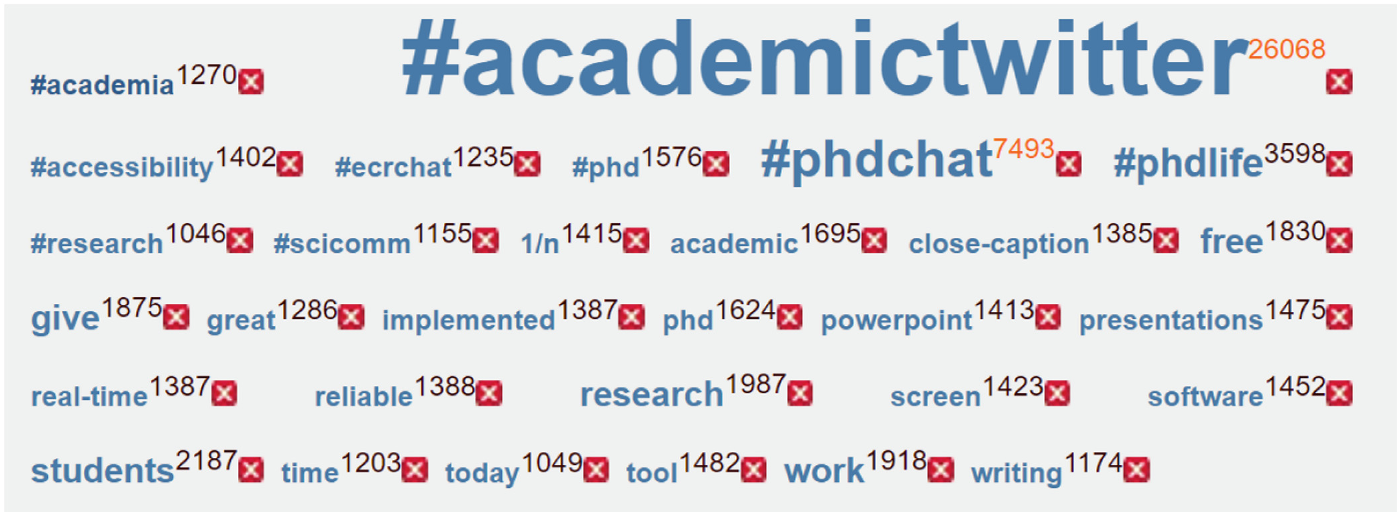
This study explores #AcademicTwitter as an online professional community using content and social network analysis (SNA). By analyzing over 26,000 tweets, the researchers identify the community's decentralized structure, predominantly positive sentiment, and the pivotal role of media platforms in driving professional discourse.
TL;DR
Is #AcademicTwitter a vibrant digital community or just a series of broadcast silos? This study analyzes 26,000+ tweets to reveal a highly modular, decentralized network where media platforms, not just professors, dictate the flow of information. While it serves as a crucial hub for resource sharing and emotional support, true two-way engagement remains surprisingly low.
Context: This work positions itself as a foundational structural analysis of one of the most resilient "affinity spaces" on social media, moving beyond anecdotal evidence to quantify the social architecture of digital academia.
The "Digital Watercooler" Problem
Scholars have long used Twitter for "scholarly chatter," yet the actual mechanics of these interactions remain a "black box." The problem is twofold: first, the sheer volume of data makes it hard to distinguish between noise and meaningful community building; second, many academic hashtags are ephemeral (like conference-specific tags), making #AcademicTwitter unique for its longevity. The authors suspect that despite the high volume, the community might suffer from "participation inequality."
Methodology: Mapping the Conversation
The researchers utilized Netlytic to capture a month's worth of data, focusing on both What was said (Content Analysis) and Who spoke to Whom (Social Network Analysis).
Key Metrics Analyzed:
- In-degree Centrality: Identifying the "Rockstars" (who is mentioned most).
- Modularity: Determining if the community is one big group or many small "cliques."
- Reciprocity: Measuring if users actually talk back to each other.
Insights: The Anatomy of a Fragmented Community
1. The Dominance of "Micro-Communities"
With a modularity score of 0.92, the network is remarkably fragmented. Instead of a single "town square," #AcademicTwitter consists of at least six distinct clusters. Interestingly, these clusters aren't always led by famous professors; they are often anchored by media platforms like @AcademicChatter and @Chronicle.
2. Information Sharing over Dialogue
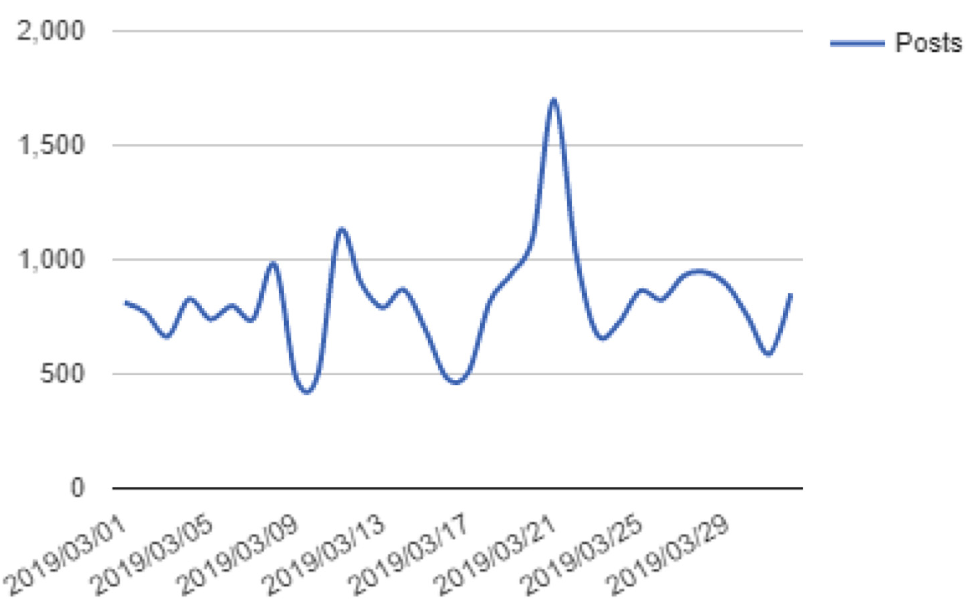
The study found a Reciprocity of 0.025, meaning only roughly 0.25% of communication was two-way. This suggests #AcademicTwitter acts more as a "Broadcast Hub" for resources—like the peak in activity seen when a user shared tips on PowerPoint accessibility—than a space for deep, sustained debate.
3. STEM Dominance and Sentiment
The user base is skewed: 31% STEM, 23% Social Sciences, and 13% Arts & Humanities. Despite the "complaining" stereotype, the sentiment was overwhelmingly positive, centered on themes of research support, success stories, and survival tips.
Critical Analysis & Conclusion
The Takeaway: #AcademicTwitter is effectively a decentralized library and support group. Its value lies in weak ties—the ability to find a resource or a sympathetic ear outside of one's immediate institutional silo.
Limitations: The study identifies a high number of "lurkers" (90% of users don't contribute). Because the research focuses on active posters, the silent majority's "invisible learning" remains unquantified.
Future Outlook: As platforms evolve, the "broadcast" nature of these communities suggests they are vulnerable to algorithm changes. For academics, the lesson is clear: to maintain this social capital, there must be a shift from mere information dissemination to intentional, reciprocal engagement.