
Beyond the Screen: Unpacking Social Network Addiction in Indonesian Young Females
Exploring indonesian young females online social networks (OSNs) addictions: a case study of mass communication female undergraduate students
This study investigates Online Social Network (OSN) addiction among young Indonesian females, specifically female undergraduate Mass Communication students. Using a qualitative approach, the research identifies Line, WhatsApp, and Facebook as the most used platforms and highlights the critical factors driving addictive behaviors in this demographic.
TL;DR
This study explores the "extravagant" use of Online Social Networks (OSNs) among Indonesian female undergraduates. It identifies that platforms like Line and WhatsApp have become indispensable for identity building and relationship maintenance, leading to significant indicators of addiction, including excessive time spent (up to 12+ hours daily) and a high volume of group memberships.
Contextual Positioning
Published in 2017, this research captures a pivotal moment in Indonesia's digital evolution—a period where the country's internet growth was nearly triple the global average. The study positions OSN usage not just as a hobby, but as a critical infrastructure for Self-Identity Development in young adulthood.
Problem & Motivation: The Digital Distraction
The authors argue that while OSNs lower the barriers to interaction, they create a "double-edged sword" effect. For young Indonesian females, the pressure to demonstrate self-identity and sustain relationships has moved almost entirely online. The research aims to move beyond general statistics to understand the specific triggers—why do these students feel compelled to stay connected 24/7?
Methodology: The Case of Mass Communication Students
The researchers focused on a specific niche: first-year Mass Communication students at Bina Nusantara University. This group is particularly relevant as their field of study revolves around media and communication, making them "advanced" or "heavy" users of these platforms.
The Addiction Framework
The study defines addiction through four operational lenses:
- Group Proliferation: The number of social circles a user belongs to.
- Temporal Investment: Total hours dedicated to OSN platforms daily.
- Social Reach: The volume of "friends" or connections maintained.
- Accessibility: The hardware (Smartphones, Laptops) enabling constant connectivity.
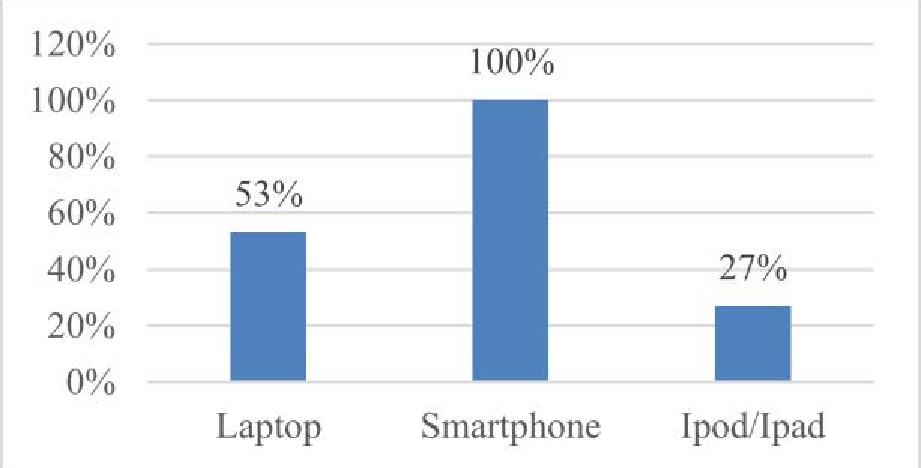 Figure: The dominance of Smartphones in facilitating constant OSN access.
Key Results: Defining 'Social' Addiction
The findings paint a picture of a life lived through the lens of a smartphone:
- The "Always-On" Culture: 53% of respondents spent between 1 to 12 hours daily on OSNs. Remarkably, 7% reported being online for 13-24 hours—essentially whenever they were awake.
- Platform Preference: Line (93%) and WhatsApp (73%) dominated over Facebook. This indicates a shift toward "closed" social networks where privacy and phone-number-based connections are prioritized.
- Identity Sharing: Real names and photos were the most shared data points. The authors note that photos act as a "secure" way to build self-identity, where "likes" function as positive reinforcement for self-esteem.
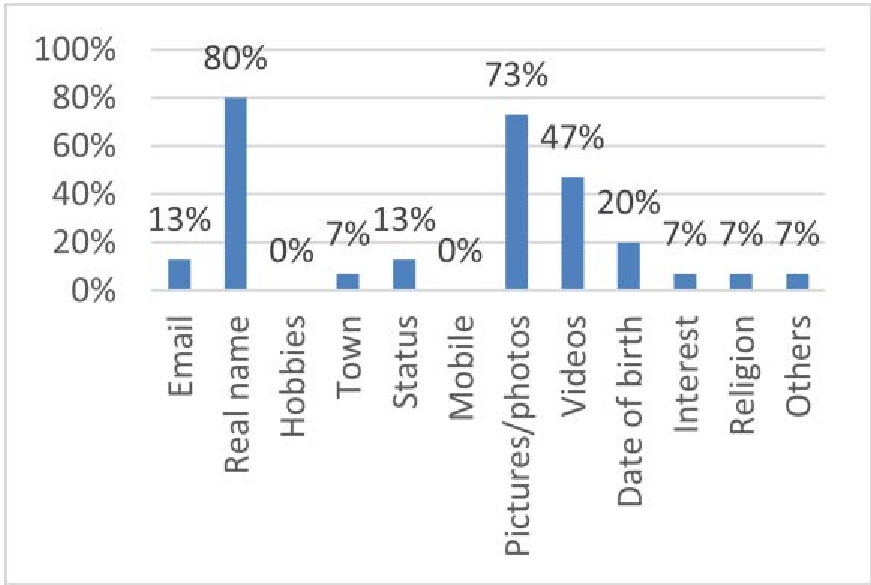 Figure: Breakdown of shared content, highlighting the importance of visual identity (Photos).
Critical Insight & Analysis
The study's most profound insight is that for these young women, OSNs are not just apps—they are Digital Mirrors. The usage is motivated by a deep-seated need for "recognition processes." By sharing real names and current photos, they are performing their identity for a digital audience.
Limitations
- Sample Size: With only 15 respondents, the study is a localized case study rather than a broad demographic survey.
- Self-Reporting Bias: Relying on questionnaires can lead to under-reporting of "addictive" hours due to social desirability bias.
Conclusion: A Call for Digital Literacy
The paper concludes that addiction in this context is inherently tied to the need for belonging. Rather than simply banning phones, the authors suggest that educators and parents should focus on the psychological motivations behind the usage—helping young women build self-esteem that isn't solely dependent on digital "likes."
Future Outlook
As communication shifts further into video-centric platforms (like TikTok and Instagram Reels), the "visual identity" factor identified in this 2017 study is likely to become even more intense, potentially requiring new frameworks for understanding "video-based" OSN addiction.