
RRM: Decoding the Silent Influence—How Internal Review Factors Reshape Social Recommendations
Exploring Users' Internal Influence from Reviews for Social Recommendation
This paper introduces the Review-based Recommendation Model (RRM), a social recommendation framework that mines "internal factors" from textual reviews—specifically sentimental deviations and review reliability. By integrating these factors with an attention-based matrix factorization, it achieves state-of-the-art rating prediction accuracy on the Yelp dataset.
TL;DR
While most social recommenders look at who you follow, this paper looks at how you write. The authors present the Review-based Recommendation Model (RRM), which extracts a user's "internal" influence from their review history. By analyzing sentimental variance and review reliability through an attention-regulated Matrix Factorization, the model outperforms traditional benchmarks with a 5.6% gain in RMSE on real-world Yelp data.
Context & Motivation: Beyond the Follow Button
In the world of social commerce, we are often influenced by "expert" friends. Previous research categorized this influence using external markers: counts of followers, retweets, or explicit trust scores. However, these markers are often sparse or noisy.
The authors argue that a user's true influence is hidden within their textual reviews. They identified a key psychological intuition: users who provide varied, polarized, and detailed feedback (high "internal influence") are more persuasive than those who post generic, middle-of-the-road comments.
Methodology: Mining the "Internal" Signal
The RRM framework operates on three primary pillars of influence:
- Sentimental Deviation: Using Word2Vec and SVM/SVR, the model calculates the sentiment of every review. It then computes the variance of these sentiments. The intuition? A user who provides specific, polarized opinions (e.g., loving one dish but hating another) provides more "information" and carries more weight than a "balanced" reviewer.
- Review Reliability: Through data fitting, the authors found an exponential relationship between review length and the number of product features mentioned. Users who write longer, feature-rich reviews are deemed more reliable.
- Attention Mechanism: Not all factors are equal. The model uses an attention layer to automatically learn the weights for sentiment, reliability, and popularity during the Matrix Factorization process.
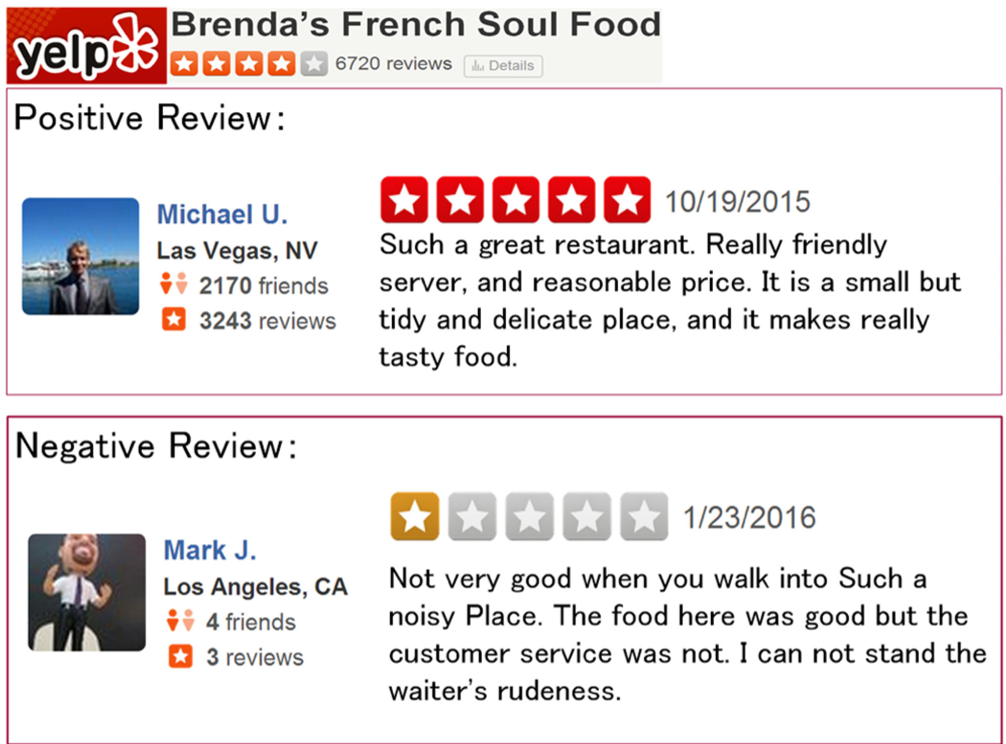 Fig 1: The architecture of RRM, showcasing the flow from raw reviews to weighted factor fusion.
Technical Deep Dive
The objective function at the heart of RRM is a Matrix Factorization regularized by social influence: Here, is the normalized influence of friend on user . The attention mechanism allows the model to "realize" that Sentimental Deviation often yields a stronger predictive signal than simple popularity or review length.
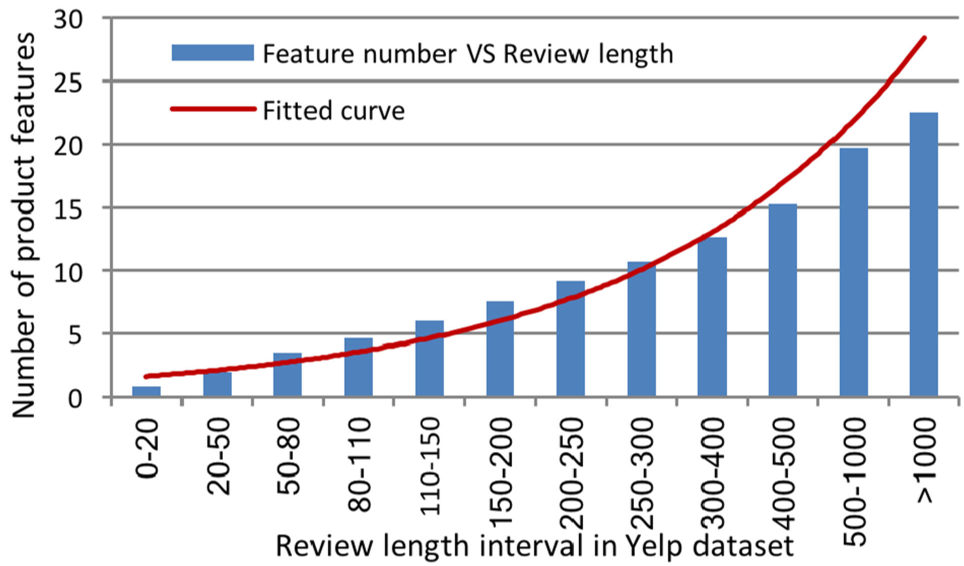 Fig 2: The exponential relationship between review length and feature extraction used to calculate Reliability.
Experiments & Results
The model was tested against 7 major baselines, including BaseMF, CircleCon, and RPS. Across categories like "Beauty," "Restaurants," and "Active Life," RRM consistently took the lead.
- Average RMSE Improvement: 5.6%
- Average MAE Improvement: 6.7%
- Sentiment Precision: The Word2Vec + SVM approach reached 92.49% precision on Yelp reviews.
Interestingly, the ablation study (Fig 6 in the paper) reveals that while all factors help, the combination via the attention mechanism is the secret sauce. The attention weights (Fig 5) show that "Sentimental Deviation" is often the most significant positive-impact factor.
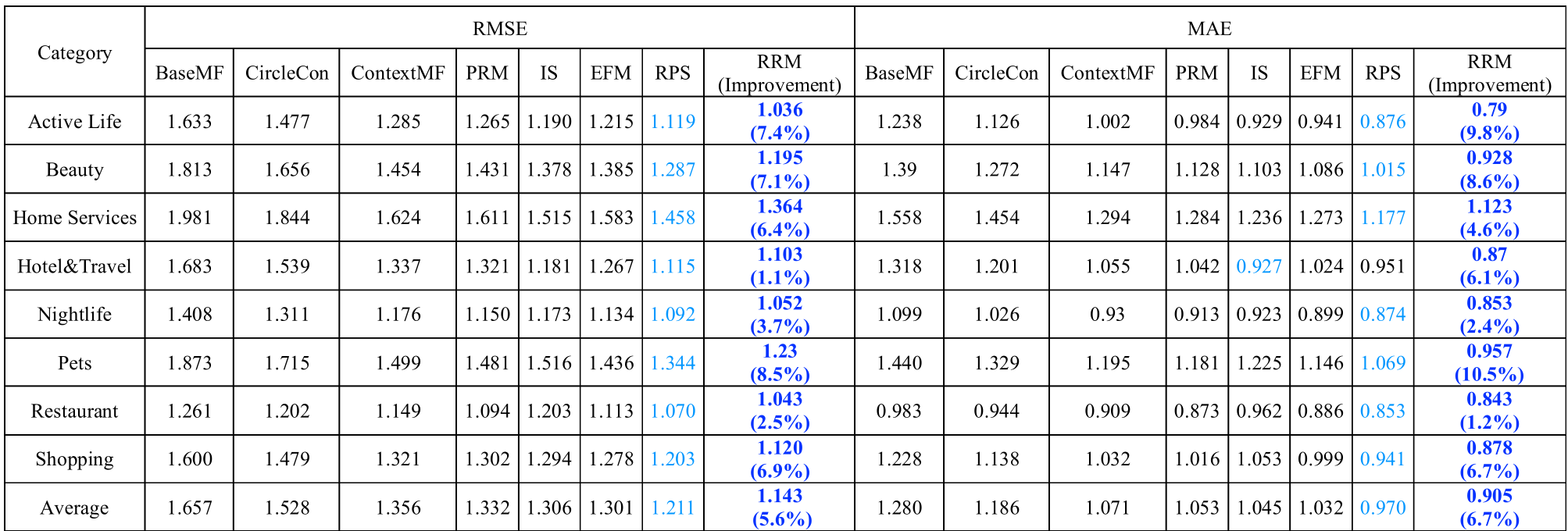 Table 1: Detailed comparison showing RRM's superior performance across all Yelp categories.
Critical Insight: The Value of Polarization
The most striking takeaway is the validation of Sentimental Deviation. In a recommendation landscape that often tries to smooth out noise, this paper suggests that the "variance"—the peaks and valleys of a user's opinion—is exactly where the most valuable social signal resides.
Conclusion & Future Work
RRM proves that "internal" writing patterns can effectively substitute or augment "external" social graphs. While the model excels at short-form reviews like those on Yelp, future iterations may need to adapt for the complex semantics of long-form blogs or video-based sentiment.
For developers building social features, the lesson is clear: don't just track who follows whom—analyze the consistency and detail of what they say to find your true influencers.