
Beyond Self-Interest: Mapping the "Perceived Shared Risk" of Exposing Others Online
Exposing others’ information on online social networks (OSNs): Perceived shared risk, its determinants, and its influence on OSN privacy control use
The study introduces the interpersonal concept of "perceived shared risk" in Online Social Networks (OSNs), specifically focusing on how users perceive the risk their own activities pose to others' information. Using a cross-cultural survey of Facebook users in the US and South Korea, it establishes that factors like culture, self-efficacy, and personal privacy concerns significantly influence risk perception and the subsequent use of privacy controls.
TL;DR
When you post a photo of a friend on Facebook, are you thinking about their privacy risk? This study shifts the focus from "how others handle my data" to "how my actions affect others." It introduces Perceived Shared Risk—the combined assessment of how likely (susceptibility) and how damaging (severity) it is to expose a friend's info. The findings reveal that while we might know we're exposing others, we only take action (using privacy controls) if we believe the consequences are truly severe.
Problem & Motivation: The Gap in the Privacy Calculus
Most academic literature treats privacy as a selfish calculation: "What do I gain by sharing my data vs. what is the risk to me?" However, Social Networks (OSNs) are inherently collaborative. Much of the data shared is co-owned information.
The authors argue that the current understanding of privacy is incomplete because it ignores the interpersonal dimension. They identify two major blind spots in prior research:
- Peer-to-Peer Risk: We worry about companies, but what about the "digital footprint" we create for our friends?
- Lack of Collective Responsibility: If users don't perceive the risk they pose to others, they have no incentive to use the platform's privacy tools accurately.
Methodology: Protection Motivation Theory (PMT)
The researchers built a structural model (tested on 1,121 users in the US and Korea) using Protection Motivation Theory. They proposed that "Risk" isn't a single feeling, but a calculation of:
- Susceptibility: "How likely is my post to leak a friend's secret?"
- Severity: "If it leaks, how much will it hurt them?"
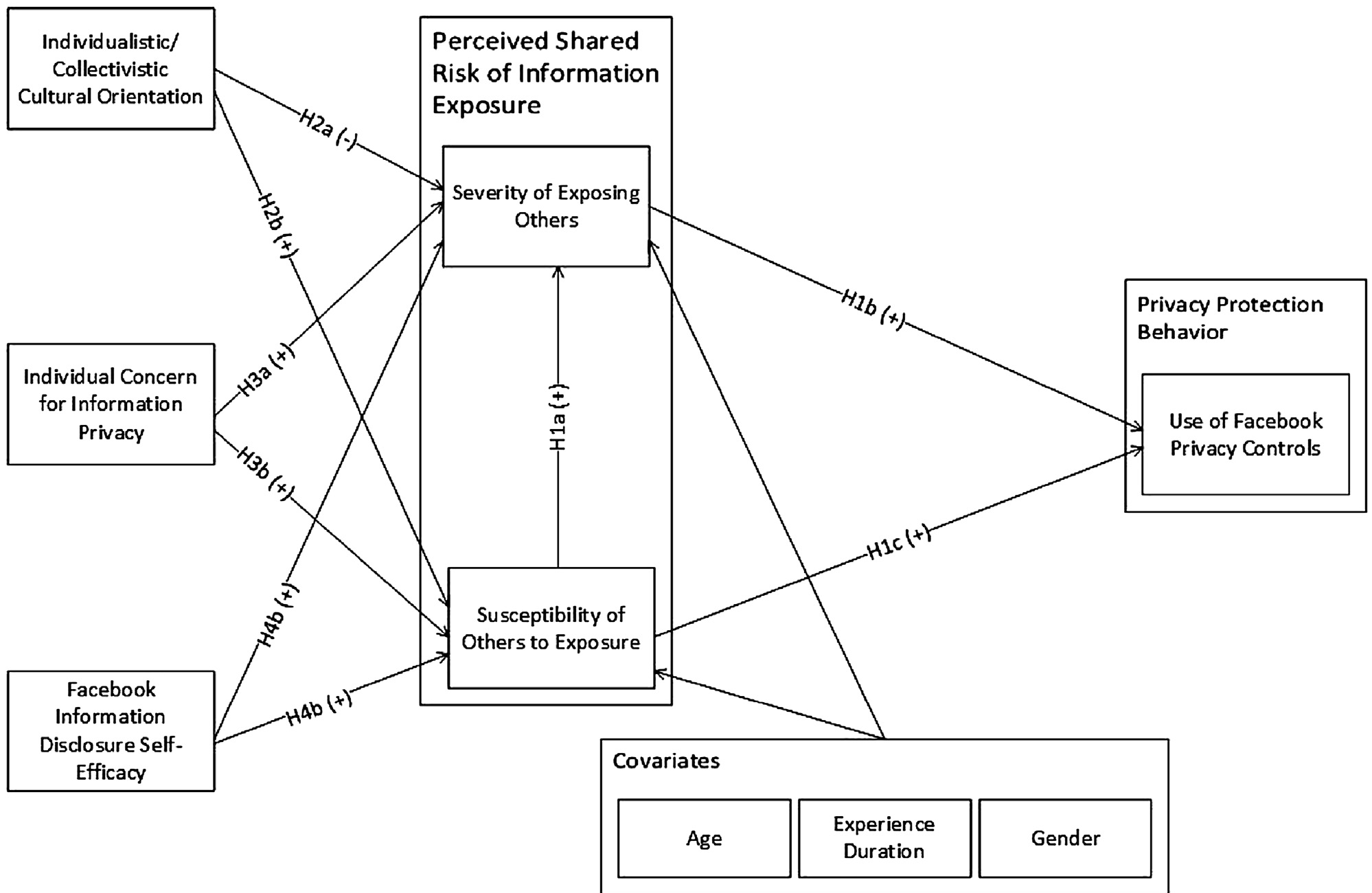 The conceptual model linking cultural traits and self-efficacy to Shared Risk.
Key Insights & Experimental Results
1. The Cultural Dissonance
One might assume collectivistic cultures (like South Korea) would be more protective of others. The data suggests the opposite for OSNs. Collectivists perceived lower severity for exposing others' info. Why? Because in a collective, "sharing within the group" is a norm, not necessarily seen as a "violation."
2. High Literacy ≠ High Protection
Users with high Facebook Self-Efficacy (those who know exactly how to tag, post, and share) are more aware that they are exposing others. However, this technical mastery doesn't always lead to safer behavior.
3. The Susceptibility Paradox
The most striking find:
- Severity → Privacy Control Use (+): If I think the leak is "dangerous," I use privacy settings.
- Susceptibility → Privacy Control Use (-): Surprisingly, users who thought leaks were "likely" were less likely to use privacy controls. This suggests a "numbness" or complacency—if leakage feels inevitable, why bother with settings?
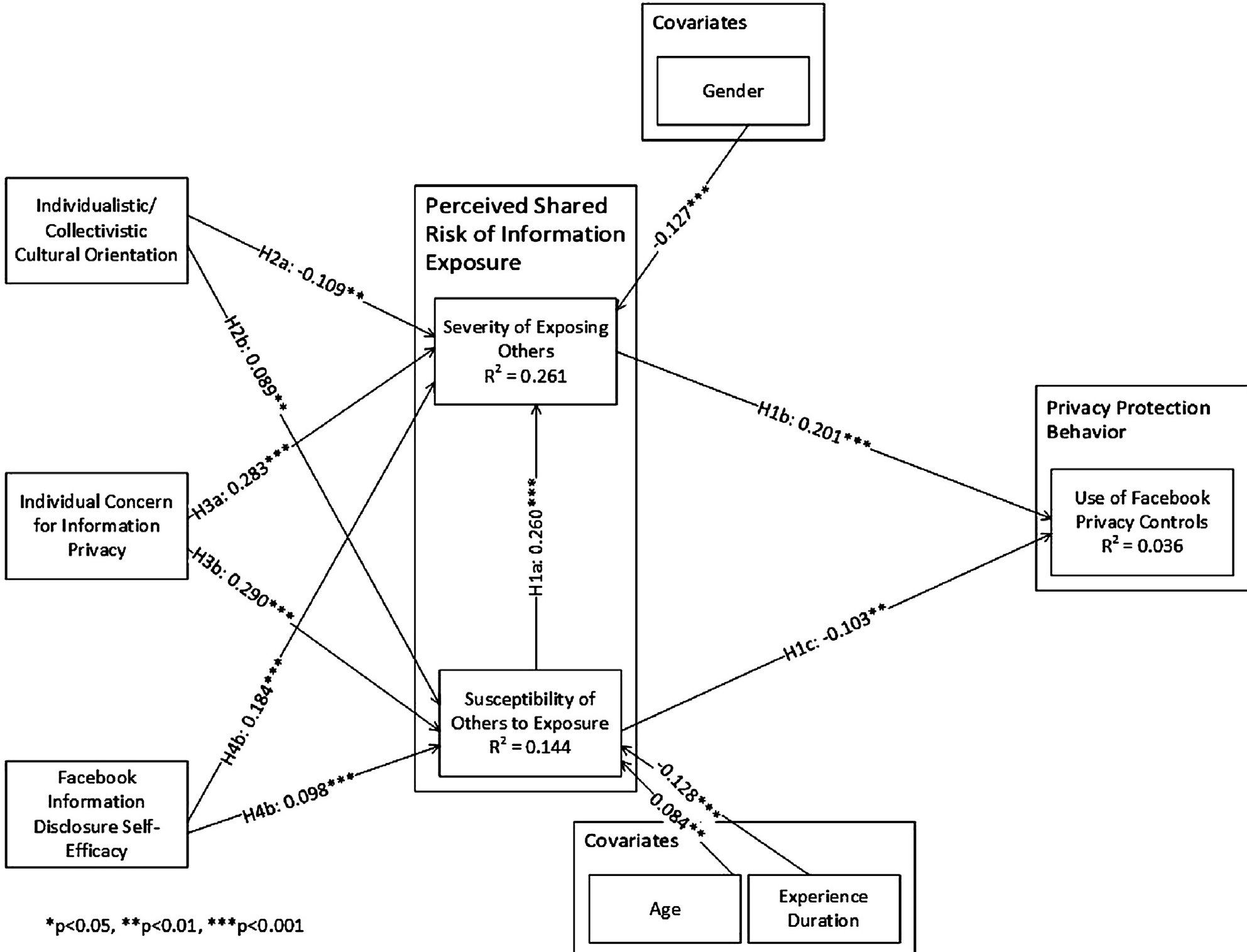 Figure 2: The path analysis showing the significant positive and negative correlations.
Critical Analysis & Takeaways
The study highlights a fundamental flaw in how we design OSN privacy notifications. Currently, platforms warn us about our security. This research suggests that to protect the ecosystem, we should be prompted to think about others.
Limitations:
- The sample was primarily "sophomores" (college students). While they are the heaviest users, their perspective on professional reputation risk might be lower than that of older adults.
- The "Culture" metric showed low AVE (Average Variance Extracted), indicating that even in Korea, Western digital influence is blurring the lines of traditional collectivism.
Future Outlook: As AI-driven tagging and facial recognition become more prevalent, the concept of "co-owned information" will only get more complex. Future OSN features might need to include "Multi-User Authorization"—where a tag isn't live until everyone in the photo agrees, moving the burden of risk management from the uploader to the collective.
Conclusion
Privacy is no longer an individual right; it is a shared responsibility. By proving that "Risk to Others" is a measurable metric, this paper opens the door for a more empathetic, socially-aware era of social media design.