
Mining the Press: How AI Decodes Political Polarization in Romanian Media
Expression of Political Opinions in Press
This paper presents a specialized opinion mining application designed to analyze Romanian political news. Using a combination of web crawlers and supervised Machine Learning (SVM and Naive-Bayes), the system extracts and classifies sentiments toward political entities to track media polarization during major elections.
TL;DR
The shift from print to digital media has transformed how political opinions are formed and spread. This paper introduces an end-to-end application that crawls Romanian news, identifies political entities, and uses Support Vector Machines (SVM) to classify sentiments. The system successfully mapped the 2014 Romanian Presidential Election, demonstrating that online sentiment is a potent lead indicator for political shifts.
Background & Motivation: The Romanian Digital Frontier
Romania's political landscape over the last 25 years has been characterized by tumultuous power shifts and social dissatisfaction. The authors argue that while traditional newspapers have lost influence, their online counterparts have become primary engines of audience polarization.
The core challenge addressed here is the need for an automated, unbiased tool to quantify this polarization. Manual analysis cannot scale to the millions of articles generated during election cycles, and general sentiment tools often overlook the "entity-specific" nature of political news—where a single article might praise one candidate while criticizing another.
Methodology: The Engineering Pipeline
The application architecture is divided into three functional pillars:
- Data Acquisition: Custom web crawlers targeting political archives (e.g., Hotnews.ro). The authors highlights a significant hurdle: the "chaotic structure" of many news sites, which required filtering for structured domains.
- Entity-Level Analysis: Instead of classifying a whole article, the system creates Article-Entity Associations. This allows the same text to receive a "Positive" label for Candidate A and a "Negative" label for Candidate B.
- Vectorization: Using a classic Bag-of-Words approach combined with TF-IDF (Term Frequency-Inverse Document Frequency) to normalize the text for ML consumption.
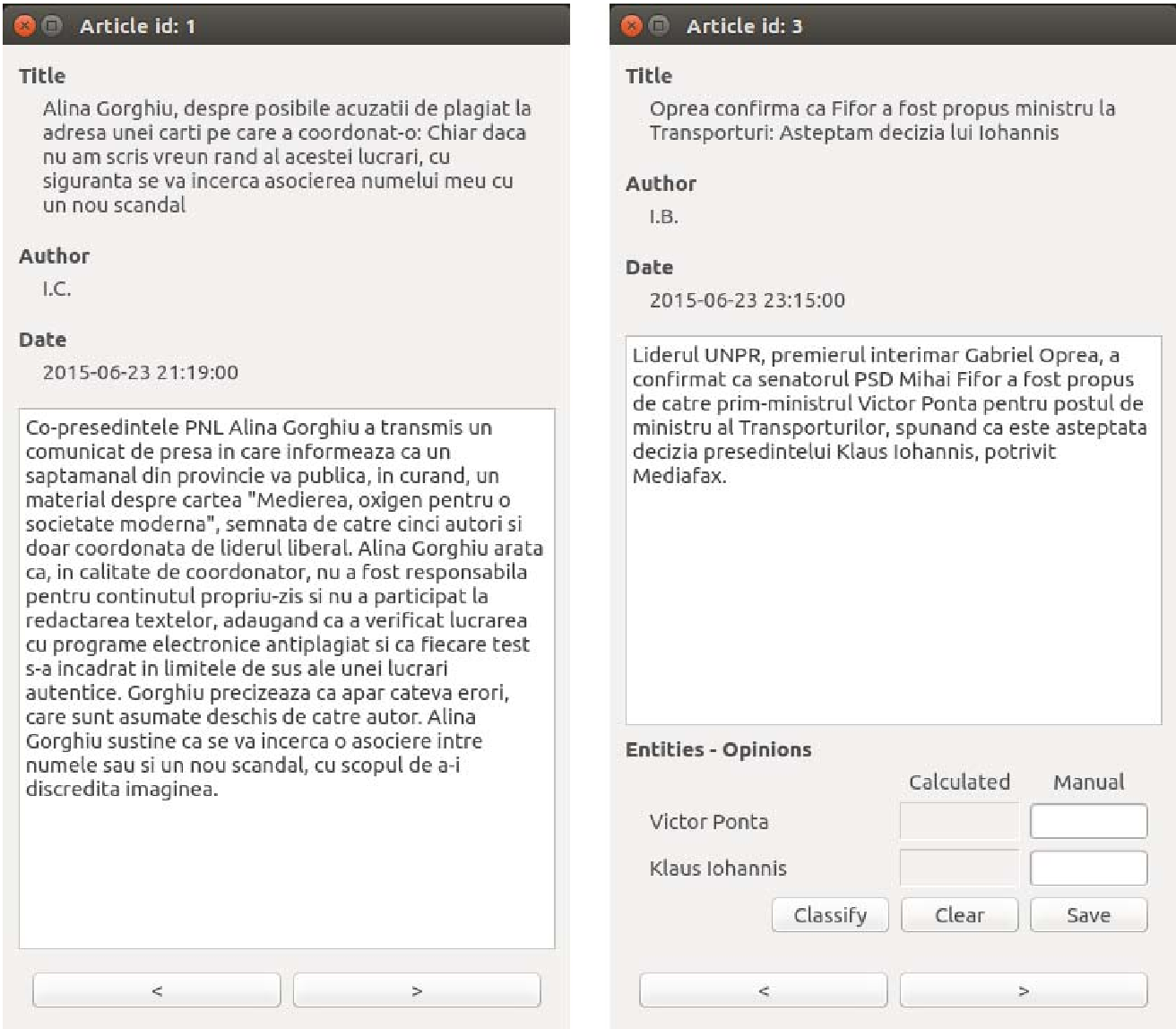 Fig 1: The application's interface allows for manual labeling to refine the training set and real-time chart generation.
Experiments: SVM Takes the Lead
To validate the system, the authors compared three popular algorithms. The training set consisted of 200+ manually labeled associations, while a separate test set of 50 articles was cross-validated by two human observers (achieving a Cohen’s Kappa of 0.6019).
| Algorithm | Average Accuracy |
|---|---|
| Naive-Bayes (Multinomial) | 64% |
| Naive-Bayes (Bernoulli) | 68% |
| Support Vector Machines (SVM) | 78% |
The SVM model's superior performance (80% vs. one student observer) justifies its use as the primary engine for the case study.
Case Study: The 2014 Presidential Mirror
The tool was put to the test analyzing the battle between Victor Ponta and Klaus Iohannis.
- The Findings: While traditional polls often saw the race as close or favored Ponta, the sentiment analysis showed Iohannis maintaining a massive positive sentiment lead (over 80%) throughout the campaign.
- The Surprise: The system captured a crucial "discrete presence" effect—Iohannis's popularity actually dipped slightly when his media appearances spiked, suggesting his appeal was rooted in being an "outsider."
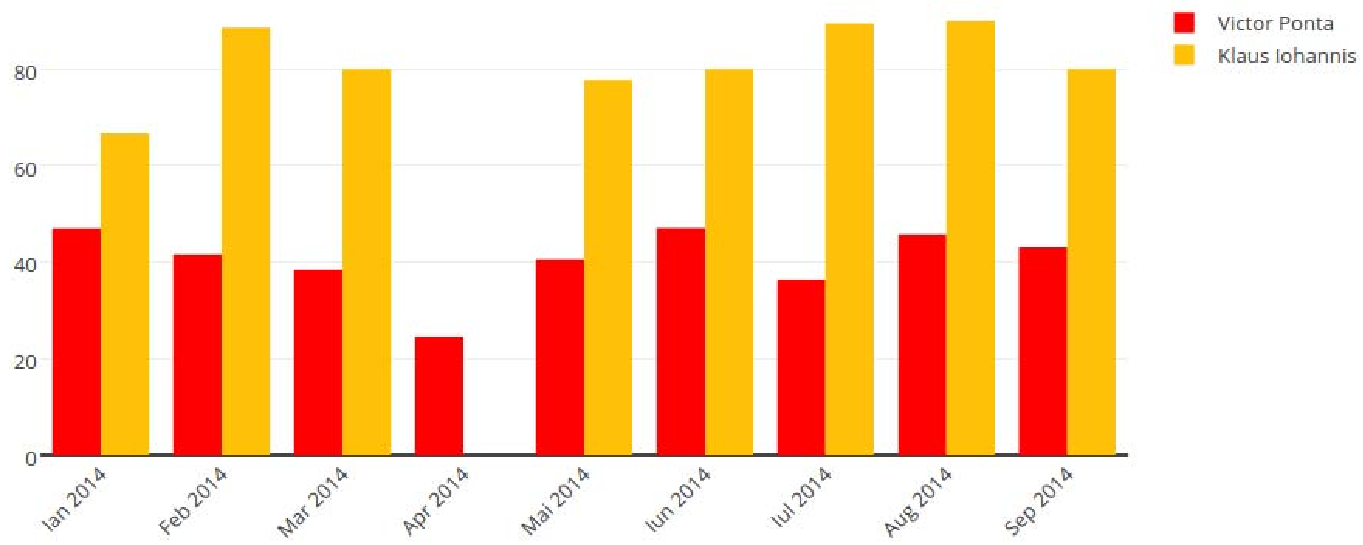 Fig 2: Comparison of positive opinions between candidates leading up to the election.
Critical Insight & Future Outlook
The paper concludes that while social media analysis cannot yet replace traditional polling, its ability to process massive, unbiased datasets makes it an essential "early warning system."
Limitations & Future Work:
- Local vs. Web: The current tool is a local application; moving to a web-based SaaS architecture is a priority.
- Sentiment Granularity: Moving beyond binary (Positive/Negative) to a weighted scale (Strong/Weak) would provide more nuance in highly critical political commentary.
- Source Weighting: Not all news outlets are equal. A future iteration will weight opinions based on the "visibility" or "authority" of the source.
In an era of "fake news" and echo chambers, tools like this provide a data-driven lens to measure the pulse of a nation.