
Elevating App Pre-Launch: Why Your Smartphone Needs to Feel Your Emotions
Extending App Pre-Launch Service with Emotion Context
This paper introduces an enhanced mobile application pre-launch service that integrates user emotion context derived from smartwatch PPG sensors. By combining heart rate variability (HRV) with smartphone usage patterns, the system utilizes a Naive Bayes classifier to predict and preload apps, aiming to improve prediction accuracy and reduce launch latency.
TL;DR
Mobile app "pre-launching"—loading an app into RAM before you even tap the icon—is a critical technique for reducing latency and saving energy. This paper proposes a transition from passive usage-tracking to emotion-aware prediction. By leveraging PPG sensors in smartwatches to detect heart rate variability (HRV), the system adds a psychological dimension to prediction, allowing the OS to anticipate your needs based on your mood.
The Motivation: Moving Beyond Tap History
Current pre-launch systems like FALACON or AppJoy are essentially "blind" to the user's internal state. They rely on "where you are" and "what you just did." But what happens when you’ve been idle for an hour?
The authors argue that emotion is the missing link. Studies indicate that 96% of users change their app usage patterns based on their mood—using social media when stressed or entertainment apps when happy. Traditional models fail because they lack the "unobtrusive sensing" capability to understand the user when the phone is in their pocket.
Methodology: The Fusion of Heart and Silicon
The proposed architecture bridges the gap between the smartphone (the interaction hub) and the smartwatch (the physiological sensor).
1. Feature Engineering
The system extracts features across several dimensions:
- Environmental: Location (clustered via DBSCAN) and Time.
- Physical: Movement data from accelerometers and gyroscopes.
- Internal (The Core): Emotional state derived from the PPG sensor.
2. The Prediction Engine
Using a Naive Bayes classifier, the system calculates the probability of an app being used given the context vector (which includes emotion).
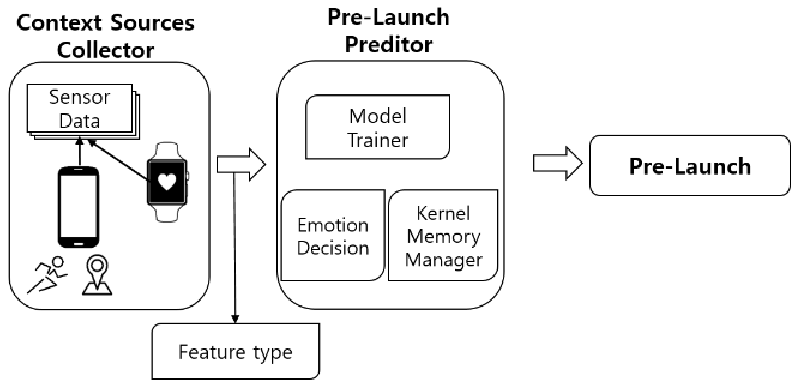 Figure 1: The system architecture showing data flow from wearable sensors to the pre-launch engine.
Experimental Insights: Reading the Heart
The researchers focused on Photoplethysmogram (PPG) sampling at 200Hz. By analyzing the Heart Rate Variability (HRV), they categorized user states into Positive, Negative, and Normal based on Russell’s circumplex model of affect.
| Emotion | Potential Target Apps |
|---|---|
| Happy | Angry Birds, Netflix, YouTube, Music |
| Stress | Facebook, Twitter, WhatsApp, Skype |
| Enthusiastic | Gallery, News, Life Organizer |
Preliminary data showed that though the average BPM (Beats Per Minute) might remain similar across states (approx. 65 BPM), the standard deviation—the "nervousness" of the heart—varied significantly between positive (4.29) and negative (9.08) states.
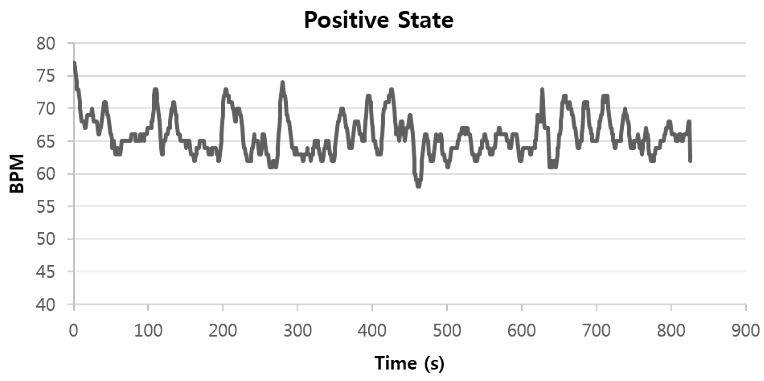 Figure 2: Heart rate signals captured during a positive emotional state.
Critical Analysis & Conclusion
The Takeaway
This work marks a shift toward Affective Computing in mobile operating systems. By treating the smartwatch as a continuous "mood sensor," smartphones can transition from reactive tools to proactive assistants.
Limitations & Future Work
- Sample Size: As a poster/short paper, the preliminary results rely on a small dataset. The correlation between heart rate and specific apps needs large-scale validation.
- Privacy: Predicting emotion via heart rate raises significant ethical and privacy concerns regarding how this data is stored and who has access to the user's psychological profile.
- Compute Overhead: Running a continuous PPG analysis and a Naive Bayes classifier could theoretically negate the energy savings gained from app pre-launching.
In the future, we can expect these models to be integrated directly into mobile OS schedulers, potentially using edge-AI chips to process physiological data locally and securely.