
Lukap: Bridging the Gap Between Virtual Profiles and Physical Encounters
Extending Social Networking Services toward a Physical Interaction Scenario
The paper introduces Lukap, a ubiquitous mobile application designed to bridge the gap between virtual social networking services (SNS) and physical face-to-face encounters. Using a Mobile Ad hoc Network (MANET) approach, it enables community member detection and interaction in physical spaces without requiring centralized internet infrastructure.
TL;DR
Lukap is a ubiquitous mobile system that extends social networking into the physical world. By leveraging Mobile Ad hoc Networks (MANETs), it allows users to detect nearby friends and acquaintances from their existing social networks without needing an active internet connection or GPS check-ins, facilitating spontaneous face-to-face interactions.
Background: The Limits of the Virtual Space
Most Social Networking Services (SNS) like Facebook and Twitter excel at maintaining "weak ties" across vast distances. However, they are notoriously poor at supporting Partially Virtual Communities (PVC)—groups that interact both online and in person. Previous attempts (like Foursquare) failed because they required manual check-ins (which are often outdated) or constant cellular data.
The researchers from the Universidad de Chile identified a critical gap: how can we use our digital social graph to enrich our physical reality in real-time without being tethered to a centralized server?
The Hybrid Interaction Paradigm
The core innovation of Lukap is the Hybrid Interaction Space. It treats the virtual and physical worlds as a unified continuum. Instead of a "cloud-first" approach, it employs a "local-first" strategy:
- On-Demand Sync: Users download their social contacts and privacy settings to their mobile devices while online.
- Autonomous Discovery: Once in a physical scenario, the application uses the HLMP API to establish a peer-to-peer network (MANET) with nearby devices.
- Proximity Awareness: When a contact is detected within range, the system triggers a notification, allowing users to coordinate a meeting via local messaging or phone calls.
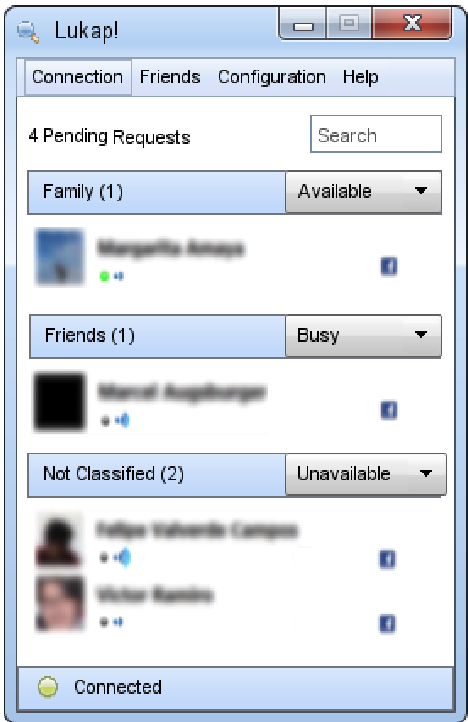 Figure 1: The Lukap Architecture, highlighting the integration between SNS APIs and the MANET communication layer.
Methodology: Under the Hood
Lukap is built on the .NET 4 framework and utilizes a multi-layered architecture:
- Context Discovery Service: Monitors environment changes.
- Activity Estimator: Infers if a user is available for social contact based on their current state.
- HLMP Communication Layer: Manages the ad hoc routing and message exchange between mobile nodes.
A key design choice was the inclusion of privacy-centric visibility. Users can set themselves as "available" to family but "busy" to colleagues, and this status is broadcasted through the MANET, ensuring that the physical proximity doesn't compromise personal boundaries.
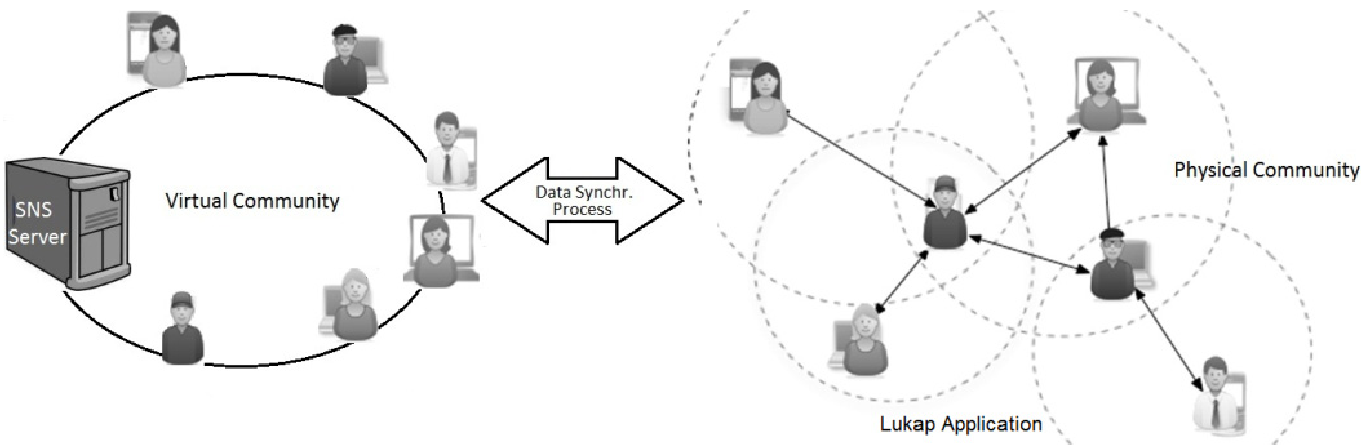 Figure 2: Lukap Interface showing status settings and contact availability.
Evaluation & Results
The researchers conducted both a usability focus group and a technical performance evaluation.
Performance Metrics
Technical tests at the University of Chile revealed the limitations and strengths of the MANET approach:
- Proximity Strength: At 1 to 2 hops (approx. 30-60m in buildings), the detection failure rate was 0%, with delays under 8 seconds.
- The Multi-hop Wall: Performance dropped significantly at 4 hops, with a 60% failure rate and over 90 seconds of delay, indicating that the system is most effective for "immediate vicinity" interactions.
- Throughput: Bandwidth was sufficient (127Kbps at 1-hop) for text and basic voice coordination.
Usability Insights
Software designers in the focus group praised the unobtrusive nature of the tool—specifically that it requires no active check-in. However, they suggested shifting from a "chat-style" interface to a radar or map-based view to better fit the mental model of physical navigation.
Critical Insight & Conclusion
Lukap proves that social networks do not have to be "virtual-only." By moving the logic of connection from the cloud to the device's edge, we can create serendipitous physical interactions.
Limitations: The reliance on MANETs means that peer density is required for the network to function. Furthermore, the 4-hop performance drop suggests that for larger campuses or crowded urban centers, more robust routing protocols would be necessary.
Future Outlook: As we move toward a world of "smart cities," the principles of Lukap could be integrated into wearable devices, allowing for a seamless "social sense" that alerts us to the presence of our community members in the real world.