
Beyond Dating Apps: Automating Social Networks via Implicit Human-Human Interaction
Extending Social Networks with Implicit Human-Human Interaction
The paper introduces a framework for Implicit Human-Human Interaction (HHI) designed to expand social networks using mobile devices. It leverages a dual-layered user model—combining profile data with privacy preferences—to automate "serendipitous" matching between individuals in physical proximity.
TL;DR
This research tackles the friction of physical networking by introducing a framework for Implicit Human-Human Interaction (HHI). By carrying a mobile device that "talks" for you, the system matches your profile against others in your vicinity—like a tutor finding a student—while strictly adhering to a multi-layered privacy model that changes based on your location and social context.
Background: Turning "Digital Auras" into Real Connections
In the mid-2000s, the rise of "Dodgeball" and dating sites signaled a hunger for digital social extensions. However, the authors argue that the real potential lies in implicit interaction. Drawing from the "Focus and Nimbus" theory, they suggest that our devices should project a "digital aura"—information that is observable to others only when their interests (Focus) intersect with our shared data (Nimbus).
Methodology: The Logic of Privacy and Matching
The core of the framework is the User Model (), which is split into two distinct but linked ontologies:
- User Profile (): Categorized into social domains like Work, Identity, and Free Time. It uses Situational Statements—triplets of (Auxiliary, Predicate, Range) that describe a user’s attributes (e.g.,
hasKnowledge: UbiComp). - Privacy Profile (): Defines trust levels for contact groups (e.g.,
Friends: Low,Colleagues: High).
The Interaction Calculus
The framework’s "Secret Sauce" is the release condition. Information is only released to human if: Where is the confidentiality of the data and is the trust level assigned to the recipient.
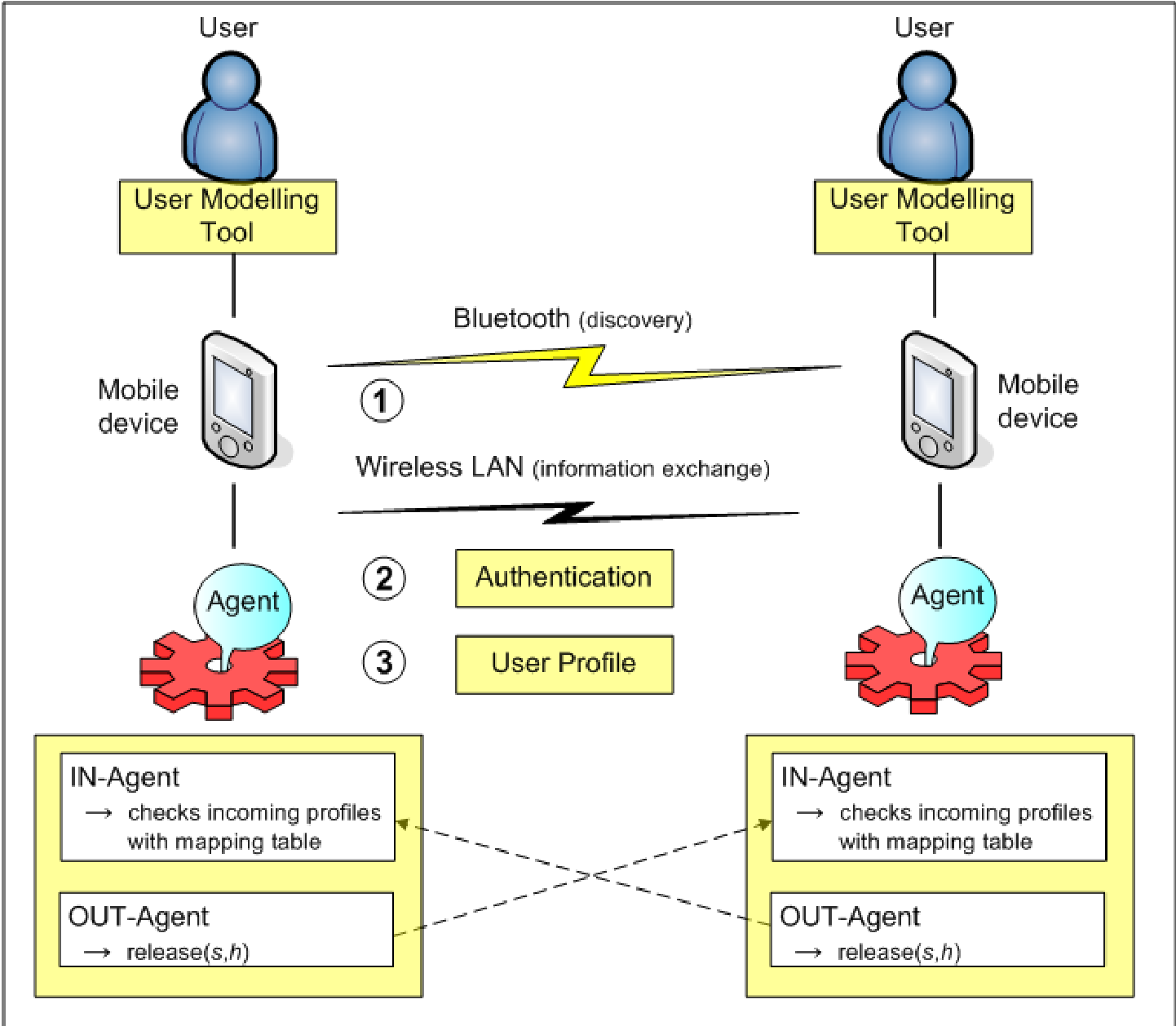 Fig 1: The modular architecture showing the communication flow between the OUT-agent (sender) and IN-agent (receiver).
System Architecture: Agents in the Wild
The framework utilizes a dual-protocol approach to bypass the limitations of 2006-era hardware:
- Bluetooth: Used for low-power "Discovery" to ensure the person is physically nearby.
- WiFi: Used for the "Authentication" and "Exchange" phases to handle higher data throughput and maintain connection if the users move slightly apart.
The Personal Agent acts as an autonomous gatekeeper. The "OUT-agent" filters your profile into a safe subset for strangers, while the "IN-agent" scans incoming data for matches.
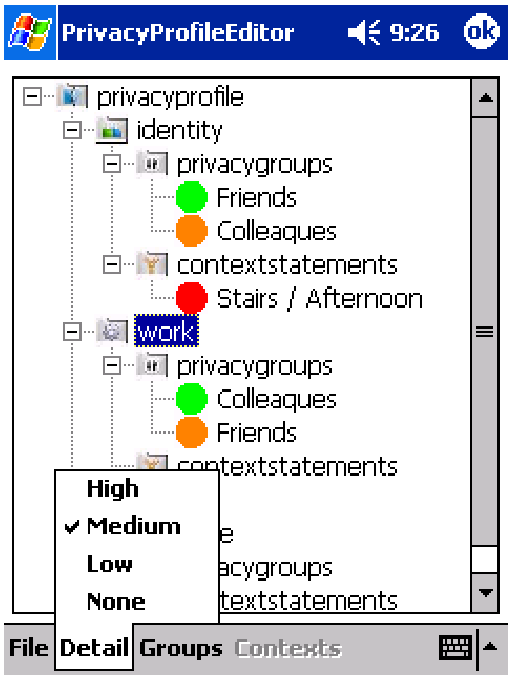 Fig 2: The UI allows users to define situational statements and assign color-coded trust levels (e.g., red for high confidentiality).
Experimental Insight: The Tutor Scenario
The authors validated the system using a scholarly scenario. A student needing help with "UbiComp" sets a "NeedsHelp" flag. When an expert (with "ExcellentKnowledge" in their profile) walks by, the agents detect the predicate match. Instead of an awkward cold-call, the expert receives a notification and can choose to help later, bridging the gap between physical proximity and social utility.
Critical Analysis & Conclusion
Takeaway
The paper’s greatest contribution is the formalization of Contextual Overrule. For example, a user can set a rule that work data is Never shared while the device senses they are "On Holiday," regardless of who is nearby. This prevents the "always-on" nature of ubiquitous computing from becoming a privacy nightmare.
Limitations
- Security: The paper acknowledges that peer-to-peer encryption was not fully implemented in the prototype.
- Scalability: In a crowded environment, the "Discovery" phase via Bluetooth could lead to significant signal noise and agent-matching overhead.
Future Outlook
While this paper was written in the era of PDAs, the logic remains eerily relevant to today’s "Spatial Computing" (Apple Vision Pro) and IoT ecosystems. The next step for this tech isn't just matching profiles, but using Decentralized Identity to ensure that "Implicit HHI" can happen without a central server ever seeing your data.