
Decoding the Chaos: Specialized POS Tagging for Social Media
10884_Extracting Actions with Improved Part of Speech Tagging for Social Networking Texts.
The paper introduces a specialized Part-of-Speech (POS) tagging framework and localized NLP processing methodology tailored for Social Media text (specifically Twitter/X). It proposes a 25-tag schema that incorporates non-standard tokens like hashtags, at-mentions, and emoticons, significantly outperforming traditional Penn Treebank-style taggers on informal data.
TL;DR
Social media is an NLP nightmare. This paper presents a specialized Part-of-Speech (POS) tagging framework designed to bridge the gap between formal linguistics and the "wild west" of Twitter. By introducing a 25-tag schema that accounts for hashtags, emoticons, and slang clusters, the authors turn noisy text into structured, actionable data.
The "Broken" Lexicon of Social Media
Standard NLP toolkits, trained on the Penn Treebank or Wall Street Journal, view a tweet like "She wants to add hdr frd in fcb looool" as a series of errors. The primary struggle is two-fold:
- Out-of-Vocabulary (OOV) Explosion: "Looool", "tryna", and "finna" don't exist in traditional dictionaries.
- Platform Symbols: Hashtags (#) and Mentions (@) carry critical structural information that formal taggers treat as punctuation or junk.
Methodology: A New Grammar for the Digital Age
The core innovation lies in the Custom Tagset. Instead of forcing tweets into a rigid 19th-century grammar structure, the authors introduce categories that reflect how people actually type:
1. The Twitter-Specific Tags
- # (Hashtag): Topics and categories.
- @ (At-mention): Specific recipients.
- E (Emoticon): Critical for sentiment (e.g.,
:),>_<). - L (Nominal + Verbal): Handling contractions like "I'm" or "let's" as single units.
2. Lexical Clustering
As shown in the paper's data analysis, the authors grouped variations of slang to help the model learn the underlying "Standard English" equivalent.
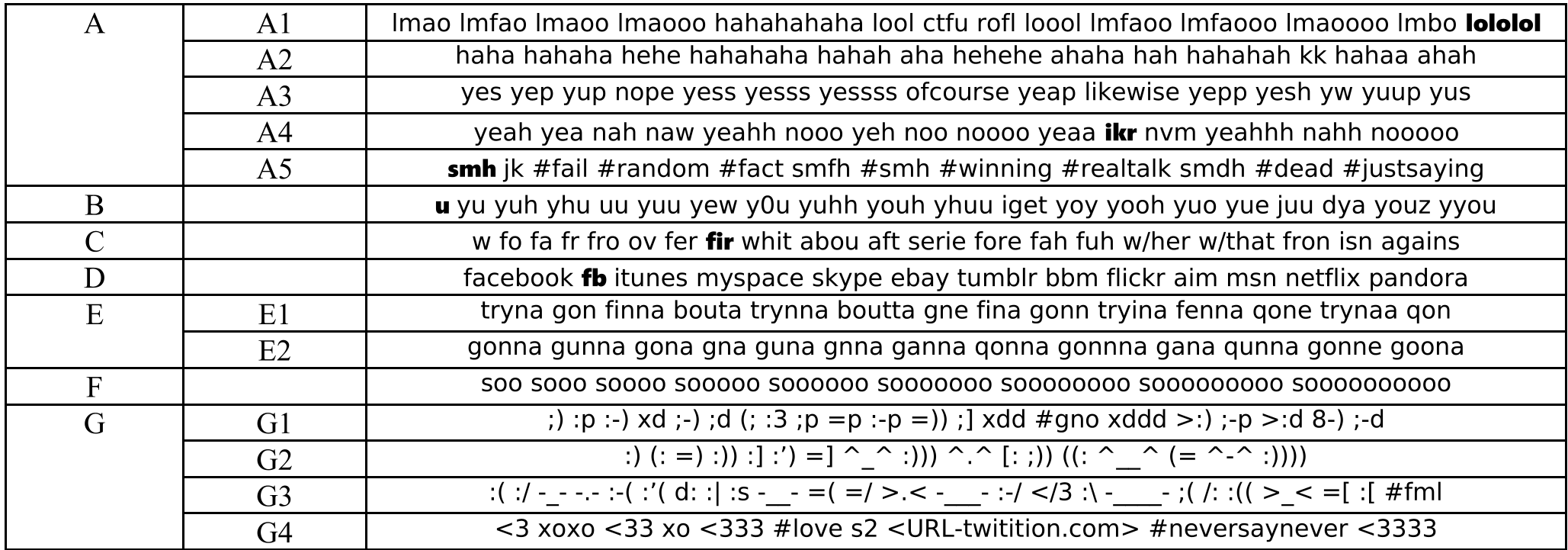 Figure 1: Comparison of slang variations (A1-A5) and emoticons (G1-G4) used to train the tagger.
Architecture of a Social Media Tagger
The framework moves beyond simple dictionary lookups. It looks at the context of a token (e.g., "frd" appearing after "add" likely indicates a noun/person).
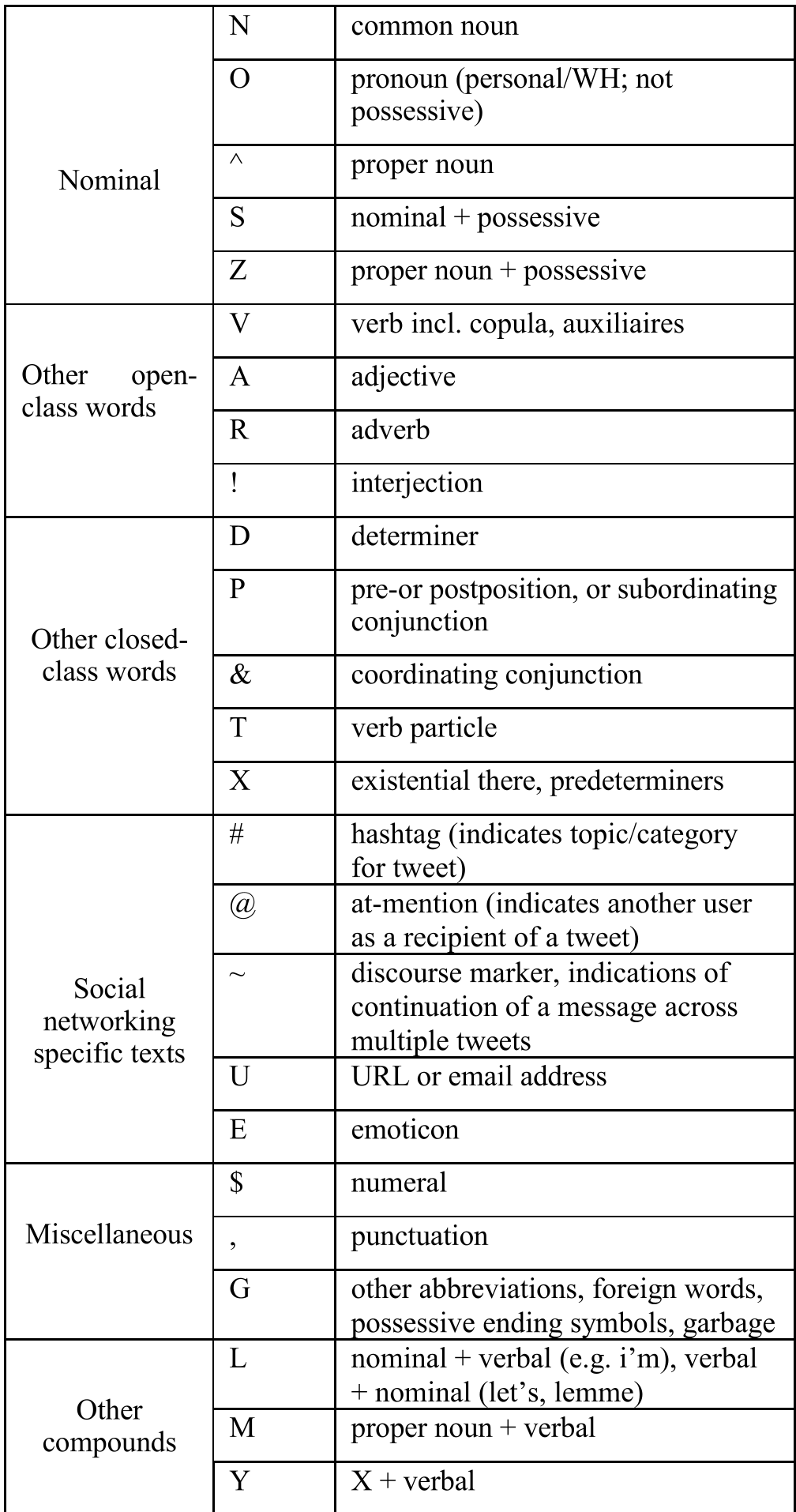 Figure 2: The expanded 25-tag schema designed for social networking specific texts.
Results: From Noise to Intent
The effectiveness of the method is demonstrated in intent extraction. Even when a user writes with zero punctuation or heavy slang, the tagger allows the system to distill the action (Verb) and the target (Noun).
Example Transformation:
- Input: "Yesss I visited museum of louvre ^ ^"
- Tagging: [Interjection] [Pronoun] [Verb] [Noun] [Preposition] [Proper Noun] [Emoticon]
- Extraction: Action: "visit" | Entity: "Museum of Louvre"
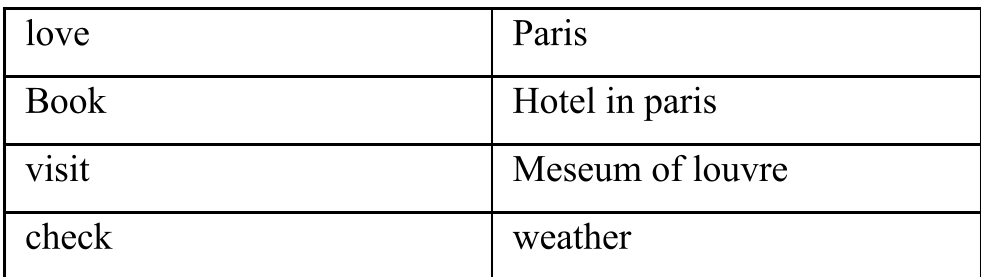 Figure 3: Semantic extraction results after applying the social media POS tagging.
Critical Insight & Conclusion
This work highlights a fundamental truth in AI: Domain adaptation is not optional. While modern LLMs are getting better at zero-shot understanding of slang, the precision of a dedicated POS tagger remains vital for downstream tasks like Information Extraction (IE) and Graph Construction where "near enough" isn't good enough.
The limitation of this work lies in its specificity to English-centric Twitter culture. Future pathways involve cross-lingual adaptation for platforms like Weibo or WhatsApp, where the "noise" follows entirely different linguistic patterns.