
Decoding Polyphony: Extracting Socio-semantic Intel from Collaborative Chats
Extraction of Socio-semantic Data from Chat Conversations in Collaborative Learning Communities
The paper introduces a novel socio-semantic data extraction tool for analyzing collaborative learning in chat conversations. It leverages Bakhtin's polyphonic theory and ontology-based text mining (WordNet) to identify topics, track participant contributions, and uncover implicit references, achieving a multi-voiced visualization of the discourse.
TL;DR
This research presents a system that transforms chaotic chat logs into structured "musical scores" of human collaboration. By blending Bakhtin’s Dialogism with Ontology-based NLP, the authors move beyond simple keyword counting to track how ideas (voices) resonate, conflict, and build upon one another in a learning environment.
Background: From Knowledge Acquisition to Participation
In the landscape of Computer-Supported Collaborative Learning (CSCL), a paradigm shift has occurred. We no longer view learning as the mere "acquisition" of facts, but as becoming a participant in a discourse. However, teachers and researchers struggle to quantify this. If a student is silent for ten minutes but then drops a "Knowledge Bomb" that pivots the entire group's direction, how do we measure that impact?
The Problem: The "Flat" Nature of Text
Current chat analysis tools often fail because they treat text as a linear stream of data. They miss the implicit references—the "I agree," the "Regarding that point," and the subtle shifts in topic. This ignores the socio-cultural reality that every utterance is "multi-voiced," carrying the influence of previous speakers.
Methodology: The Polyphonic Graph
The authors treat a chat conversation as a Polyphonic Score. The core of their approach is the creation of a Conversation Graph.
1. Identifying Implicit Voices
While some tools like ConcertChat allow users to draw explicit arrows between messages, most users are in too much of a hurry to do so. The authors developed patterns to detect implicit references:
- Pattern Matching: Identifying expressions like "I don't agree with your [subject]."
- Temporal Proximity: Short agreements (e.g., "Exactly") are automatically linked to the immediate predecessor.
- Transitive Linking: If C refers to B, and B refers to A, an implicit link is established between C and A.
2. Measuring "Voice Strength"
Instead of just counting words, the system calculates an utterance's Strength Value based on its influence. An utterance is considered "strong" if it is frequently referenced by subsequent important messages. This is conceptually similar to PageRank but applied to the temporal flow of a conversation.
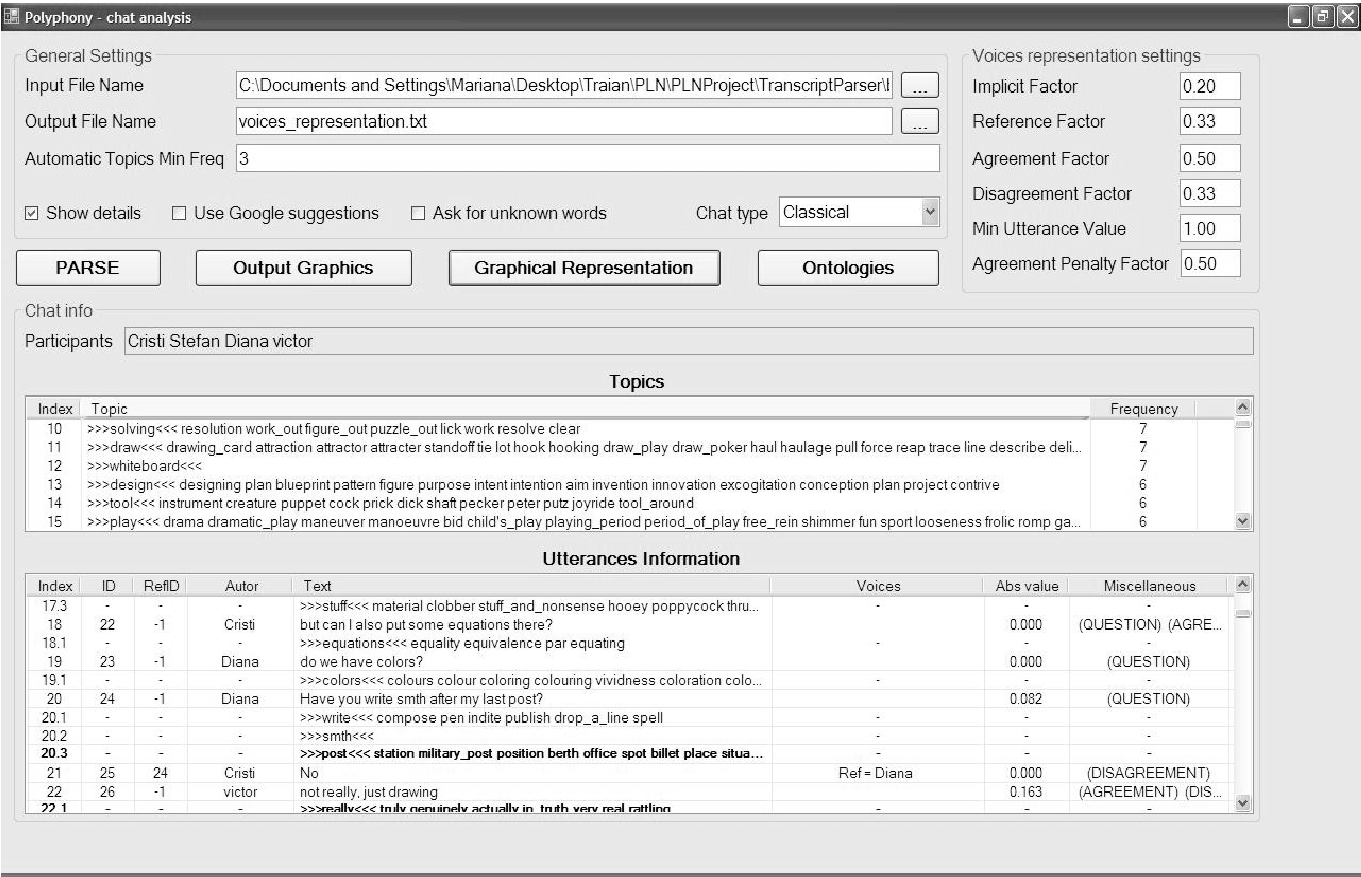 Figure 1: The graphical representation displays horizontal lines for each participant, with connecting lines representing explicit (blue) and implicit (red) references.
3. Competence Assessment via Ontologies
The system uses WordNet to go beyond exact word matches. If the group is discussing "Email" and a student mentions "SMTP" or "Electronic Mail," the system recognizes these as part of the same synset (concept group). Competence is then calculated by:
- Originality (penalizing redundant agreements).
- Conceptual density (matching the core topics of the session).
- Social impact (how often others refer to their ideas).
Experiments and Results
The tool was tested with students debating Human-Computer Interaction (HCI) and NLP topics. The graph-based segmentation allowed the researchers to see "inter-crossings"—moments where two distinct sub-topics were discussed simultaneously by different members of the same group.
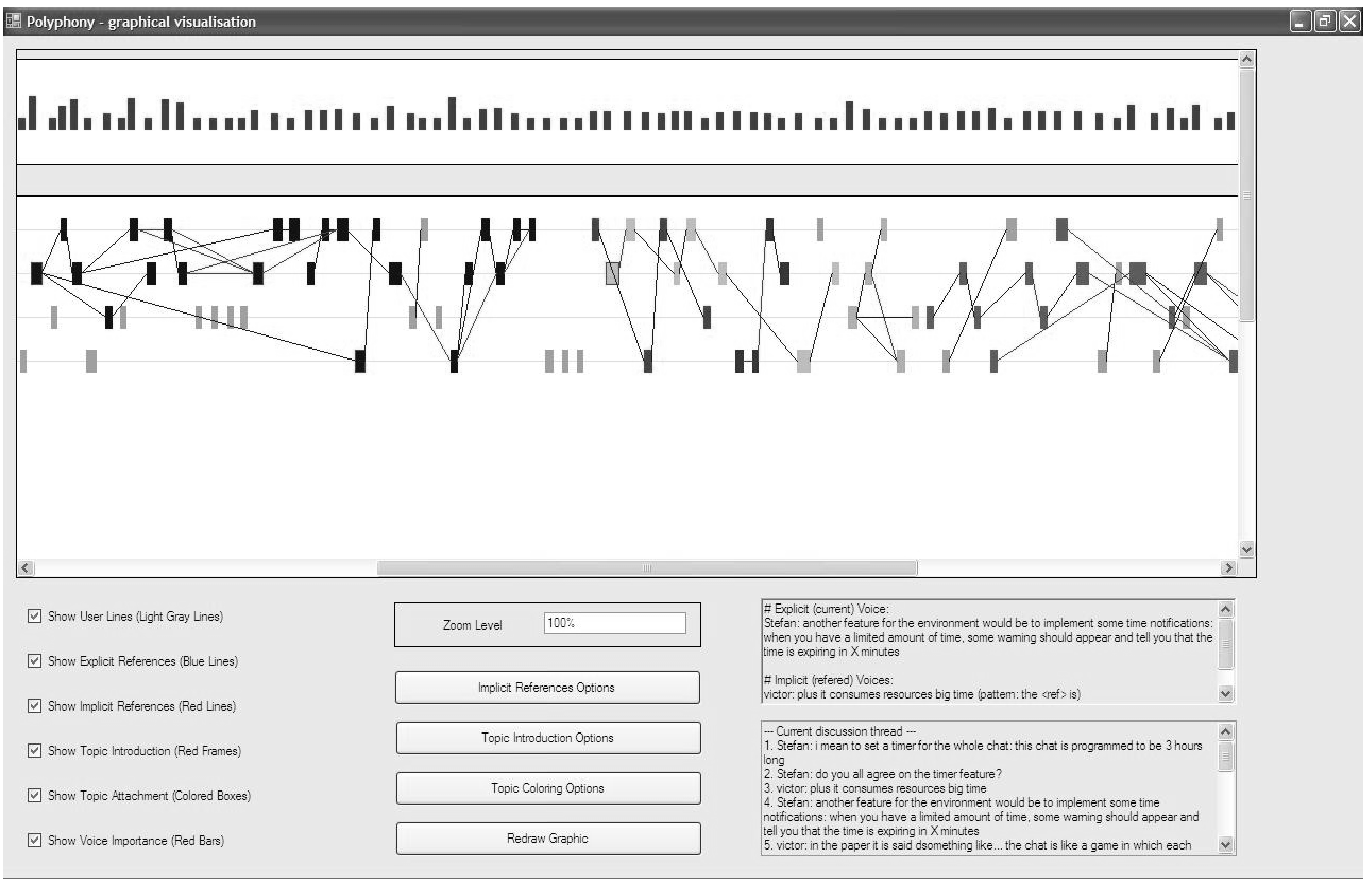 Figure 2: The Directed Acyclic Graph (DAG) used to perform topological sorting and calculate message importance.
Key findings included:
- Topic Persistence: The system could track when a topic was abandoned for a while and then successfully resumed.
- Participant Mapping: Clear visual distinction between "influencers" (whose voices echoed) and "followers."
Critical Insight: Why This Matters Today
While this paper uses classical NLP (WordNet and pattern matching), the theoretical framework is more relevant than ever. In the era of LLMs, we are still struggling with "long-context" and "multi-turn" reasoning. This paper's insistence on the Graph-based Nature of Dialogue provides a roadmap for how we might evaluate the reasoning quality of AI agents in collaborative swarms.
Limitations
The primary hurdle remains the manual definition of patterns for implicit reference discovery. While the authors proposed a semi-automatic version, the "messiness" of human slang and chat abbreviations requires more robust, likely Transformer-based, pattern recognition to be truly scalable.
Conclusion
By treating conversation as a structured, polyphonic entity rather than a flat log, Rebedea et al. provide a powerful lens for assessing collaborative learning. Future work integrating these dialogistic theories with modern embeddings could revolutionize how we monitor remote team productivity.