
Decoding the Digital Pulse: Insights from the World’s Largest MSM Social Network
Extremely Low Reciprocity and Strong Homophily in the World Largest MSM Social Network
This study presents a large-scale social network analysis of the MSM (Men who have sex with men) population using data from "Blued," the world’s largest MSM geosocial networking app. By analyzing over 11 million nodes and 838 million edges, the authors characterize unique interaction patterns, including extremely low reciprocity and strong geographic/age-based homophily.
TL;DR
Researchers have mapped the social architecture of the global Men who have sex with men (MSM) population using data from the app Blued. Analyzing 11.4 million users, the study reveals a world defined by "fleeting" connections: extremely low reciprocity, a heavy preference for younger partners, and a network structure that favors new encounters over stable friendships. This is the largest study of its kind, offering a blueprint for modern public health interventions.
Context: Beyond the Limitations of Surveys
For decades, understanding the social dynamics of the MSM population—a group disproportionately affected by HIV—relied on manual surveys and limited sampling. These methods often missed the "hidden" nature of the community. In the era of Geosocial Networking (GSN), apps like Blued provide an unprecedented lens into real-world behavior at a scale of hundreds of millions of interactions.
The "Fluid" Network: Why MSM Interaction is Different
The study identifies several "anomalies" when comparing the MSM network to general platforms like Facebook or Twitter:
1. The Reciprocity Paradox
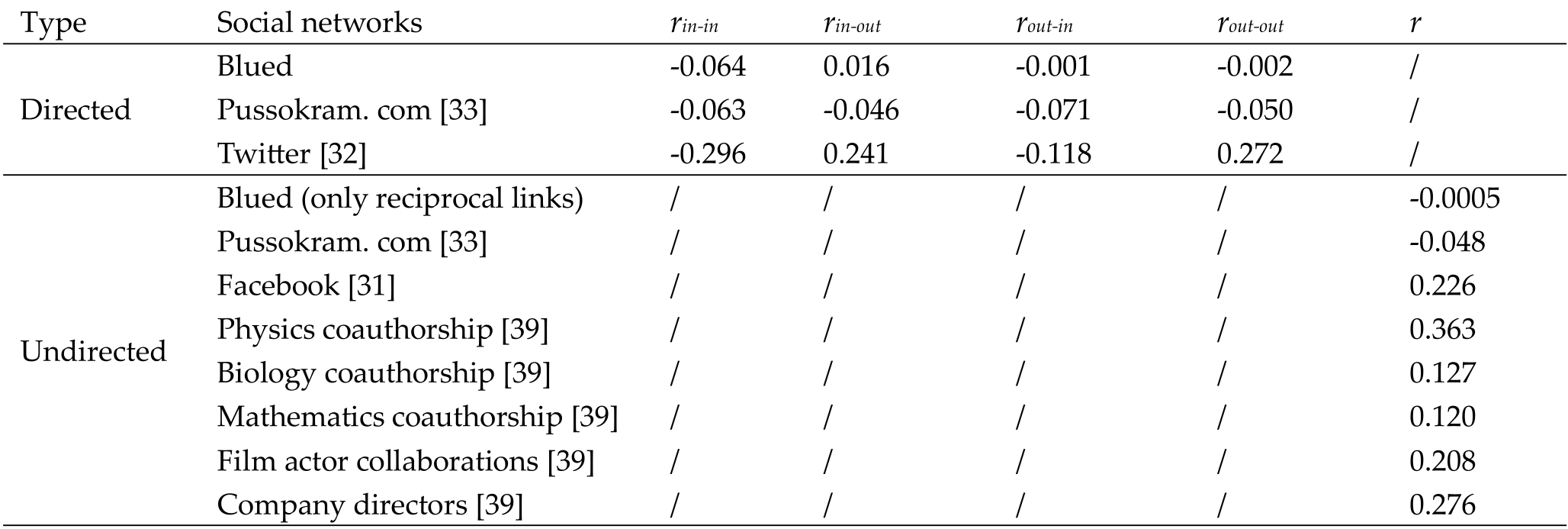
In most social networks, if you follow someone, they often follow you back (reciprocity). On Twitter, reciprocity is around 42%. In the MSM network, it is a staggering 4.7%.
- Insight: This suggests the platform is used less for "socializing" in the traditional sense and more for "discovery" and "exchange." Users establish one-way following ties to track interesting profiles without the social pressure of a mutual bond.
2. Disassortative Mixing
While people on Facebook tend to connect with others of similar popularity (assortative mixing), Blued users show disassortativity.
- Insight: Highly popular or active users frequently connect with "newcomers" or less-connected users. This reflects a high turnover rate of social ties, likely driven by seeking new partners for offline dating rather than maintaining long-term digital circles.
Methodology: Mapping 850 Million Edges
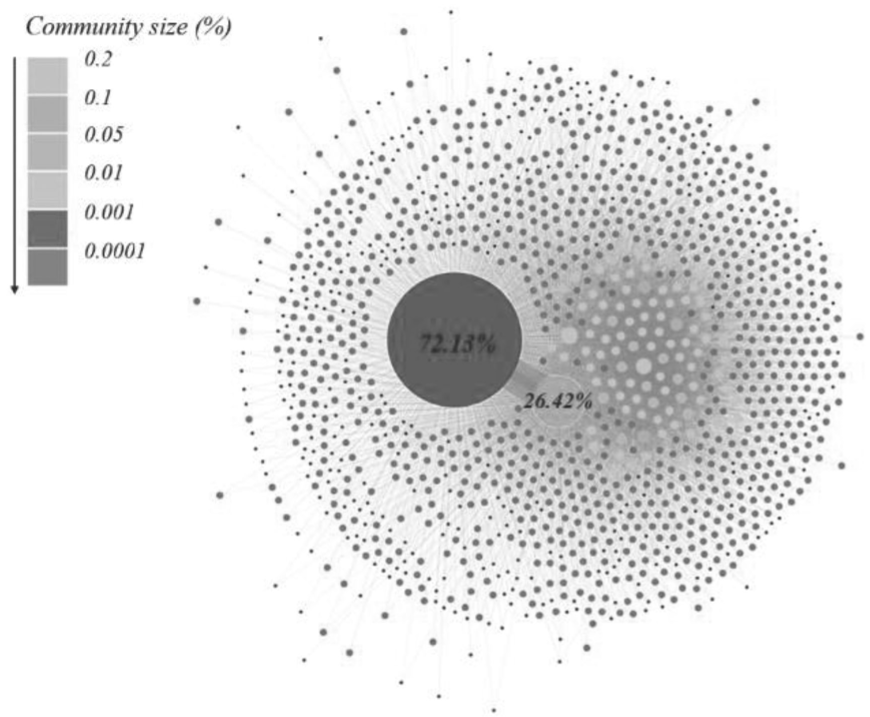
The research team used the Infomap algorithm to detect communities. Despite the vastness of the network, they found a "Giant Component"—a single community containing 72.13% of all nodes.
Key architectural features include:
- Boundary Nodes: Approximately 36% of nodes act as bridges between smaller clusters, maintaining global connectivity.
- Homophily: There is a strong "birds of a feather" effect regarding Geography. Users heavily favor others in the same province or country, confirming that digital interactions are primarily a precursor to physical meetings.
Demographics & Preferences
The data confirms a massive youth tilt: 75.88% of users are aged 17-29. Interestingly, users in their twenties are "excessively followed" by all other age groups. Furthermore, the study quantifies the popularity of "Sexual Roles" (Top, Bottom, Versatile), finding that while "Tops" are broadly popular, "Bottoms" face a statistical disadvantage in being selected as friends/follows.
Critical Insight: Implications for HIV Prevention
The structural findings have massive implications for public health:
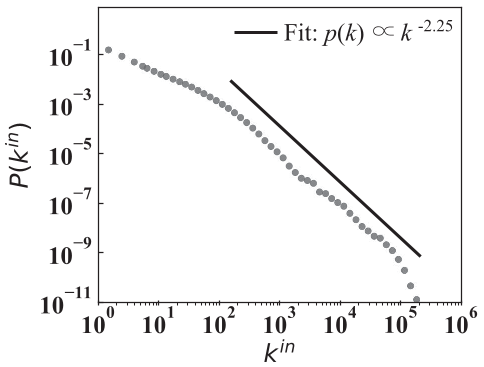
- Targeted Diffusion: Since "boundary nodes" connect different communities, health interventions (like PrEP awareness or HIV testing drives) should target these high-activity bridges rather than just the "celebrity" nodes with the most followers.
- The Geography Factor: High homophily in provinces with high HIV incidence (like Sichuan or Guangdong) suggests that digital "neighborhood" interventions are likely to be more effective than generic global campaigns.
Conclusion & Limitations
This work represents a shift from "small-data" sociology to "big-data" epidemiology. While self-reported data (age, role) remains a limitation common to all internet studies, the sheer volume of 14.7 million users provides a statistically robust foundation. Future research must now look at the temporal evolution—how these ties form and break over months—to truly master the rhythm of this digital community.
Takeaway: In the MSM digital world, connectivity is broad but shallow, and geographic proximity remains the ultimate "gravity" of social interaction.