
Eye-Gaze Analysis: Decoding Student Attention through Lightweight Deep Learning
Eye Gaze Analysis of Students in Educational Systems
The paper proposes an appearance-based eye-gaze estimation system tailored for educational environments, utilizing a customized LeNet-inspired Convolutional Neural Network (CNN). It maps eye images directly to 2D screen coordinates, achieving robust performance in "in-the-wild" conditions.
TL;DR
Researchers from the University of Patras have developed an end-to-end gaze estimation system designed for the "in-the-wild" constraints of distance learning. By combining the Viola-Jones algorithm for robust feature detection with a customized LeNet CNN for coordinate regression, the system achieves over 70% pixel accuracy on horizontal gaze tracking using only standard RGB webcams.
Context: Eye Gaze as a Proxy for Learning
In a physical classroom, a teacher intuitively senses a student's engagement by where they look. In the transition to distance learning, this vital feedback loop is lost. Most existing gaze-tracking solutions are either too hardware-dependent (requiring infrared sensors) or too fragile for home environments. This paper bridges that gap by positioning eye-gaze estimation as a software-only, appearance-based task that respects the messy reality of students' home setups.
Methodology: From Pixels to Screen Coordinates
The authors' approach follows a rigorous four-stage pipeline:
- Face & Eye Detection: Using the Viola-Jones algorithm, the system extracts the face and then locates eyes within a narrowed search space.
- Symmetry Resolution: A clever addition to the pipeline—if only one eye is detected (due to lighting or head tilt), the system uses facial symmetry and a "cone-shaped block search" to locate the missing eye.
- ROI Normalization: The eye regions are cropped and merged into a single 60x30 grayscale image, effectively isolating the features that matter for gaze.
- CNN Regression: Unlike classification tasks, this model performs regression. It outputs a 2D vector representing screen pixels.
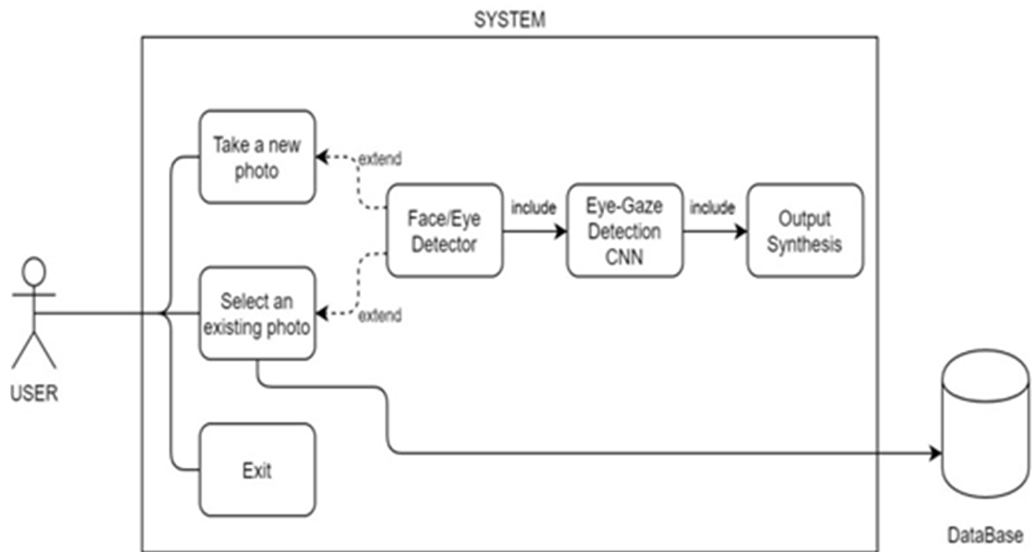 Fig 1. The overall system workflow from raw video input to regressed gaze coordinates.
Architecture Deep Dive
The core "engine" is a CNN that imitates LeNet but is optimized for regression. It uses:
- Two Convolutional stages: Featuring 128 filters ( kernel) and ReLU activations to extract distinctive textures from the eye area.
- Batch Normalization & Dropout: These are critical for ensuring the model doesn't overfit to specific facial features, allowing it to generalize to new students ("User-Independent" performance).
- Sigmoid Output: Since the output is normalized, the Sigmoid function facilitates the final 2D coordinate mapping.
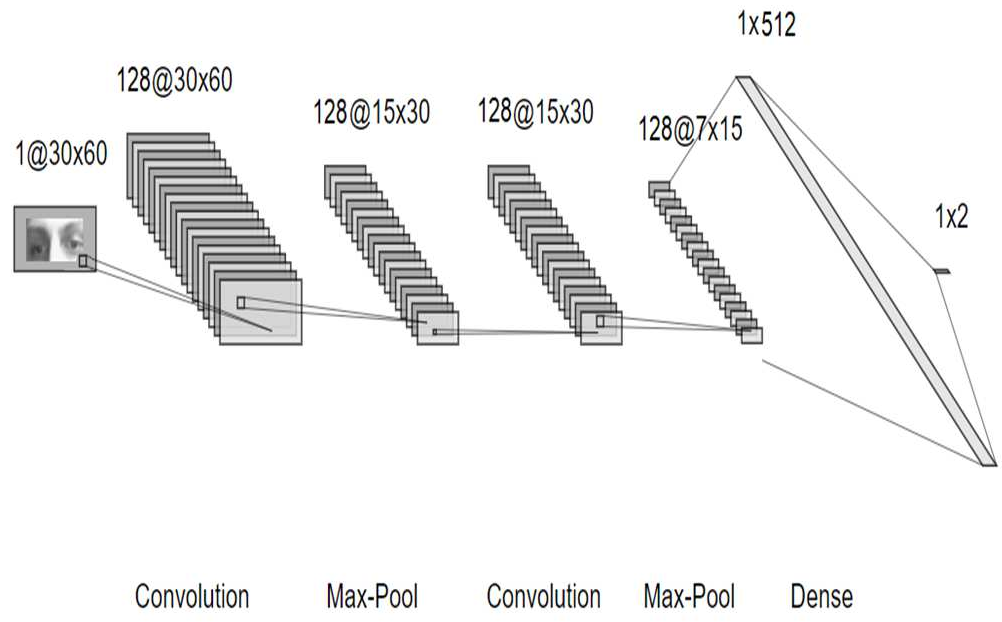 Fig 2. The specific CNN structure designed to handle 2D gaze vectors.
Experimental Insights
The model was trained on the MPIIGaze dataset, which captures users in the wild during their daily routines.
- Horizontal vs. Vertical: The system performs better on the x-axis (72.4% accuracy). The authors attribute the lower y-axis accuracy (60.2%) to the vertical compression of the eye region during cropping, which makes fine-grained vertical movement harder to distinguish.
- Attention Mapping: While exact pixel accuracy is difficult, the system excels at Regional Attention. When dividing the screen into a grid (9 areas), the accuracy jumps to 80%. This is more than sufficient for identifying if a student is looking at the video lecture, the chat, or looking away from the screen entirely.
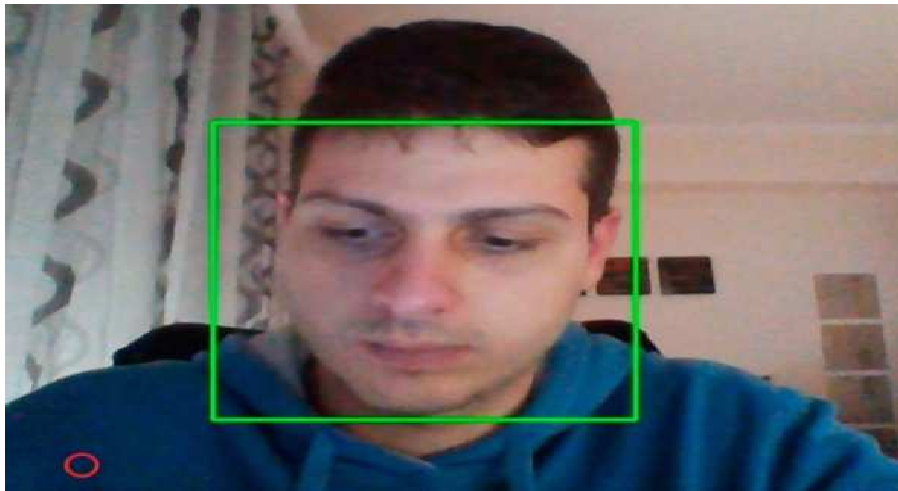 Fig 3. Practical execution: The red circle indicates the predicted point of gaze on the screen.
Critical Analysis & Future Directions
The strength of this work lies in its scalability. By utilizing a LeNet-style architecture, the model remains computationally "light" enough to run in real-time on standard laptops without requiring high-end GPUs.
Limitations noted:
- Head Pose Bias: Performance currently degrades if the user’s head is significantly tilted.
- Resolution Dependency: While the authors claim camera independence, the quality of facial landmarking naturally scales with input resolution.
The Road Ahead: The authors suggest incorporating 3D head pose vectors directly into the CNN to "re-calibrate" the gaze in real-time. This would move the system from a 2D image-map to a more robust 3D geometric understanding of the user.
Conclusion
This research moves us one step closer to truly "empathetic" educational software—systems that don't just deliver content, but actually "watch" and adapt to the student's level of focus.