
Eye Movements: The Secret Ingredient for Emotional AI in Image Classification
Can Eye Movement Improve Prediction Performance on Human Emotions Toward Images Classification?
This study investigates whether integrating eye movement data with low-level image features can improve human emotion prediction in image classification. The research evaluates two distinct datasets (abstract and context-rich images) using Support Vector Machines (SVM) to demonstrate that gaze patterns significantly enhance accuracy in "leave-one-image-out" cross-validation scenarios.
TL;DR
Can a machine understand how you feel by watching where you look? This research proves that eye-tracking data provides a vital layer of "implicit feedback" that traditional image analysis lacks. In scenarios where a system knows a user's habits but faces a new image, adding gaze data boosts emotion prediction accuracy by nearly 9% for complex, real-world images.
The "Semantic Gap" and the Motivation
In the world of Content-Based Image Retrieval (CBIR), we've gotten good at finding "red cars" or "sunny beaches." However, Emotion Semantic Image Retrieval (ESIR)—finding images that make a user feel "happy" or "afraid"—is much harder.
The core problem is the Semantic Gap: low-level features like color histograms and texture don't inherently contain "fear" or "joy." Furthermore, emotions are subjective. An abstract painting might look like a mess to one person but trigger deep sadness in another. The authors hypothesize that eye movements act as a bridge, revealing which specific parts of an image are triggering a user's emotional response.
Methodology: Fusing Vision and Biometrics
The researchers compared two types of visual stimuli:
- Abstract Images: No recognizable objects; purely shapes and colors.
- Contextual Images: Figurative art containing real-world objects and interactions.
Using the "Eye Tribe" tracking device, they captured gaze coordinates at 30Hz while 20 volunteers viewed 100 images from each set.
The Feature Fusion Pipeline
The system doesn't just look at the eyes; it combines three "low-level" image features with the gaze data:
- Color: RGB Histograms.
- Shape: Sobel descriptors.
- Texture: Gabor filters.
 Fig 1. Examples of stimuli used: Abstract (Non-context) vs. Figurative (Context).
Experimental Insights: When Does Gaze Matter?
The study used two critical validation frameworks that reveal the method's strengths and weaknesses:
1. Leave-One-User-Out (Predicting a New Person)
When trying to predict how a stranger feels based on the gaze patterns of others, the gaze data was not helpful. It actually degraded performance in some cases. This suggests that emotional gaze patterns are highly idiosyncratic—one person’s "stare of fear" might be another's "stare of curiosity."
2. Leave-One-Image-Out (Predicting a New Image)
This is where the method shines. If the model knows the user's specific behavior and is shown a brand-new image, the eye movement data significantly clarifies the emotional intent.
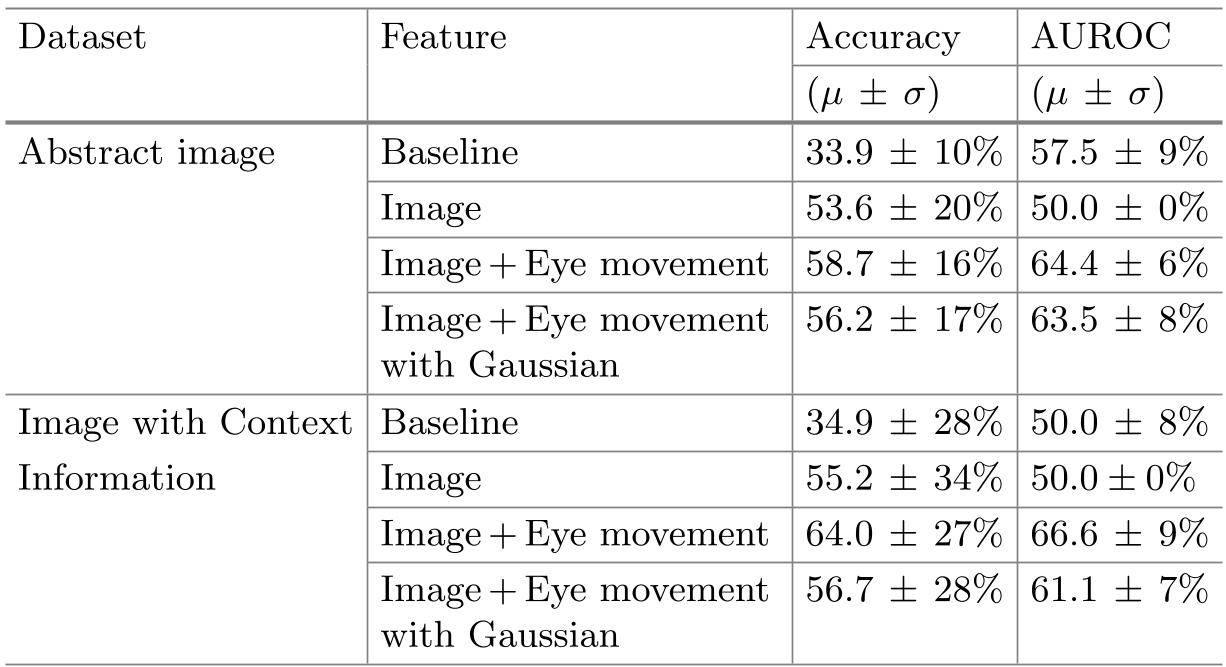 Table 2. Significant performance gains observed in the Leave-One-Image-Out framework.
Key Finding: The Gaussian Blur Trap Interestingly, the common practice of applying Gaussian blur to eye-tracking data (to create smooth heatmaps) actually reduced accuracy. The "raw" coordinates were more descriptive, suggesting that the precise trajectory of the eye carries more emotional weight than a general "area of interest."
Critical Analysis & Future Outlook
The study confirms that implicit feedback is a powerful tool for personalized AI. While image features alone can provide a baseline, they cannot account for the subjective "imagination" required to process abstract art or the complex narratives in figurative art.
Limitations:
- Scalability: Eye-tracking hardware is still not standard for most consumers (unlike webcams).
- Generalization: The model struggled to generalize across different users, highlighting the need for "Zero-shot" emotional transfer learning in future research.
Conclusion: If you want an AI to truly understand human sentiment, you can't just look at the picture—you have to watch the person watching the picture. As eye-tracking becomes more common in VR/AR headsets, this "gaze-augmented" emotion classification will likely become a standard feature of personalized digital experiences.