
Eye of the Mind: Transitioning from Text-Only to Visual-First Social Coding
Eye of the Mind: Image Processing for Social Coding
This paper introduces the concept of "Eye of the Mind," a vision for leveraging image processing and machine learning in social coding platforms. It substantiates the increasing prevalence of visual content in developer communications on StackOverflow and Bugzilla and proposes automated tools for image retrieval, summarization, and synthesis to augment textual software artifacts.
TL;DR
In the world of social coding (GitHub, StackOverflow, Bugzilla), a picture is literally worth a thousand lines of code. This paper presents empirical evidence that image sharing among developers is sky-rocketing. It argues that the next frontier for Software Engineering (SE) tools isn't just better NLP, but robust Image Processing to automatically understand, summarize, and even synthesize visual artifacts like screenshots and error logs.
Background: The Visual Blind Spot in SE
While social networks like Instagram have long been visual-primary, software engineering tools remain stuck in a "text-only" paradigm. We have advanced models for summarizing code or generating commit messages, but they are often blind to the screenshots developers attach. This paper, presented at ICSE '20, attempts to bridge this gap by proving that these images aren't just "extra"—they are essential.
The Problem: Why Text is No Longer Enough
The author identifies a critical disconnect: as software becomes more UI-driven and "social," developers rely on visuals to convey complex runtime states, UI bugs, and configuration settings.
- Data Exclusion: Platforms and datasets (like SOTorent) often discard images, losing vital context.
- High Cognitive Load: Understanding a complex bug report without its accompanying screenshot often leads to slower "Time to Closure."
- Incomplete Automation: Chatbots and autocompletion tools cannot currently "see" what a user is complaining about if it's shown in a window capture.
Methodology: Proving the Power of the Pixel
The study utilized a massive dataset from StackOverflow (2.9M posts) and Mozilla's Bugzilla.
1. Trend Analysis
The author tracked the ratio of visual to textual content from 2013 to 2018. The result? A linear increase in images across all major programming tags (Java, Python, JS).
2. Crowdsourced Informativeness
By employing 168 professional developers via Amazon Mechanical Turk, the study analyzed over 22,000 images. The goal was to determine if the text could "stand alone."
- Result: 86.9% of developers agreed that without the image, the text was nearly unintelligible.
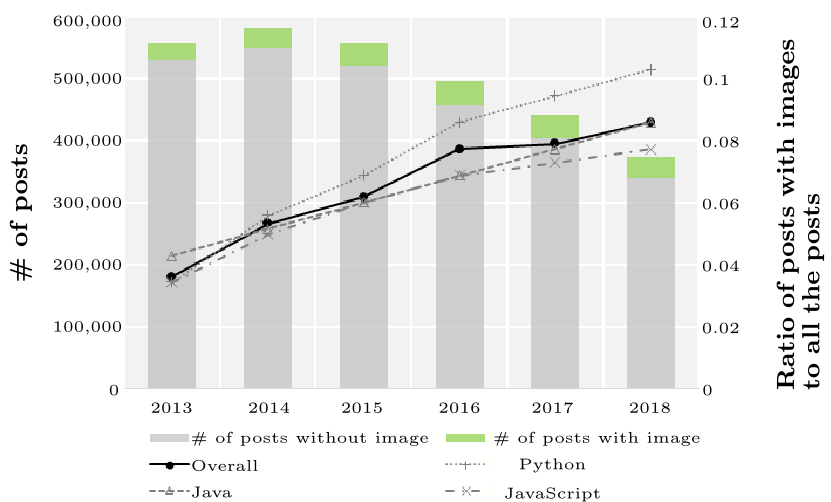 Figure 2 (from paper): Showing the steady rise of image-inclusive posts on StackOverflow.
The Core Insight: Software "Visual Naturalness"
One of the most profound arguments made is that image processing for software is actually easier than for self-driving cars.
- Geometric Simplicity: UI components are mostly rectangles, icons, and structured text grids—far less complex than the "randomness" of a river or a forest.
- Finite States: Software interfaces have a finite number of components, making object localization and recognition highly predictable.
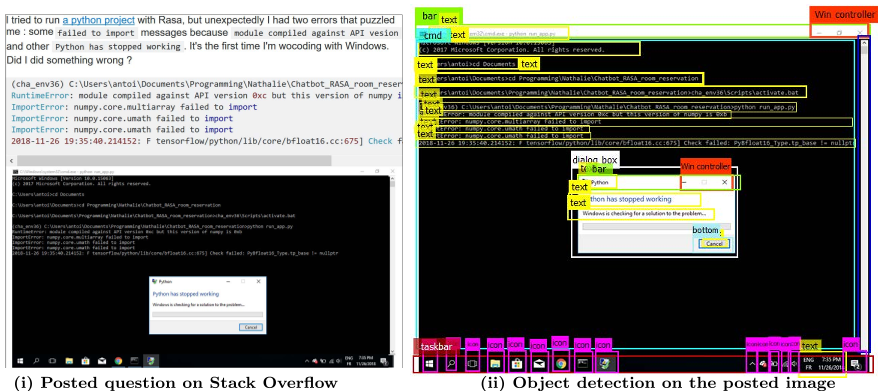 Figure 4: Demonstrating how current CV techniques can extract browser versions, battery status, and UI elements directly from a screenshot.
Experimental Battle Results
The paper doesn't just look at trends; it looks at efficiency.
- Time to Closure: On both StackOverflow and Bugzilla, posts with images were closed significantly faster (p-value < 0.05).
- Information Density: In a case study, a single image contained metadata (Windows version, firewall status, browser) that the developer totally forgot to mention in the text.
Deep Insight: The Generative Future
The author envisions a future where machines don't just read images but create them.
- Auto-Annotated Bug Reports: A tool could see a "Runtime Error" text, fetch the relevant UI screenshot, and automatically draw red boxes around the faulty menu items.
- Visual Documentation: Automatically generating release notes that include side-by-side visual comparisons of UI changes.
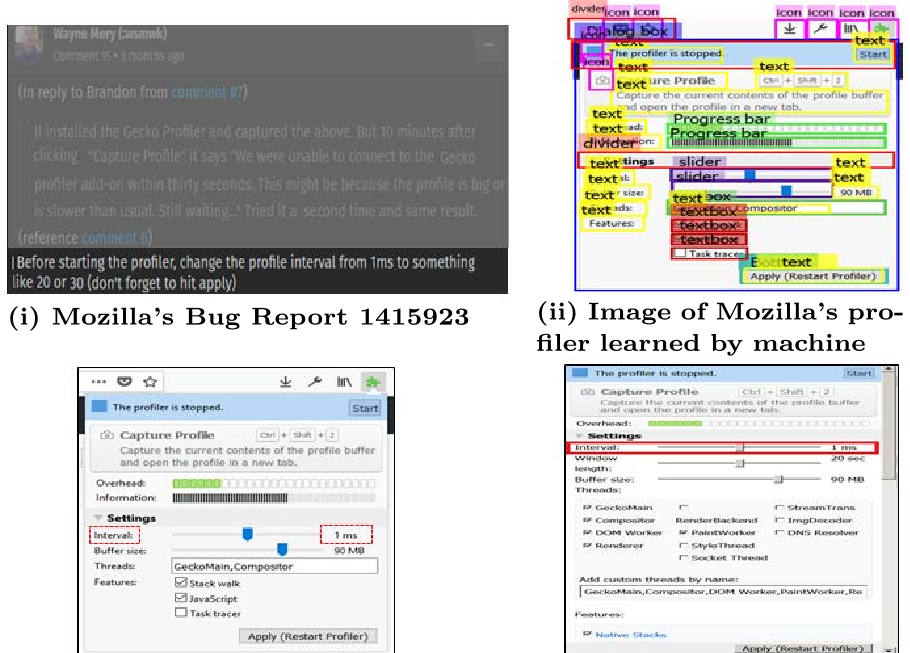 Figure 5: A comparison between a machine-generated annotated screenshot and a manually edited one.
Conclusion and Future Outlook
The "Eye of the Mind" paper serves as a wake-up call for the SE community. We are sitting on a goldmine of visual data that is currently being treated as "noise."
Key Takeaways:
- For Researchers: There is a desperate need for labeled "Software Image" datasets to train the next generation of SE-specific CV models.
- For Tool Builders: Integration of OCR and object detection into Issue Trackers could slash the time developers spend "describing" what is already visible in a screenshot.
- Limitations: The study focuses heavily on certain ecosystems (Mozilla/SO); how these visual trends translate to enterprise, closed-source environments remains to be seen.
In the near future, the most helpful "Code Assistant" might not be the one that reads your code, but the one that observes your screen.