
The Face of Quality: How Personality and Demographics Shape Crowdsourcing Success
The Face of Quality in Crowdsourcing Relevance Labels: Demographics, Personality and Labeling Accuracy
This paper investigates the correlation between crowd worker characteristics (demographics and personality) and the quality of relevance labels in information retrieval tasks. By comparing two Human Intelligence Task (HIT) designs on Amazon Mechanical Turk, the study identifies that location, personality traits like Openness and Conscientiousness, and reading habits are significant predictors of labeling accuracy.
TL;DR
Is a crowd just a collection of anonymous clicks, or does the "person behind the screen" determine the accuracy of your data? This study reveals that the quality of relevance labels in IR evaluation is deeply tied to worker characteristics. Key findings: Workers from specific regions, those with high Conscientiousness and Openness, and frequent book readers produce significantly more accurate results.
Background: Beyond the Black Box
In the world of Information Retrieval (IR), gold-standard labels are the lifeblood of search engine evaluation. While platforms like Amazon Mechanical Turk (AMT) provide scale, they are notorious for noise. Most researchers focus on how the task is built. But Gabriella Kazai and her team asked a different question: Who is doing the work, and does it matter?
Problem: The Limits of Traditional Quality Control
Current quality assurance techniques—like trap questions or "gold" checks—treat all workers as interchangeable units. However, this ignores the Inductive Bias inherent in different human populations. The authors argue that if we don't understand the demographics and personality of our crowd, we are blind to the systematic biases and error patterns they bring to the task.
Methodology: High-Bar vs. Low-Bar Task Design
To test how different "faces" of the crowd perform, the researchers designed two distinct HIT (Human Intelligence Task) environments:
- Full Design (FD): High pay ($0.50), strict qualifications (95%+ approval rate), and multiple trap questions.
- Simple Design (SD): Lower pay ($0.25), no pre-filtering, and minimal quality checks.
Both groups performed the same task: assessing the relevance of book pages for given search topics. Crucially, the workers also completed a BFI-10 personality test (measuring the "Big Five") and a demographic survey.
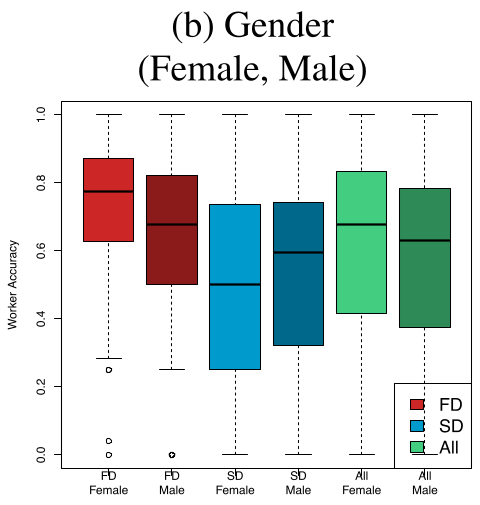 Figure 1: The survey used to capture the Five Factor Model (FFM) of personality.
Key Insights: Who are the Best Workers?
1. Geography and the "Location Gap"
The study found a massive performance disparity based on location. Workers from the US and Europe significantly outperformed those from Asia. Interestingly, the Full Design (the "high-standard" task) naturally attracted a crowd that was 64% American, while the Simple Design was dominated by workers from Asia (61%).
2. Personality as a Performance Predictor
The "Big Five" traits were not just psychological trivia; they were statistical predictors of accuracy:
- Conscientiousness: Higher scores (meaning the worker is disciplined and organized) led to more accurate labels.
- Openness: Workers curious about variety and new ideas were better at the cognitive task of interpreting search relevance.
- The "Socially Desirable" Trap: In the Simple Design (SD), personality traits didn't correlate as well with performance, likely because lower-quality workers were giving "socially desirable" (fake) answers to the personality questions.
3. Habits vs. Education
Interestingly, a worker's education level (e.g., University degree) was not a strong predictor of success. Instead, their reading habits were. Frequent book readers were much better at the high-cognitive task of evaluating document relevance than those who rarely read, regardless of their degree.
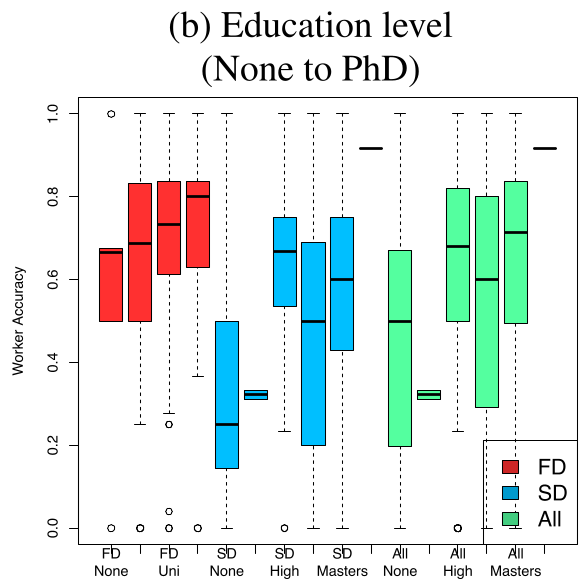 Figure 2: Accuracy distributions across different demographic categories in FD vs. SD.
Critical Analysis & Conclusion
This work challenges the "mechanistic" view of crowdsourcing. It suggests that if you want high-quality IR labels, you aren't just looking for an "average" crowd; you are looking for conscientious, middle-aged females who enjoy reading and reside in regions with high language proficiency relative to the task.
Limitations & Future Outlook
While the study is robust, it highlights a potential ethical dilemma: if certain demographics perform better, will platforms begin to "gate" tasks based on personality or location? This could lead to a digital divide.
Takeaway: When building specialized datasets, don't just optimize the pay and the UI—consider who your task is "inviting" to the table. The "face" of your crowd is the "face" of your data quality.