
Facebook’s Language Gap: A Semiotic Deep Dive into Elderly vs. Young Users
Communicability on Facebook: evaluating elderly and young users using MAC-g method
This research evaluates the communicability of Facebook by comparing the interactions of elderly users (70-90 years) and young users (30-50 years). Using the MAC-g (Communicability Evaluation Method for Collaborative Systems), the study identifies semiotic breakdowns and assesses how age-related limitations affect the understanding of the designer's intent in social networking.
TL;DR
Is Facebook truly "intuitive"? This study uses the MAC-g method—a framework based on Semiotic Engineering—to prove that for elderly users, the interface speaks a foreign language. By comparing users aged 70+ with those in their 30s-40s, the research reveals that technical metaphors and low-visual contrast create massive "communicability breakdowns" that discourage silver-surfers from staying socially connected.
Context: Beyond Simple Usability
While "Usability" asks if a user can complete a task, Communicability asks if the user understands what the designer meant. In collaborative systems like Facebook, this communication isn't just between the human and the machine, but between the designer and the social group. As the global population ages, the digital divide is no longer just about access to hardware; it’s about a failure in the "metacommunication" between the designer and the user.
Methodology: The MAC-g Approach
The researchers employed the MAC-g (Communicability Evaluation Method for Collaborative Systems). Unlike standard user tests, MAC-g categorizes every hesitation, error, or vocalization into specific "tags" representing different types of communication failures.
The Test Setup
- Participants: 5 Elderly (70-90 years) vs. 5 Younger adults (30-50 years).
- Tasks: 1) Initiating a chat, 2) Sharing a post, 3) Liking a public page.
- Physicality: A mobile lab was used to reach elderly participants in their homes to ensure a natural yet controlled environment.
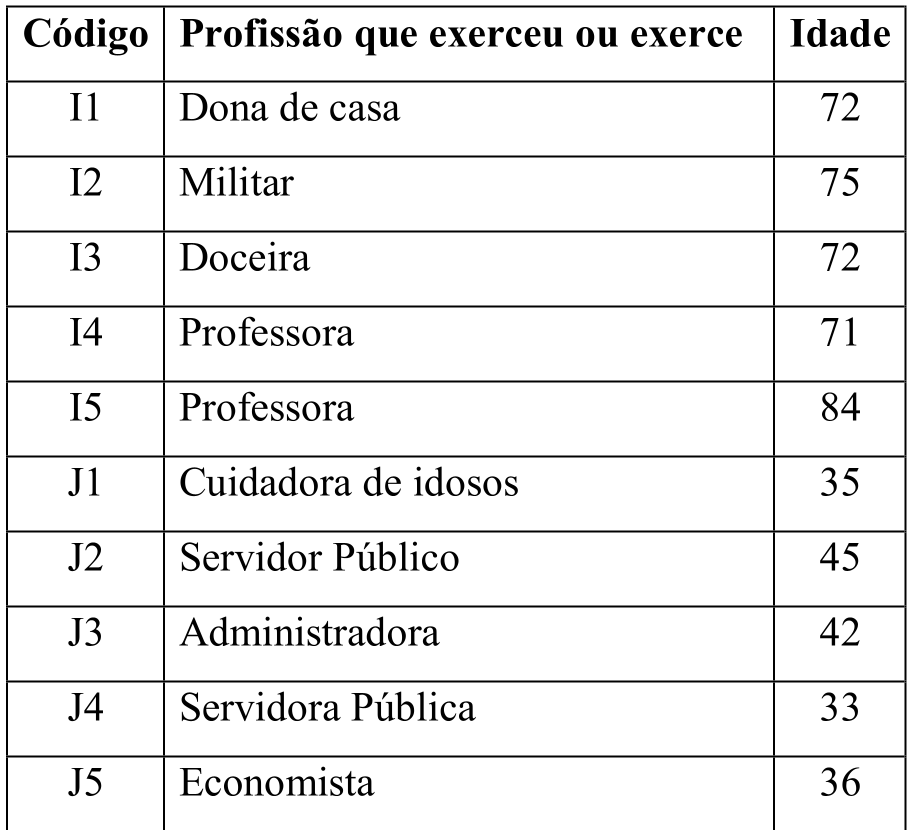
Key Findings: Where the Dialogue Breaks Down
1. The "What is this?" (O que é isto?) Crisis
The most frequent tag for the elderly was "What is this?" (31%). This indicates a fundamental conflict between the designer's metaphors and the elderly user's world view. For instance, icons for "tagging people" or "sharing" were often unrecognizable without explicit text labels.
2. Sensory and Motor Barriers
The tag "Ué, o que houve?" (Huh, what happened?) occurred 17% of the time for elderly users, often due to:
- Low Contrast: Elements in shades of gray were invisible to users with reduced visual acuity.
- Lack of Feedback: When a connection failed or a button was missed, the elderly users blamed themselves rather than the system.
3. Efficiency Gap
The data showed a stark contrast in performance efficiency:
- Average Time: Elderly users took 18 minutes on average, compared to 9 minutes for younger users.
- Task Completion: While 4/5 young users finished all tasks perfectly, zero elderly users completed the first task (Chat) exactly as expected, often getting lost in friend-search sub-tasks.
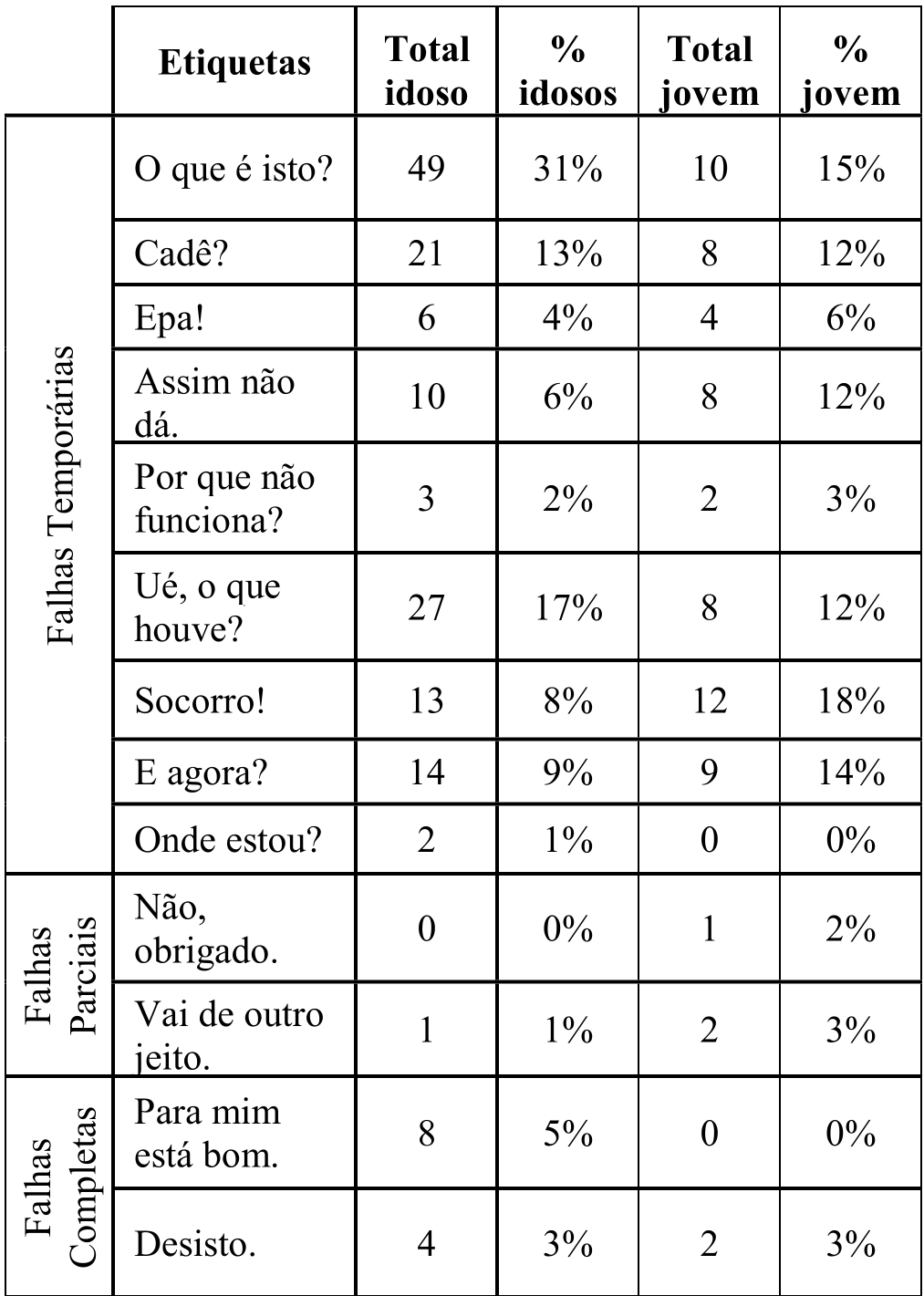
Deep Insight: Reconstructing the Semiotic Profile
The study concludes by contrasting two "Semiotic Profiles"—the message the designer thinks they are sending versus what they should be sending.
- The Current Message: "I designed this for a dynamic, young user who understands 'social media-ese' and can troubleshoot their own connectivity."
- The Required Message: "I designed this for someone who values clarity over style, prefers text over abstract symbols, and needs the system to be an active guide during errors."
Critical Analysis & Conclusion
Takeaway
The core contribution of this work is demonstrating that aging is a cultural transition in the digital world. The struggle is not just cognitive decline, but a mismatch in "signification systems." Facebook’s reliance on gray-on-white text and icon-heavy navigation creates an unintentional "age gate."
Limitations & Future Work
The study was conducted with a small sample (N=10) and focused on individual interactions within a collaborative tool. Future research should look at inter-generational interaction (e.g., a grandchild helping a grandparent) to see how "translated" communicability via a third party changes the user experience.
Final Thought: To build inclusive social networks, we must stop designing for "users" and start designing for "conversations" across generations.