
Digital Resistance: How Andean Community Radio Navigates the Facebook Era
The Use of Facebook in Community Radio: A Quantitative Analysis of the Andean Community of Nations
This study presents a quantitative analysis of how community radio stations in the Andean Community of Nations (Bolivia, Colombia, Ecuador, and Peru) utilize Facebook to enhance social cohesion. By evaluating 90 days of Fanpage data via Fanpage Karma, the research identifies Peru as the leader in management and engagement metrics despite Colombia having the largest volume of community stations.
TL;DR
Community radio has always been about "giving the word back to the people." But in the age of the Network Society, that word is increasingly digital. This research quantifies how community stations in the Andean Community of Nations (CAN)—Bolivia, Colombia, Ecuador, and Peru—are using Facebook. While the potential for deep social integration is high, the study reveals a stark "participation gap" where stations broadcast content but fail to engage in meaningful dialogue.
Background: This work acts as a critical benchmark, moving beyond qualitative praise for community media into hard data analytics. It positions community radio not just as a cultural relic, but as a potential node in modern digital ecosystems.
The Core Tension: Broadcast vs. Interaction
The fundamental promise of community radio is horizontality—the idea that the listener and the sender are interchangeable. However, the authors argue that many stations treat Facebook as a "digital megaphone" rather than a town square.
The researchers highlight a critical gap:
- Technological Stagnation: Fear of evolution keeps some stations in archaic processes.
- The Digital Divide: Lack of economic resources and training prevents stations from moving past simple radio production into "integrated language" (word, image, and sound).
- Relationship Management: In the industry, social media is for closeness; in community radio, it is often misused as mere distribution.
Methodology: Measuring the "Fanpage" Pulse
The study utilized Fanpage Karma to audit community radio performance over a 90-day period. They categorized metrics into four key pillars:
- Performance: Growth and participation levels.
- Recognition: Fan count and "likes."
- Management: Volume and variety of posts (Images, Videos, Links).
- Participation/Interactivity: The depth of engagement (Comments, Shares, Feedback).
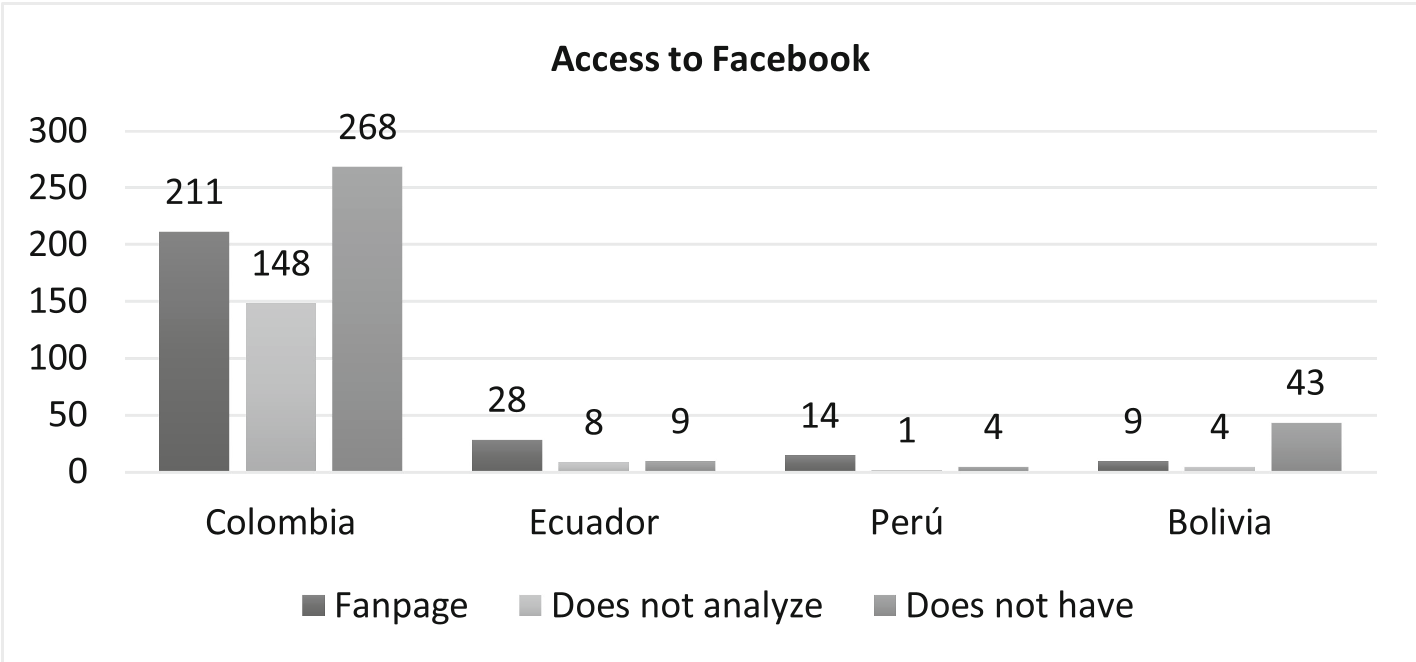 The gap in Colombia is striking: despite having 627 stations, institutional Facebook adoption remains low compared to Ecuador and Peru.
Key Findings: The Peruvian Peak and the Colombian Paradox
The results provide a fascinating look at regional disparities:
- The Paradox of Volume: Colombia has the highest number of community stations by far (627), yet only 34% have an active Fanpage. Conversely, Peru has fewer stations but 74% are active on Facebook.
- Content is King?: Peruvian stations lead the "Management" variable, averaging 7 publications per day. However, Ecuador dominates in Recognition, with an average of nearly 90,000 fans per station—far exceeding its neighbors.
- The Interaction Deficit: Across the board, interactivity is the weakest link. Even in Peru—the most active country—there are only 6.43 comments on fan publications. This suggests that stations are talking at the community rather than with them.
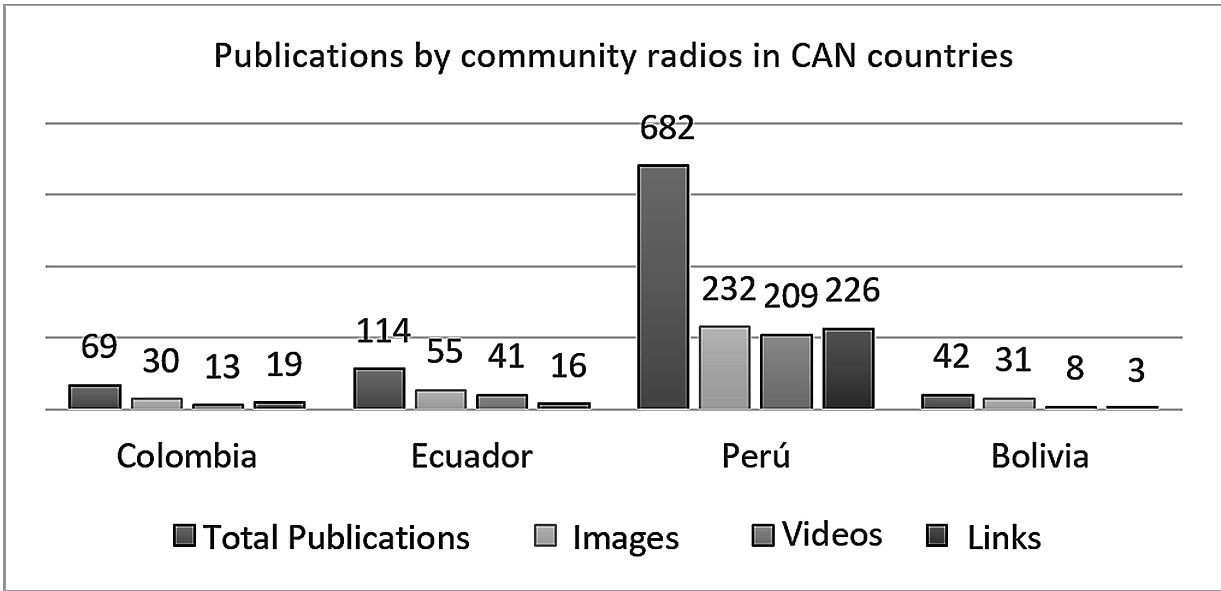 Activity levels vary wildly, with Peru showing high management of text and images, while Bolivia and Ecuador struggle with hypertextuality (links).
Critical Insight: Beyond the "Like"
The study concludes that Facebook shouldn't be seen as a "panacea." The real value of community radio lies in its ability to facilitate social change.
Takeaway for Practitioners:
- Multimedia is Essential: Video is a powerful tool to overcome the "audio-only" limitation of radio, yet it remains underutilized in Colombia.
- Hypertextuality Matters: Links are vital for connecting local struggles to global contexts.
- Feedback is the Mission: Without responding to comments, community radio loses its "alternative" status and becomes just another corporate-style broadcaster.
Conclusion & Future Look
This paper serves as a wake-up call for community broadcasters. While they have successfully entered the digital arena, they are currently losing the battle for Engagement. Future survival depends on whether these stations can translate their historical "face-to-face" trust into the virtual domain without losing their cultural soul.
Limitations: The study is strictly quantitative. Future research should look at what is being said (qualitative content analysis) to determine if the digital discourse truly promotes democratization or if it's merely echoing commercial trends.