
Facebook’s Explore Feed Fiasco: A Case Study in Algorithmic Alienation
Facebook Explore Feed: Perception and Consequences of the Experiment
This paper investigates the impact of the Facebook Explore Feed experiment, which bifurcated the News Feed into personal and public sections across six countries including Slovakia. Using a survey-based methodology, the study reveals how this algorithmic shift drastically reduced organic engagement for media organizations and sparked widespread user dissatisfaction.
TL;DR
In late 2017, Facebook executed a radical experiment in six countries, including Slovakia, by splitting the News Feed into two: one for friends and one for everyone else (media, firms, publishers). The result? A catastrophic drop in organic reach for businesses and a wave of user frustration that drove younger audiences toward Instagram. This paper explores the "why" behind the failure of the Explore Feed.
Problem & Motivation: The War on Clutter
Facebook's primary challenge is the "Information Overload" problem. With over 150,000 factors in its ranking system (historically known as EdgeRank), the goal is to predict what users want to see. The Explore Feed was born from an intuition that users wanted a "cleaner" experience—separating private social life from public content.
However, the authors point out a critical flaw: by making public content (news, media, organizations) harder to find (requiring an extra click), Facebook broke the discovery loop that keeps users engaged.
Methodology: Listening to the "Vanguard"
To understand the impact, the researchers partnered with Ringier Axel Springer to survey users of Noizz.sk, a site catering to the 15-35 demographic—the digital natives most sensitive to UI/UX changes.
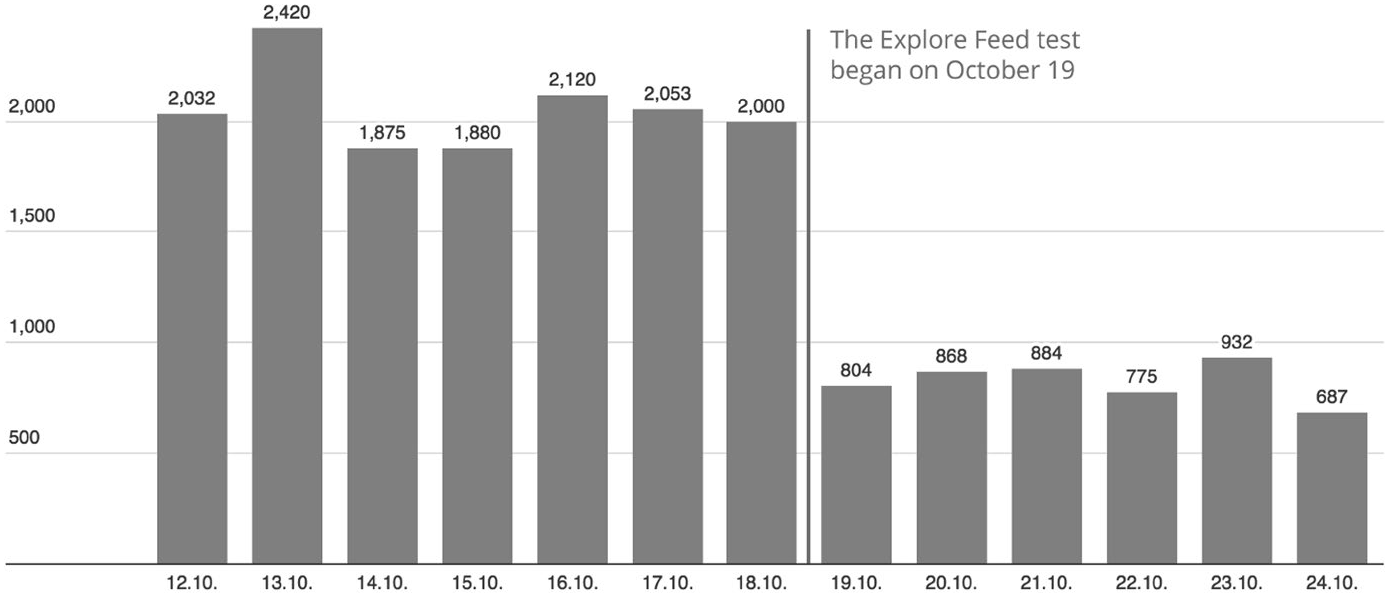 Fig 1: The dramatic cliff-edge drop in engagement for the top 60 Slovak media profiles once the Explore Feed was implemented.
Key Insights: Why it Failed
The paper highlights several psychological and technical reasons for the experiment's failure:
- Reduced Freshness: 76% of users reported seeing outdated posts (hours or days old) in their primary feed because the volume of "friends-only" content wasn't enough to keep the feed fresh.
- User Friction: 38% of users clicked the Explore Feed icon every visit, but the vast majority found the extra step annoying rather than helpful.
- Loss of Purpose: 73% of respondents felt Facebook was "losing its initial purpose." Instead of feeling more connected to friends, users felt they were missing out on the broader world.
Quantitative Results
The survey provided a bleak outlook for the platform during the test:
- Negative Satisfaction: 70% disliked the feature immediately; after 3 months, 64% still hated it.
- Engagement Decay: Interactions like likes and comments dropped by 4x for major publishers.
- Platform Flight: 57% of users used Facebook less, while 38% started migrating to other platforms, notably Instagram (incidentally also owned by Facebook).
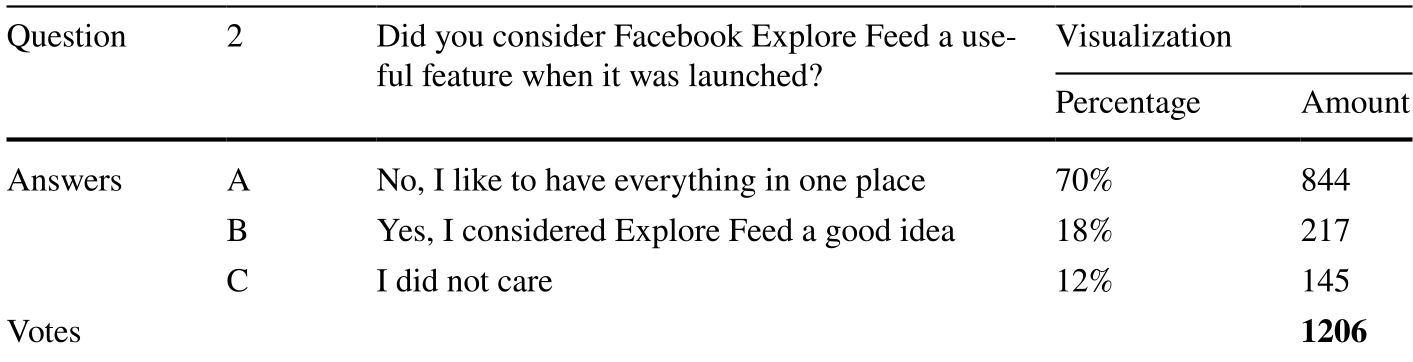 Table 1: 70% of respondents preferred the old unified layout over the split feed.
Critical Analysis & Conclusion
The Explore Feed experiment serves as a cautionary tale for tech giants. While the intention was to "prioritize meaningful social interactions," the execution ignored the Inductive Bias of social media users: they don't just go to Facebook to see what their friends had for lunch; they go for a curated blend of personal updates and global news.
Takeaway for the Industry: Radical UI changes should be incremental. Moving content to a "second tab" is often the "kiss of death" for organic visibility. For publishers, it highlights the danger of Platform Dependency—when the algorithm changes the rules of the game, those without a direct relationship with their audience (e.g., email newsletters) are the first to suffer.
Limitations: The study is geographically limited to Slovakia and focuses on a younger demographic. However, as the authors argue, if the most "tech-flexible" generation rejected the change, the broader population likely felt even more alienated.