
Digital Immortality vs. The Walled Garden: Can We Save Facebook from Itself?
What happens when facebook is gone?
This paper explores the technical and ethical challenges of archiving personal data within Facebook's "walled garden." It proposes a multi-strategy framework for data extraction, including a prototype browser extension, to preserve digital heritage in the face of platform instability or account deactivation.
TL;DR
In a world where our memories are increasingly stored in the "cloud," we face a terrifying reality: if a platform like Facebook disappears, our digital history goes with it. This paper identifies Facebook as a "walled garden" and proposes a technical framework to liberate personal data—ranging from wall posts to private messages—using browser-based extraction techniques that simulate human navigation to bypass technical silos.
The Fragility of Digital Memory
The motivation for this research is deeply human. The authors open with a sobering anecdote about a student who passed away, leaving his family only with what was publicly available on his profile. The most intimate and significant portions of his digital life—private messages and personal interactions—remained locked behind a password he could no longer provide.
As of 2009, Facebook was already hosting the creative energies of over 175 million people. Yet, the authors point out a glaring irony: while the Internet Archive preserves the public web, the most valuable parts of our personal lives are hidden behind logins and asynchronous JavaScript (AJAX) that standard bots cannot read.
The Problem: The "Walled Garden" Architecture
Current archiving methods fail for three primary reasons:
- Technical Barriers: Facebook’s heavy use of AJAX means content isn't in the static HTML; it requires active interaction (like clicking "Show More Posts") to load.
- API Limitations: The official Facebook API is intentionally crippled, preventing access to private messages or the "Wall" to keep users locked in.
- Legal Walls: Terms of Service strictly forbid scraping, even when a user is trying to download their own data.
Methodology: Liberating the Data
The authors categorize archiving into three levels: Bits (raw files), Content (text/images), and Experience (interactivity). To solve the extraction problem, they propose a framework based on "Browser Monkeys."
The Framework
Instead of a simple crawler, they suggest using a browser extension that leverages the browser's own JavaScript engine. This allows the tool to "see" the page exactly as a user does.
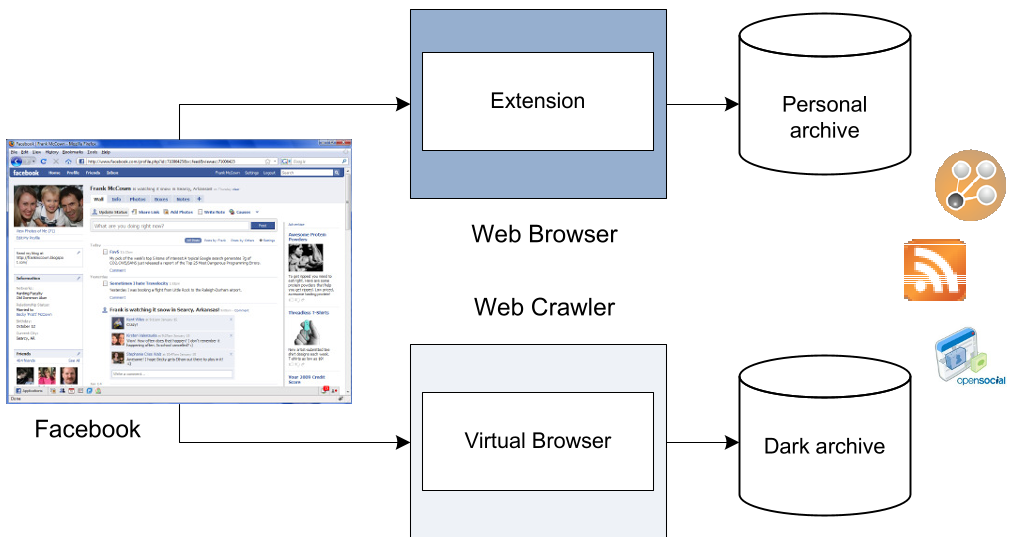 Table 1: The limitations of the official API vs. what is actually needed for a full archive.
The proposed Facebook Archiver extension works by:
- Simulating Interaction: Automatically triggering POST requests to expand "Show More Posts."
- DOM Snapshots: Capturing the state of the Document Object Model after the content has rendered.
- Polite Pacing: Delaying requests to mimic human speed, preventing the account from being flagged and banned.
Experimental Insight: Is it Practical?
The authors tested their approach on a typical account with two years of history.
- Volume: Approximately 600 wall posts.
- Technical Effort: Required about 12 AJAX cycles.
- Time: Total extraction time was roughly 4 minutes.
This proves that archiving is not computationally expensive; it is merely restricted by platform design.
Critical Analysis: A Look Back from the Future
Writing from 2026, it is fascinating to see how prophetic this 2009 paper was. While Facebook didn't "disappear," the issues of data ownership and digital legacy are more relevant than ever.
Limitations:
- Sustainability: Since the paper was written, Facebook’s architecture has become infinitely more complex, utilizing React and aggressive anti-bot measures that likely break simple DOM snapshots.
- Privacy Ethics: While the authors focus on personal archiving, the same tools could be used for malicious harvesting (a precursor to the Cambridge Analytica era).
Conclusion
This paper serves as an early warning for the "digital dark age." It argues that our reliance on massive, centralized organizations for the preservation of our personal history is a systemic risk. The "Facebook Archiver" wasn't just a tool; it was a political statement for data portability—a right that is now being encoded into laws like the GDPR, but one that still requires robust technical solutions to be truly effective.
Takeaway: Your digital life is only yours if you can take it with you.