
Facebook as a Community of Practice: Decoding Engineering Education through Social Network Analysis
Facebook and information security education: What can we know from social network analyses on Hong Kong engineering students?
This study presents a longitudinal social network analysis (SNA) of an online learning community formed on Facebook for a "Web Programming and Security" course at a Hong Kong university. Using Gephi and the Fruchterman Reingold algorithm, the researchers identified that the community exhibits scale-free properties and follows a power-law distribution in social interactions.
TL;DR
This research investigates how a Facebook discussion group can transform into a professional "Community of Practice" for cybersecurity students. By analyzing 505 messages from 109 participants, the authors prove that students don't just consume knowledge—they eventually take over the role of instructors, especially during high-stakes periods like final exams.
Background: The Paradigm Shift in Security Education
In the 21st century, information security is no longer just "military-grade encryption" or "operating system hardening." It is a living, breathing ecosystem of Web 2.0 vulnerabilities and social computing. The authors argue that because the subject matter itself is a part of evolving technology, the pedagogy must be Constructivist.
The core challenge: How do we foster a space where "knowledge is not absolute" but built collaboratively?
Methodology: Mapping the Social Graph
The study tracked an undergraduate course, "Web Programming and Security," over a full semester. Using Gephi, the researchers visualized the social ties (comments and replies) to identify the "pulse" of the classroom.
Key Metrics Used:
- In-degree: Popularity (who do students go to for help?).
- Out-degree: Influence (who is actively providing knowledge?).
- Scale-freeness: Observation of whether the network follows a power-law distribution (where a few "hubs" dominate the interaction).
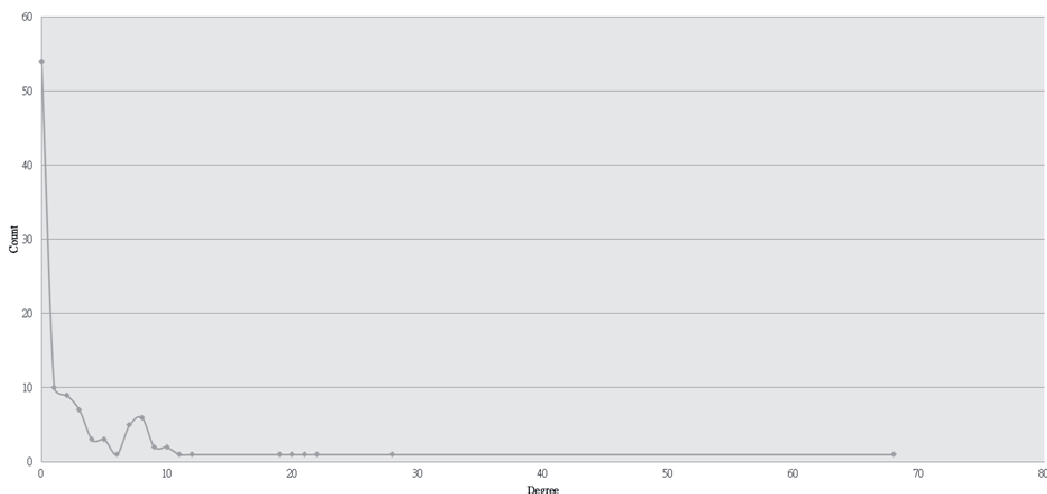
The Evolution of a Digital Hub (Longitudinal Analysis)
The most fascinating aspect of this study is the temporal shift in social dynamics.
- Phase 1 (The Instructor at the Center): In the first month (Jan-Feb), the instructor is the undisputed sun around which all student planets orbit. Every question leads back to the center.
- Phase 2 (Sub-group Formation): By March, small clusters of students start solving technical programming problems together, independent of the instructor.
- Phase 3 (The Peer-Tutor Emergence): By the final month (April-May), the "flower" pattern of the early semester breaks down.
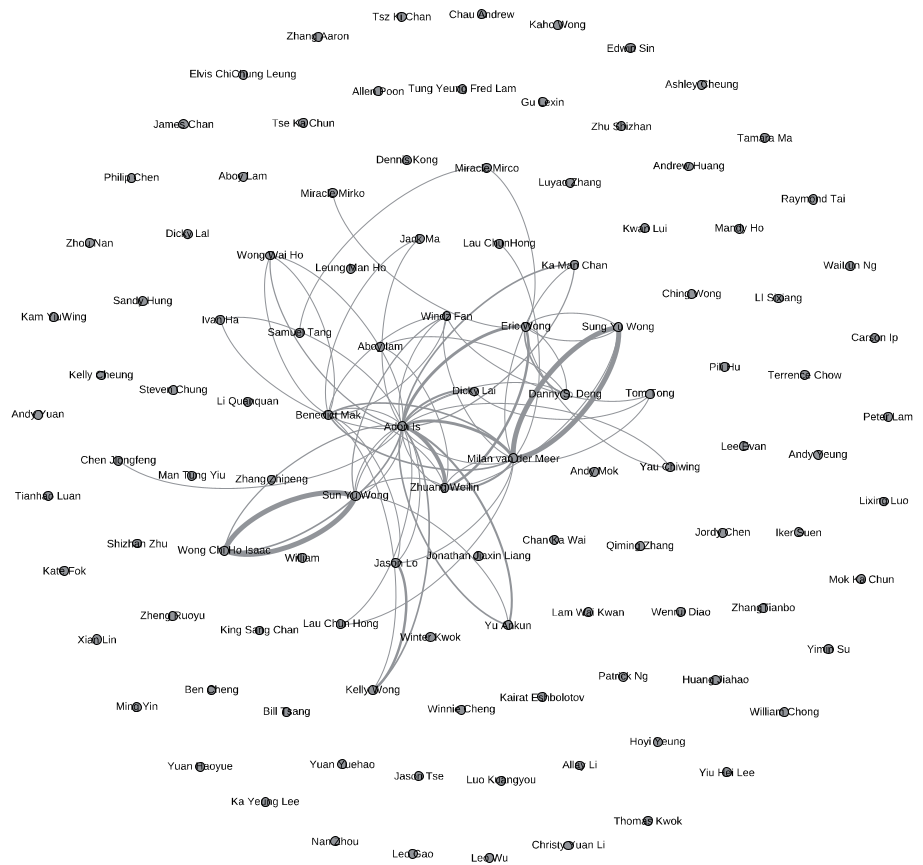 Figure: The growth of complexity and sub-groups from early to mid-semester.
Critical Insight: The "Student M" Phenomenon
The data revealed a "Scale-Free" network. While the instructor was the primary hub, a specific student—Student M—emerged with an out-degree surpassing that of the official Teaching Assistants.
This illustrates Legitimate Peripheral Participation (LPP):
- Non-active students often occupy the "periphery," observing and learning silently (salient observers).
- Active students move toward the "center," eventually sharing the instructional burden.
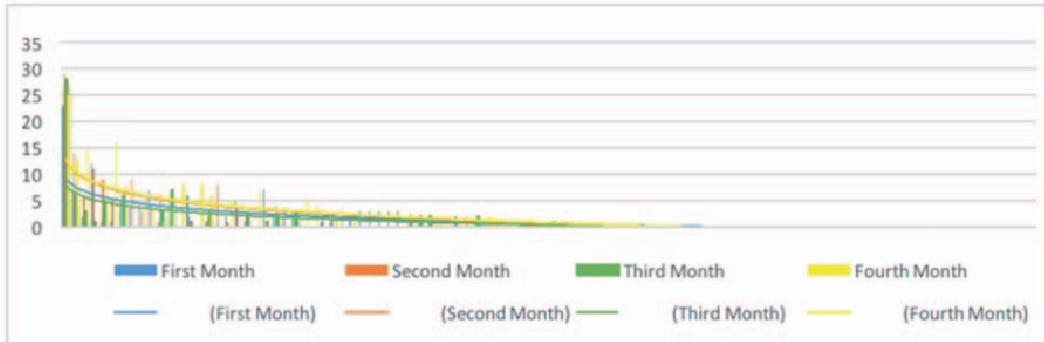 The yellow line indicates a massive spike in student-to-student interaction during the final month, where the instructor's relative degree actually decreased as students took charge.
Conclusion and Future Outlook
The study concludes that Facebook groups are more than just "social" tools; they are vital architectural components for engineering education. They allow for a decentralized learning environment that mimics real-world cybersecurity research communities.
Limitations:
- The study notes a "non-negligible" portion of isolated nodes—students who never engaged online.
- Future research needs to bridge the gap between these "silent observers" and the active community core.
Final Takeaway: In highly dynamic fields like Web Security, the instructor's job is not just to teach, but to build a network where they are eventually no longer the only person who knows the answer.