
Facebook Listener: Bridging Tangible Awareness and Social Networks
I heard you were on Facebook: linking awareness systems to online social networking
The paper introduces "Facebook Listener," a tangible awareness system that bridges physical home environments with Online Social Networks (SNS). It allows users to share ambient or recorded sound bites directly to their Facebook wall, expanding the reach of traditional awareness systems from intimate circles to broader social networks.
TL;DR
Researchers from Delft University of Technology developed Facebook Listener, a physical device that captures and shares 5-second audio snippets of daily life to a user’s Facebook wall. By connecting the intimacy of "Awareness Systems" with the reach of "Social Networking Services (SNS)," the study demonstrates how physical artifacts can lower the threshold for social presence and maintain "weak-tie" relationships through ambient sound.
Background: The Gap Between Physical Presence and Digital Feeds
In the early 2010s, "Awareness Systems" were primarily local—think of a digital frame that shows a grandmother how much her grandkids are moving in another house. While effective for intimacy, these were "silos." On the other end of the spectrum, Facebook provided a massive social graph but required a "heavy" interaction: picking up a phone, logging in, and typing.
The authors identified a missing link: Can we bring the effortless, ambient awareness of a physical object to the vast network of an online social platform?
The Methodology: Sound as a Pervasive Medium
The team chose sound over video or text because it is "pervasive"—it doesn't require the user's full visual attention.
The "Glass and Base" Prototype
The interaction was inspired by the metaphor of "listening through a wall with a glass."
- Sharing Mode: Glass right-side up. Users record a snippet or allow the system to capture environmental sounds randomly.
- Exploring Mode: Glass upside down. The device plays back audio snippets from the user's Facebook friends.
- Privacy Control: A physical knob to add "noise" (scrambling) to the audio, allowing users to blur the details of their private lives while still sharing a "presence."
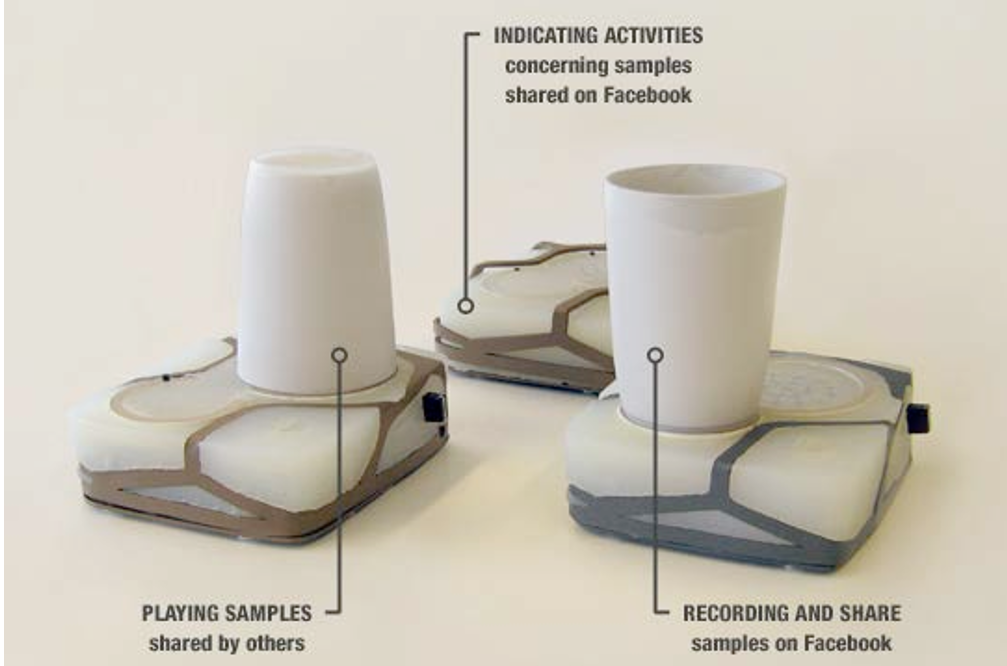 Figure 1: The Facebook Listener in Sharing (left) and Exploration (right) modes.
Field Results: Interaction & Social Impact
The system was tested with three groups of four friends. The results revealed fascinating user behaviors:
- Low Friction: Users loved that they didn't have to "think about tasks." They could just leave a message through the device.
- Curated vs. Random: Contrary to the "ambient" goal, users rarely shared random background noise. They preferred "crafting" sounds—intentionally recording a snippet of a TV show, traffic, or a quick greeting.
- The Feedback Loop: A critical addition to the final design was an LED that lit up when someone "Liked" or "Commented" on Facebook. This physical notification stimulated the user to check their digital feed, proving that feedback from the SNS is vital for maintaining the device's relevance.
Critical Insights: Why This Matters
The "Facebook Listener" experiment provides three major takeaways for the future of Ambient Computing:
- Ongoing Awareness: Even if friends didn't comment, the sheer presence of these audio "heartbeats" on a feed increased the perceived social awareness and the feeling of "being in touch."
- Modality Sensitivity: Audio is high-bandwidth. Users were more protective of their privacy with sound than they might be with a simple "status light," leading to the manual deletion of some samples.
- Bridging the Weak-Tie Gap: This system proves that tangible devices aren't just for "Close Family." They can effectively maintain the "Social Browsing" needs of a larger circle of acquaintances.
Conclusion & Future Outlook
While the study was limited by its 1-week duration and the "novelty effect," it successfully demonstrated that a physical object in the living room can act as a seamless portal to an online world. As we move toward an era of AI-integrated IoT, the lessons of Facebook Listener—specifically the importance of physical feedback and the curation of ambient data—remain highly relevant for designers building the next generation of "Connected Homes."
Note: This research was originally presented at NordiCHI '12.