
OMFacebook: Bridging the Gap Between Social Networks and Virtual Worlds
Socializing Virtual Worlds with Facebook A prototypical implementation of an expansion pack to communicate between Facebook and OpenSimulator based Virtual Worlds
This paper introduces OMFacebook, a novel expansion pack and middleware for OpenSimulator-based virtual worlds. It bridges 3D virtual environments with the Facebook social network, enabling real-time text communication between web users and in-world avatars using a lightweight, platform-independent interface.
TL;DR
OMFacebook is a pioneering architectural framework designed to link OpenSimulator (an open-source alternative to Second Life) with Facebook. By creating a specialized communication gateway, the authors allow users to track and chat with their in-world virtual friends directly through a lightweight Facebook web app, eliminating the need for high-end 3D rendering hardware just to stay "socially present."
Problem & Motivation: The "Hardware Wall" of Virtual Worlds
In the late 2000s and early 2010s, virtual worlds like Second Life were booming, but they faced a fundamental scaling problem: Accessibility. To inhabit these worlds, users required "Heavyweight" client viewers—software that demanded high GPU and CPU performance. This created a barrier for:
- Mobile Users: PDAs and early smartphones couldn't dream of rendering these 3D environments.
- Casual Interaction: Users often just wanted to check if their friends were online or send a quick message without launching a resource-heavy application.
The authors identified that while users were moving toward the 3D Metaverse, they were spending most of their time on Facebook (which had 400M+ users at the time). The insight was simple: Bring the virtual world to where the people already are.
Methodology: The Three-Tier Bridge
The OMFacebook system isn't just a simple chat bot; it is a structured middleware system consisting of three distinct components:
1. The OMFacebook Module (In-World)
Written in C# and running inside the OpenSimulator server, this module acts as the "sensor." It provides an in-world registration terminal (Figure 1) where users click to get a unique key. It handles the extraction of friend lists and manages outgoing/incoming XML-RPC messages.
2. The OMFacebook Gateway (The Brain)
This PHP-based middleware acts as the translation layer. It maintains a MySQL database that maps a user's Facebook ID to their Avatar's UUID (Universally Unique Identifier). It provides an API that handles functions like sendMessageFromFacebook and getAvatarsFriends.
3. The Facebook Application (The Front-end)
A web application built using Facebook Connect and XFBML. It uses AJAX to poll the gateway for new messages, providing a real-time chat experience within the standard Facebook UI.
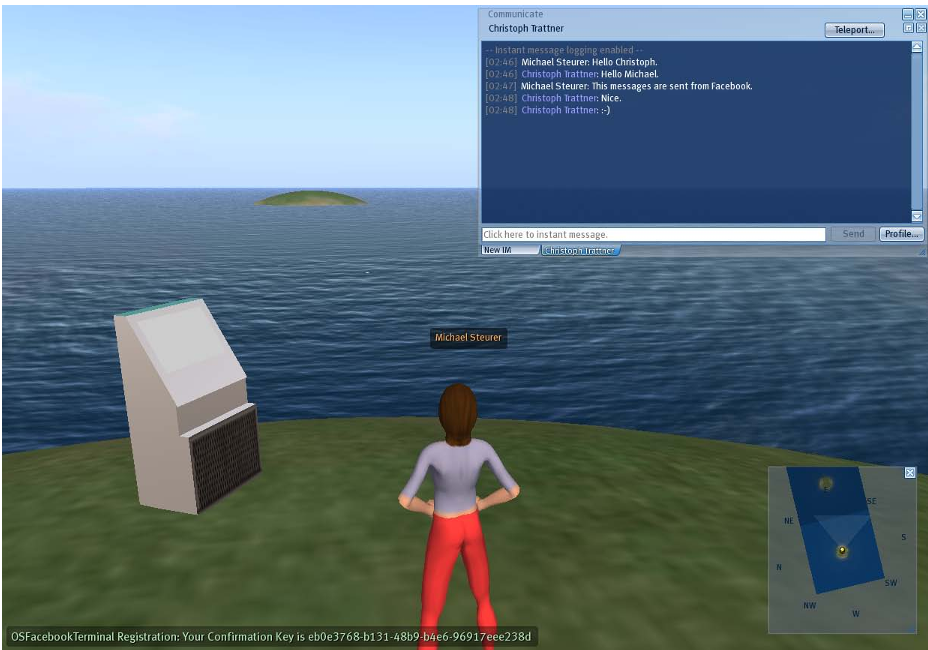 Figure 1: The in-world terminal where avatars link their virtual identity to their social media profile.
Experiments & Implementation Details
The authors realized the prototype using the OpenSimulator application server. A critical technical hurdle addressed was the communication protocol:
- XML-RPC: Used for the OpenSim server to receive messages.
- HTTPS POST: Used for the simulator to push messages back to the web gateway.
- AJAX/JSON: Used to keep the Facebook side updated without refreshing the page.
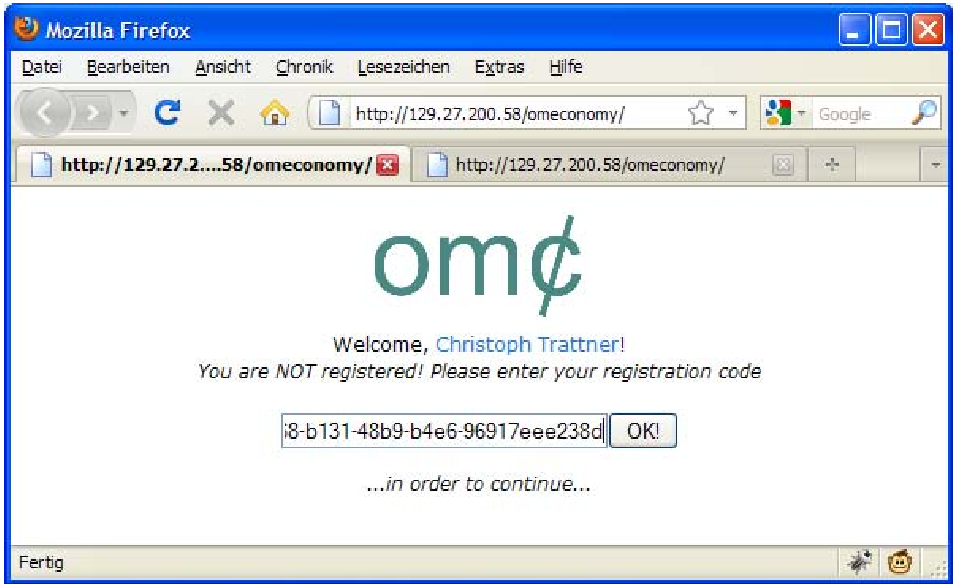 Figure 2: The registration process on the Facebook side, linking the unique key generated in-world.
While the prototype was functional, the authors noted a significant "Industrial Limitation": OpenSimulator’s native XML-RPC handled messages in plain text without standardized authentication, highlighting a major security vulnerability for 2010-era metaverse projects.
Critical Analysis & Future Outlook
Takeaway
This work was an early precursor to the "Omnichannel Metaverse" we discuss today. It proved that the persistence of identity across platforms (3D vs. 2D Web) is more important for social stickiness than the 3D graphics themselves.
Limitations
- Security: The lack of encrypted XML-RPC makes the system susceptible to man-in-the-middle attacks.
- Functionality: At the prototype stage, it was limited to text chat and friend status.
Future Perspectives
The authors envisioned integrating Virtual Commerce, specifically trading goods via the Open Metaverse Currency (OMC) directly within the Facebook app. This foresaw the rise of modern digital marketplaces where skins and assets are traded on secondary web-based platforms. Today, we see this vision fully realized in platforms like Roblox or Fortnite, where social presence and commerce extend far beyond the game client itself.
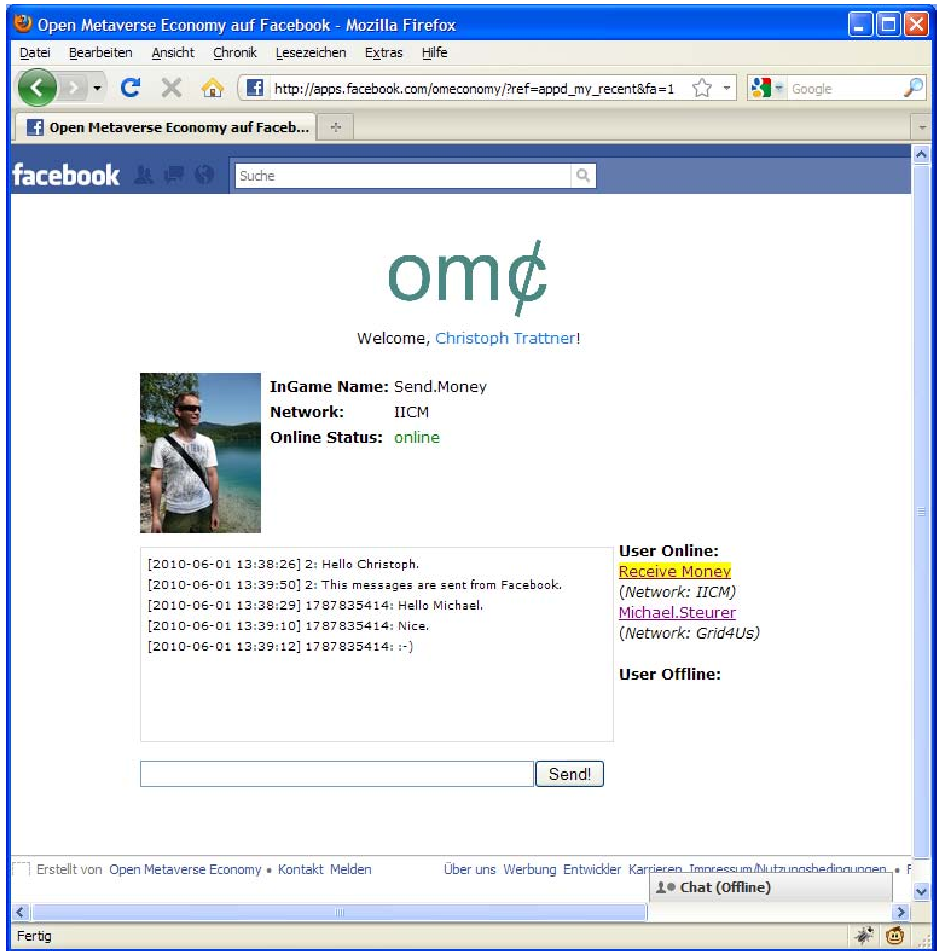 Figure 3: The final integrated chat interface allowing seamless communication between Facebook and the 3D world.