
Social Shopping: Solving the Cold Start Problem with Facebook Profile Data
The value of user’s Facebook profile data for product recommendation generation
This paper investigates the efficacy of using external Facebook profile data to mitigate the "new user cold start problem" in e-commerce recommender systems. Through two field experiments matching profile data with a 1.9-million-product database, the researchers demonstrate that semantic matching of social data significantly outperforms random recommendations, particularly in categories like music, brands, and sports.
TL;DR
The "Cold Start" problem has long been the Achilles' heel of e-commerce—how do you recommend a product to someone you've never met? This research proves that a user's Facebook profile is a goldmine for solving this. By semantically matching "Likes" and "Groups" to product databases, retailers can boost recommendation relevance by up to 26% from the very first click.
Background: The Vicious Circle of Privacy and Preference
Most recommenders are "reactive"—they learn from your past purchases. For a new store or a new user, this creates a catch-22: without data, recommendations are poor; because recommendations are poor, users don't engage, and the system never learns. This paper explores "proactive" profiling using external social data to break this cycle.
Perspective: From Direct Matching to Semantic Insight
The researchers didn't just look for word overlaps. They discovered a hierarchy of data value.
- Demographics (Age/Gender): Useful for broad filtering but lacks "soul."
- Explicit Likes: High value, but only if interpreted. Liking "House, M.D." is a specific interest; searching for the word "House" in a furniture store is a false positive.
- Semantic Categories: The real breakthrough came from treating interests as "atomic concepts" (e.g., Music, Brands, Sports Teams) and matching them to curated product taxonomies.
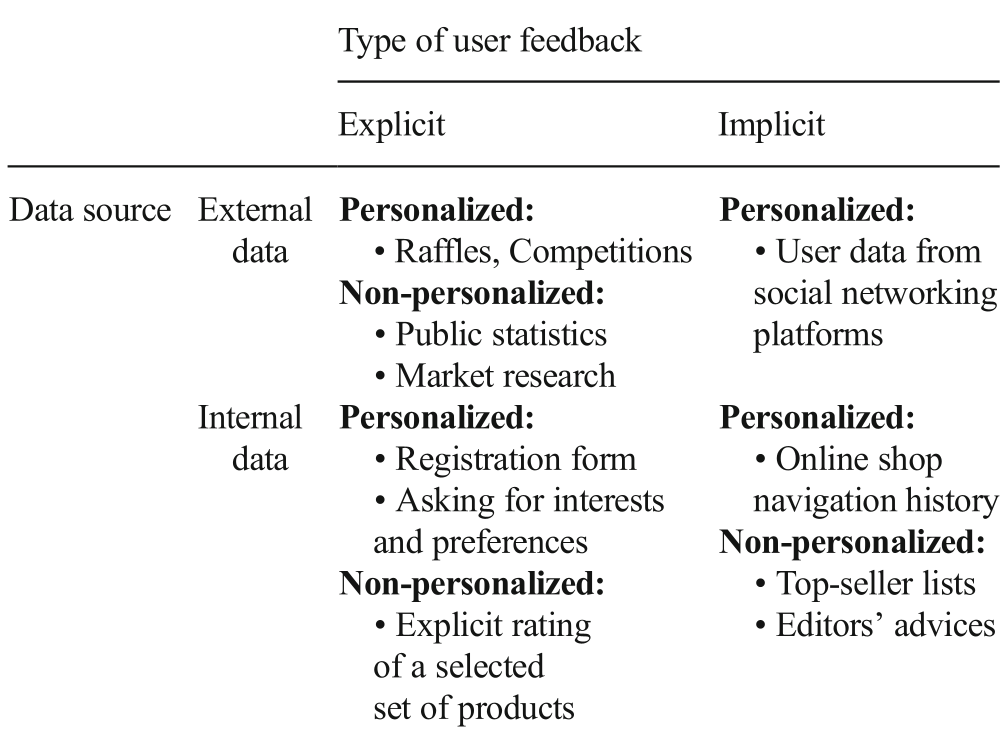 Table 1: Taxonomy of approaches to the new user cold start problem.
Methodology: The Two-Study Approach
The authors conducted two distinct experiments to isolate what makes social data valuable.
Study 1: The Value of Logic
They compared "Plain" matching (keyword to keyword) against "Specific" matching (context-aware). The results were clear: semantic understanding of Music/Video and Brands provided the highest lift in user "Taste" ratings.
Study 2: Does "More" Mean "Better"?
In Study 2, they looked at profile density. Does a user with 500 likes get better recommendations than one with 10?
- The Findings: While the number of Likes has a positive effect, the number of Groups actually had a negative correlation.
- The Intuition: Diverse group memberships often introduce "noise" and conflicting preferences, making it harder for the algorithm to find a clear signal for a specialized product.
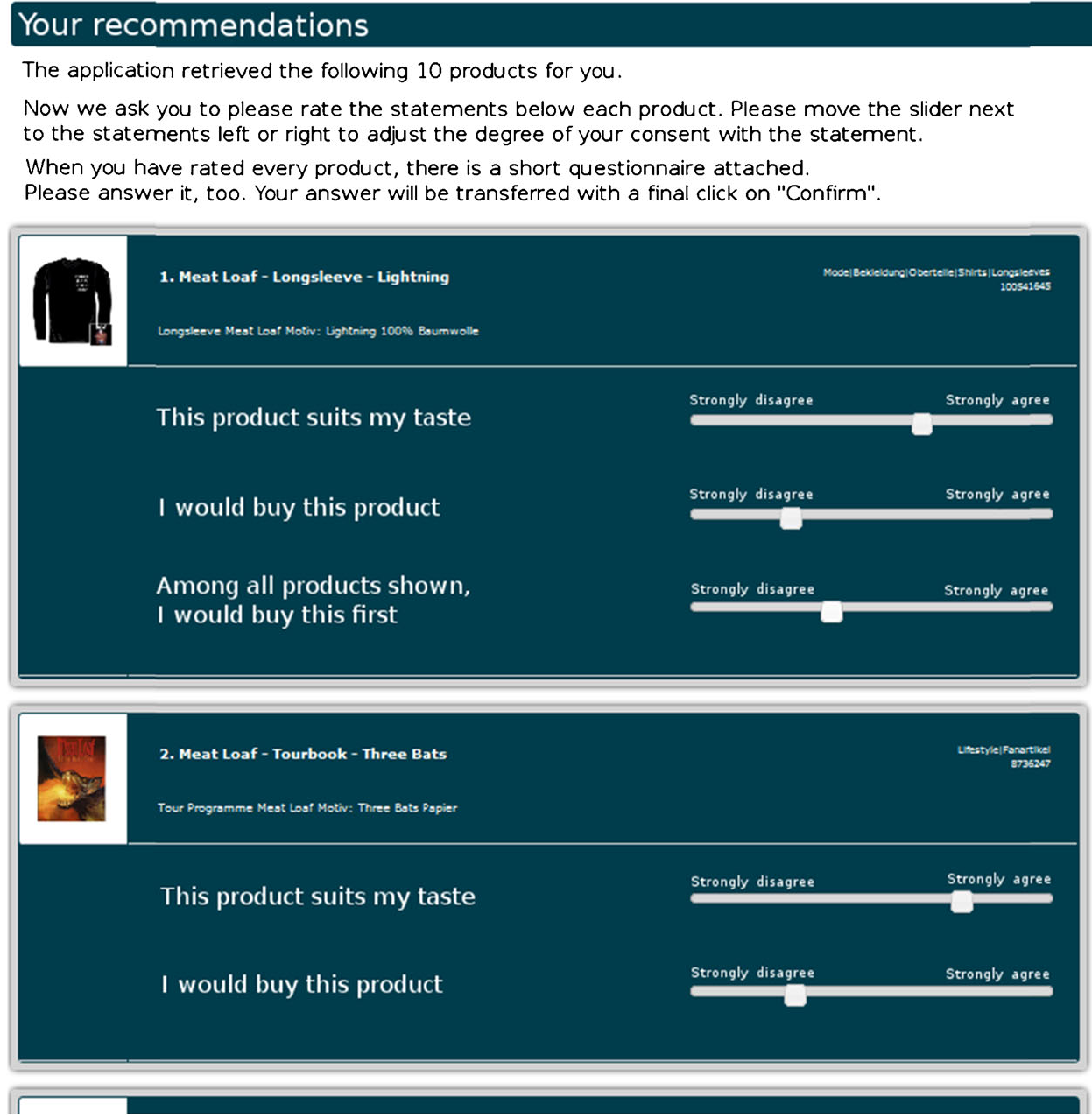 Example of the recommendation interface used in the experiments.
Key Results: Quantitative Wins
The impact was measured on a 100-point Likert scale, evaluating both "Taste" (Do I like it?) and "Purchase Propensity" (Will I buy it?).
- Sports Teams: Yielded the strongest results in Study 2, likely due to high-affinity merchandise (e.g., a Bayern Munich fan wanting a specific jersey).
- Semantic Advantage: Using semantic categories for TV/Music increased taste ratings by 19.80 points over the random baseline.
- The "Purchase" Gap: While social data is excellent at matching "taste," it is slightly less effective at predicting "purchase." This suggests that social data captures aspirational identity while transactional data captures functional need.
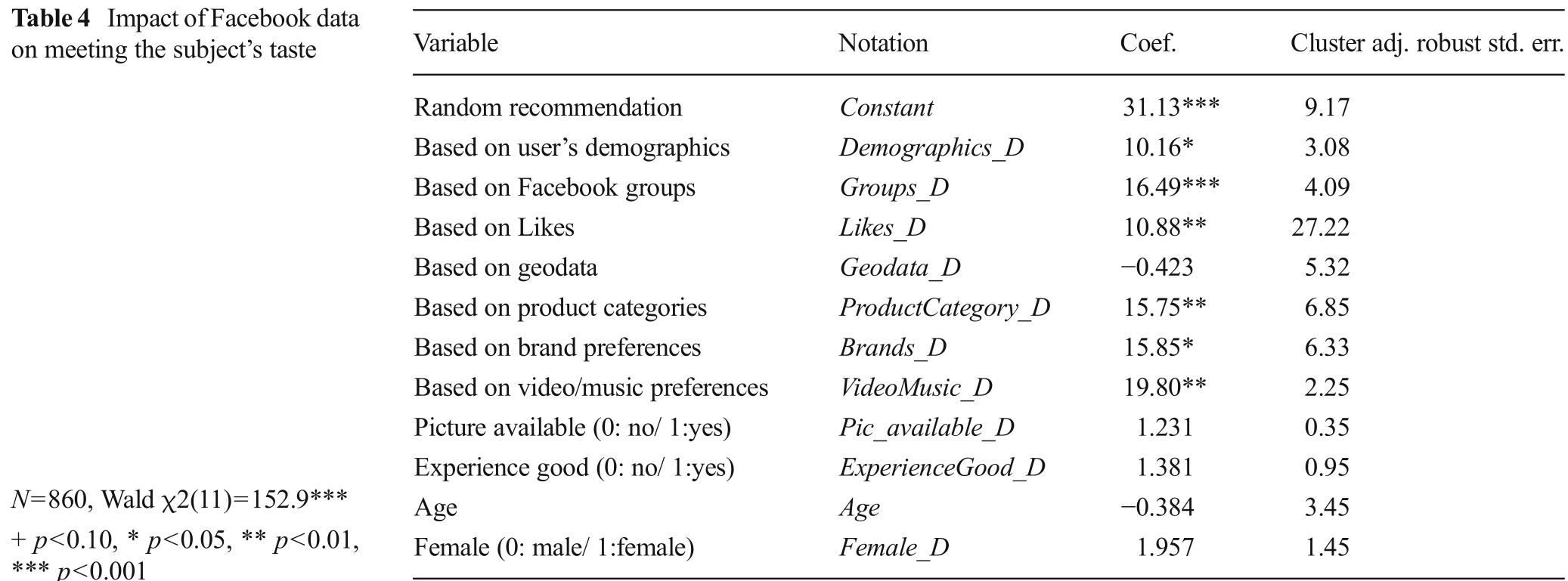 Table 4: Statistical significance of different Facebook data types on meeting user taste.
Critical Insight & Future Outlook
While this study was conducted in 2015, its core lesson is even more relevant today in the age of "Social Commerce." However, the researchers noted a massive spike in user drop-outs due to privacy authorization dialogs in later stages.
The Takeaway for Devs: Pure technical accuracy isn't enough. The future of social-based recommendations lies in Privacy-Preserving Personalization. Using external data works, but only if the user trusts the "handshake" between the social network and the shop.
If you are building a recommender today, focus on Targeted Likes (Sports/Brands)—these are the highest-signal indicators of immediate purchase intent.