
Facebook for Support vs. Research: Navigating Miscarriage Research in Digital Spaces
Facebook for Support versus Facebook for Research: The Case of Miscarriage
This paper presents a secondary analysis of an Asynchronous Remote Communities (ARC) study involving 44 women who experienced miscarriage, comparing their personal Facebook usage with their engagement in research activities. It examines how Facebook serves as a dual-purpose platform for both sensitive emotional support and academic data collection, ultimately validating Facebook's reach while highlighting engagement nuances.
TL;DR
Is Facebook a viable lab for sensitive human subjects research? This study explores the Asynchronous Remote Communities (ARC) method among women who have experienced miscarriage. The findings reveal that while many participants are "lurkers" in their private lives, they remain highly active in research tasks—provided the activities balance public discussion with private reflection.
Context: The Digital Support Paradox
For women experiencing miscarriage, face-to-face conversations can be fraught with stigma and awkwardness. Digital spaces offer a "safe" distance, yet the platforms we use for research—primarily Facebook—are the same ones where these women navigate their social identities. The authors at the University of Edinburgh and Indiana University investigated whether a participant's personal lifestyle on Facebook (how often they post or "like") predicts how well they will contribute to a 12-week scientific study.
The ARC Methodology: A Deep Dive
The study utilized the ARC framework, which moves beyond one-off interviews to create a longitudinal community of participants.
- The Cohort: 44 women divided into "Star Gazers" (no subsequent live birth) and "Star Catchers" (at least one live birth post-miscarriage).
- The Medium: Locked, "secret" Facebook groups.
- The Tasks: 16 activities ranging from "Meet and Greets" to emotional wellbeing scales and digital drawing.
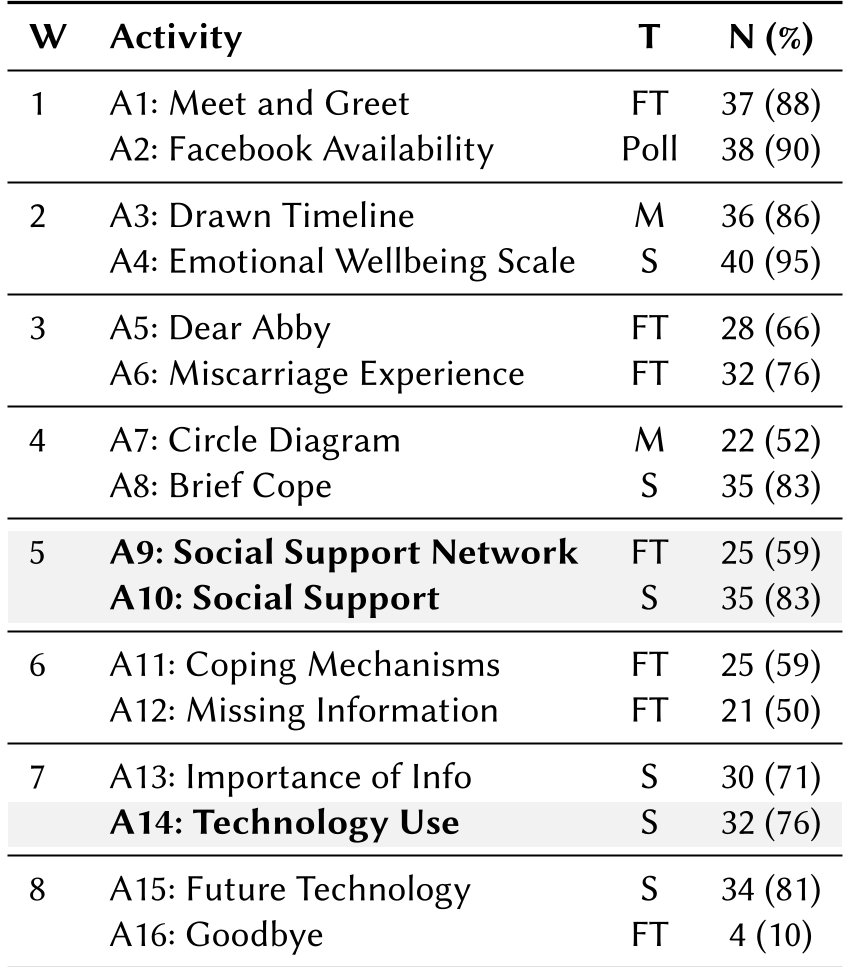 Table 2: Breakdown of the 16 research activities and their completion rates.
Key Insights: Why it Works
1. The "Lurker" Misconception
One might assume that someone who rarely posts on Facebook would be a "drop-out" risk in a Facebook-based study. The data proved otherwise. Even "rare posters" (those posting less than once a week) completed 3 out of 5 free-text activities on average. The high retention (81% at study end) suggests that the habitual check-in (98% of users logged in daily) is more important than active personal posting.
2. Privacy vs. Community
The study found a distinct preference for private surveys over public group posts.
- Survey Completion: 71% - 83%
- Free-text Post Completion: 47% - 76%
This suggests that even within a "secret" group, the "public" nature of a Facebook wall causes a degree of self-censorship, especially when dealing with traumatic memories.
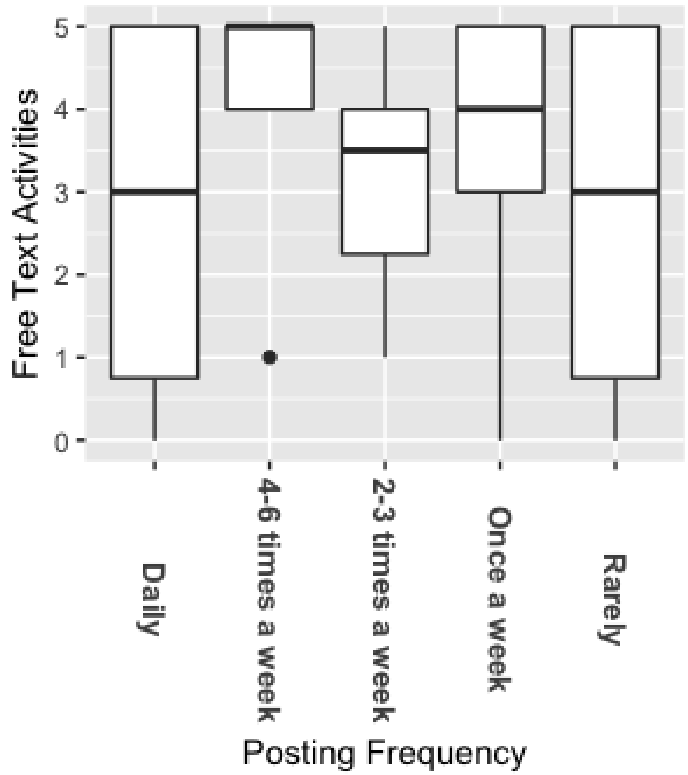 Figure 1: Comparison between personal Facebook posting behavior and research task completion.
Critical Analysis: The Dual-Edge of Facebook
The authors highlight a significant "Notification Conflict." When research happens on a social platform, a ping about a "Miscarriage Experience Survey" might appear right next to a notification about a friend's baby shower. This context collapse can be emotionally taxing.
The Takeaway for Future Researchers:
- Reach vs. Privacy: Facebook is currently unbeatable for reaching niche populations, but it lacks the "psychological safety" of a dedicated, anonymous medical forum.
- Hybrid Activity Design: To maintain high engagement, research must include private channels (like Qualtrics links within Facebook) to allow for deeper, uninhibited disclosure.
Conclusion
This work underscores that Facebook is more than a social network; for many, it is a primary infrastructure for emotional survival. While the ARC method is robust, the shift toward more private messaging platforms (like WhatsApp or Signal) in the general population may soon require researchers to move their "asynchronous communities" away from the Facebook wall and into more intimate, encrypted spaces.
Source: Alqassim et al., "Facebook for Support versus Facebook for Research: The Case of Miscarriage," CHI 2019.