
Social Torrents: How Facebook Transforms BitTorrent Swarm Dynamics
Influences of Facebook Torrent Dissemination in BitTorrent Swarms
This paper investigates the impact of Facebook dissemination on BitTorrent swarms by analyzing over 16,600 real-world swarms. It introduces the concept of "Social Torrents" and demonstrates that social network announcement significantly improves swarm longevity, peer cooperation, and network locality compared to traditional indexing sites.
TL;DR
This research reveals that BitTorrent swarms announced via Facebook—Social Torrents—are vastly "healthier" than those found on traditional indexing sites. They feature 50% more seeders, 4x higher multi-swarm participation, and significantly better network locality (AS-level grouping). By leveraging existing social ties, these swarms bypass the traditional "tit-for-tat" limitations, leading to faster dissemination and lower cross-ISP traffic.
Problem & Motivation: The Loneliness of the Traditional Peer
The success of P2P systems depends entirely on altruism. However, the BitTorrent protocol's primary incentive, tit-for-tat, is inherently short-sighted. It doesn't recognize long-term relationships; once a user finishes a download, the incentive to remain as a "seeder" vanishes. This results in:
- Dead Torrents: Nearly 47% of traditional torrents in this study were found to be "dead" (no seeders).
- Low Re-encounter Rates: Peers rarely meet again across different swarms, preventing the formation of stable sharing communities.
- Topological Blindness: The protocol often ignores physical network distances, causing massive, expensive data traffic between different Autonomous Systems (ASes).
The authors hypothesized that social networks like Facebook provide a "social glue" that traditional sites lack, fostering communities with shared interests and higher mutual trust.
Methodology: Comparative Swarm Analysis
The researchers built a custom Python crawler using libtorrent to monitor 15,086 traditional torrents and 1,612 social torrents. By connecting to trackers and peers without actually downloading copyrighted content, they mapped the metadata and peer locations (via GeoLite).
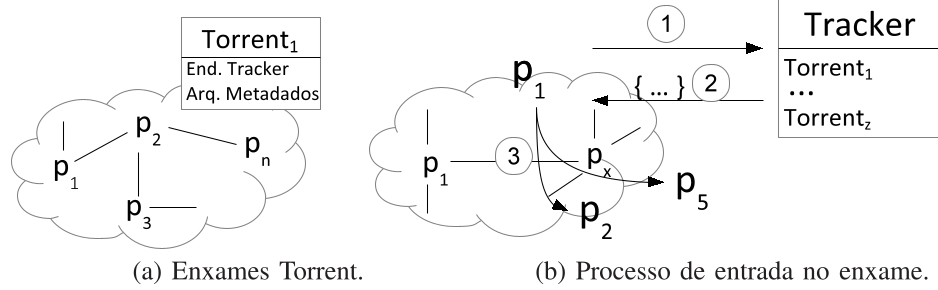 Figure 1: Conceptual overview of how users are grouped into swarms and the role of trackers.
Key Insights: Social vs. Traditional Torrents
1. Swarm Health and Longevity
The data shows a stark contrast in "vital signs." Social torrents are larger (averaging 3x more peers) and much more resilient. While 47.45% of traditional torrents were "dead," only 28.16% of social torrents lacked seeders.
2. The Multi-Swarm Phenomenon
One of the most significant findings is the Jaccard similarity between swarms. In social torrents, peers are four times more likely to participate in multiple swarms simultaneously. This suggests the formation of "proto-communities" where users don't just share one file, but a whole catalog of interests.
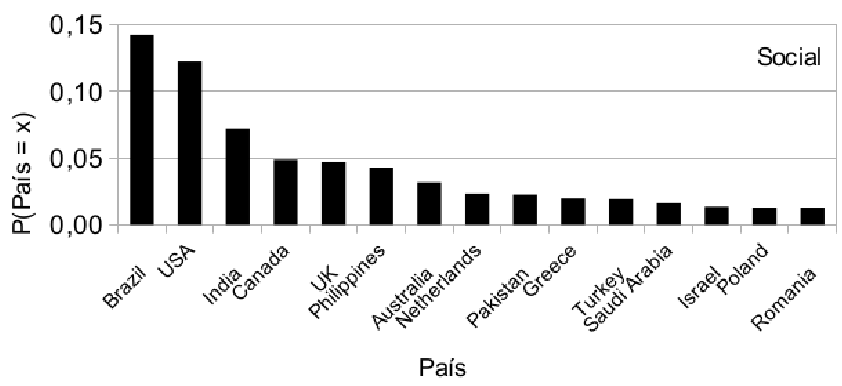 Figure 9: The similarity matrix shows that social swarms (right) have much higher peer overlap (darker blue) than traditional swarms (left).
3. High Network Locality
Social torrents tend to cluster geographically and topologically. Because Facebook communities often concentrate on specific languages or local interests (e.g., Brazilian gaming groups), the peers are often in the same country or AS.
- Peers per Country: Social (89) vs. Traditional (29).
- Peers per AS: Social (22) vs. Traditional (10).
This "local" nature is a goldmine for ISPs. If the BitTorrent protocol favored these local partnerships, it could dramatically increase speeds while reducing the cost of international data transit.
Experiments & Results
The study highlights that social dissemination acts as a filter for content. While traditional sites have a "long tail" of diverse but unpopular files, social torrents focus on high-engagement media like movies and games.
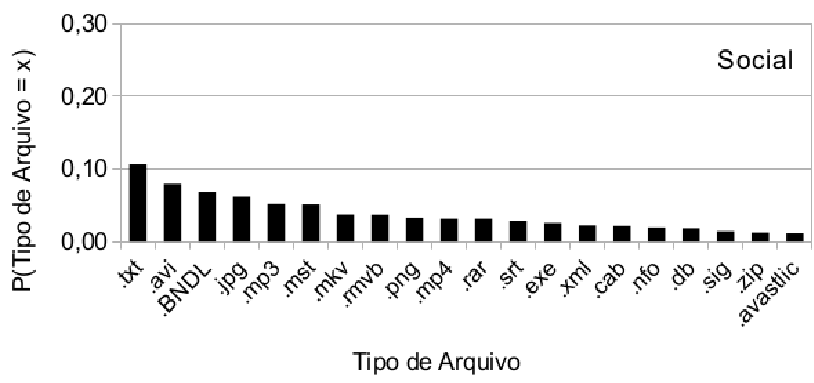 Figure 4: Social torrents focus heavily on media and gaming content (MP3, AVI, CAB), driven by community interests.
Critical Analysis & Conclusion
Takeaway
Social networks don't just disseminate links; they organize human capital. By announcing torrents in social spaces, the P2P network gains a "social layer" that naturally solves the lack of cooperation inherent in anonymous swarms.
Limitations
- Niche Content: The study admits that for "restrained interest" content, traditional indexing sites are still superior because social circles tend to be echo chambers for popular media.
- Privacy: Leveraging social identities in P2P raises significant privacy concerns that the paper does not deeply explore.
Future Work
The authors suggest that future P2P protocols should implement interest-based peer selection. Instead of picking random peers, the client could prioritize those it has met before in other "social" swarms, effectively turning BitTorrent into a more robust, community-driven network.