
The Facebook Addiction Loop: Why the "Urge to Check" is the Smoking Gun of Digital Overuse
Why Do I Keep Checking My Facebook? The Role of Urge in the Excessive Use of Social Networking Sites
This study investigates the psychological drivers behind the compulsive habit of checking Social Networking Sites (SNSs), specifically Facebook. It proposes a research model based on the Cognitive Model of Urge, identifying "Instant Gratification" and "Withdrawal" as the primary precursors that fuel the urge to check, ultimately leading to excessive use and tangible negative life outcomes.
TL;DR
Why do we instinctively reach for our phones to check Facebook even when we know we have work to do? This study moves beyond simple "personality" explanations to reveal a cognitive cycle: Instant Gratification (the high) and Withdrawal (the low) create a powerful "Urge to Check." This urge is the bridge to excessive use, which directly sabotages our professional and social lives.
Background: Beyond the Profile of an Addict
Early research on Social Networking Sites (SNSs) focused on the "what" and "who"—finding that extroverts or people with low conscientiousness might use Facebook more. However, this study targets the "Why". In a world of real-time notifications and "Nearby Friends" features, checking SNSs has become an automated, cue-response behavior similar to chemical dependencies.
The "Urge" Mechanism: The Core Motivation
The researchers utilize the Cognitive Model of Urge, arguing that the behavior isn't just about fun; it’s about relief.
- Instant Gratification: The immediate hit of pleasure from a "Like" or a new update.
- Withdrawal: The anxiety and "ill feeling" that arises when one is disconnected.
The model posits that the "Urge to Check" is an irresistible, spontaneous impulse that arises to either seek pleasure or avoid the pain of withdrawal.
Methodology & Architecture
The study validated its hypotheses using a survey of 205 Facebook users in Hong Kong (a high-penetration market) and analyzed the data via PLS-SEM.
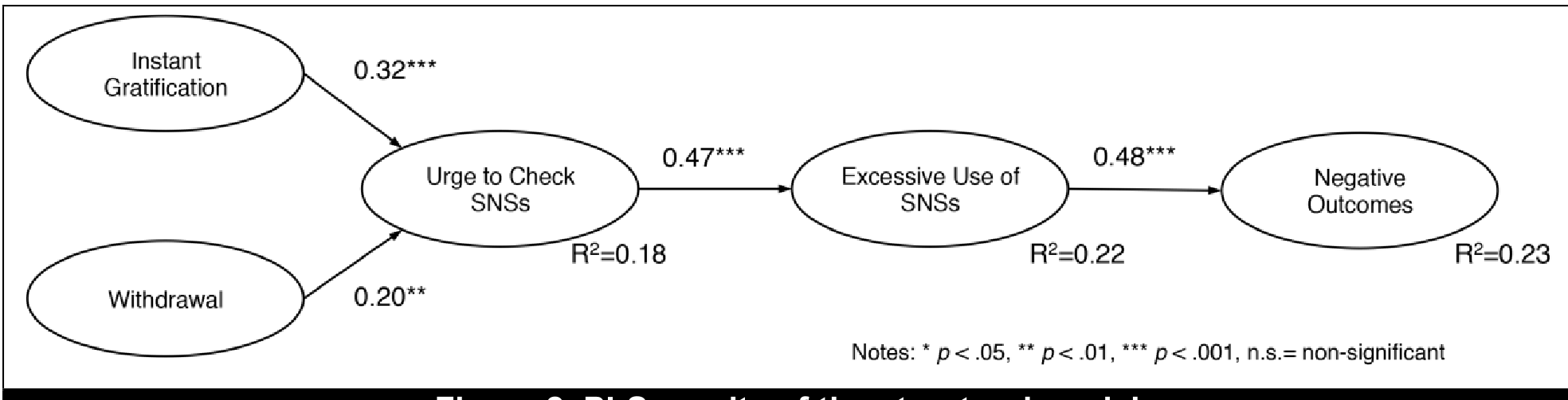 Figure 1: The structural model showing the path from psychological triggers to negative outcomes.
The researchers broke down the constructs into measurable items, such as:
- Urge: "I felt a sudden impulse to check Facebook."
- Excessive Use: "I lose track of time while on Facebook."
- Negative Outcomes: "Facebook use has created problems in my life."
Hard Data: The Cost of the Click
The structural analysis revealed that the "Urge to Check" is an irreplaceable determinant.
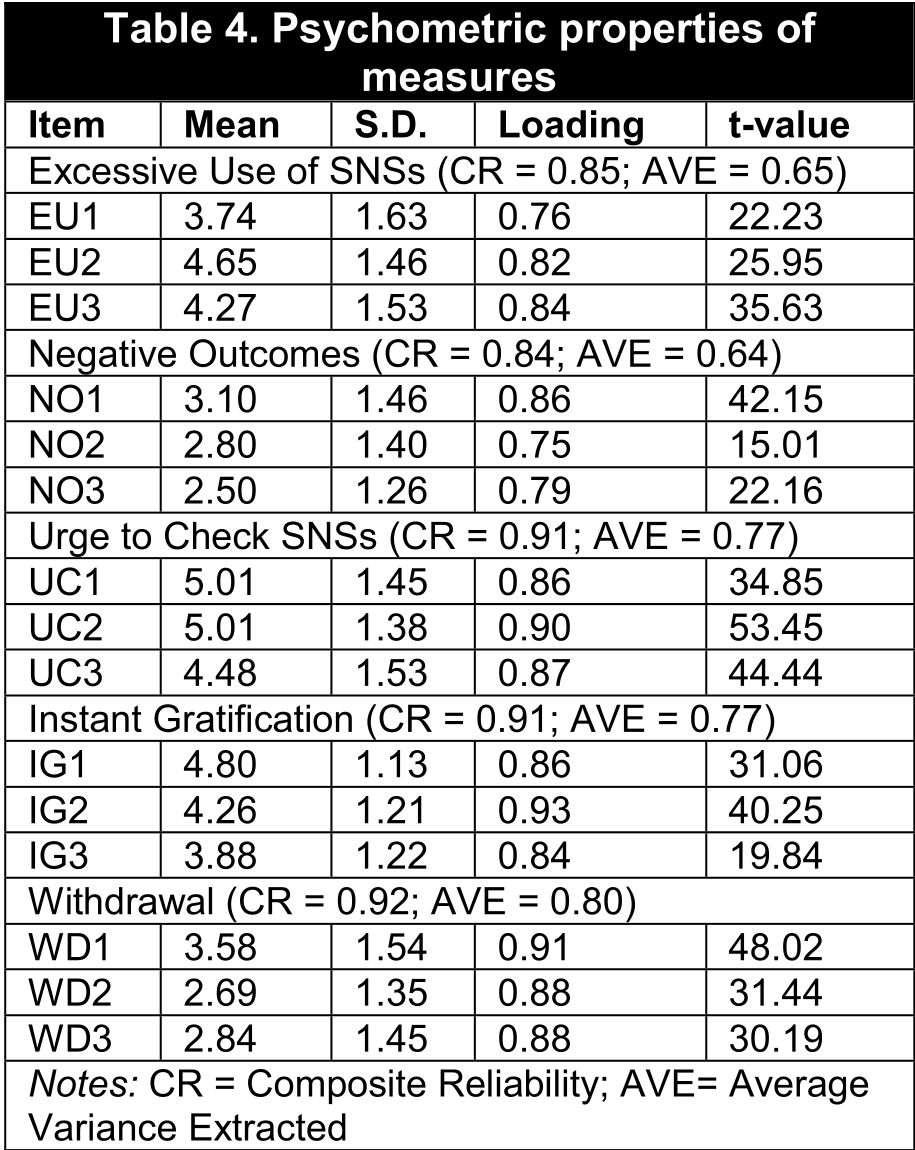 Table 1: Statistical validation showing high composite reliability (>0.85) for the Urge and Excessive Use constructs.
Key Findings:
- Direct Path to Overuse: The urge to check explains 22% of the variance in excessive use.
- The Double-Edged Sword: Both seeking pleasure (Gratification) and escaping discomfort (Withdrawal) are significant, but gratification currently shows a stronger pull than withdrawal in the undergraduate demographic.
- Real-World Friction: Excessive use isn't just a "time sink"—it significantly correlates with failing to manage one's life .
Critical Insight: Breaking the Loop
This study offers a stark warning to both users and developers. For developers, the "audio-recognition" and "Nearby Friends" features are designed to maximize the urge. However, the study suggests that Corporate Social Responsibility (CSR) should drive the creation of "anti-urge" features (e.g., built-in time managers or "Focus Modes").
Limitations: The study relies on a student sample (ages 18-25). While this is the most "active" group, further research is needed to see if the "Withdrawal" factor becomes more dominant in professional adults whose livelihoods might depend on networking.
Conclusion
The "Urge to Check" is no longer a metaphor—it is a measurable cognitive state driven by the dual engines of pleasure and discomfort. To reclaim our time, we must address the psychological "pull" of the platform before it translates into the "push" of life-altering excessive use.