
Digital Heartbreak: How Facebook Rumination Bridges the Gap Between Personality and Post-Breakup Distress
The role of Facebook use in mediating the relation between rumination and adjustment after a relationship breakup
This pilot study investigates the psychological impact of Facebook use on post-breakup adjustment. It identifies that "State Rumination" on Facebook—specifically monitoring an ex-partner's profile—acts as a critical mediator between general trait rumination and negative emotional outcomes, achieving a significant regression model (p < .01) that explains up to 28% of adjustment variance.
TL;DR
Is Facebook making it harder for you to get over your ex? According to this pilot study by Tran and Joormann, the answer lies not in how long you spend on the site, but in how you use it. For those naturally prone to overthinking (trait ruminators), Facebook acts as a catalyst, providing a "digital loop" of reminders that prolongs emotional distress.
Background: The Double-Edged Sword of Social Media
The literature on Social Networking Sites (SNS) has long been divided. Some studies suggest Facebook increases socialization and decreases depression (Social Capital), while others link it to social isolation and "Internet Paradoxes." This study moves the needle by arguing that it isn’t the platform itself, but the internal emotion regulation strategies of the user—specifically Rumination—that determine the outcome.
The Core Challenge: The "Online Cue" Trigger
Rumination is the passive, repetitive focus on one's distress. In the "offline" world, triggers might be limited to shared physical spaces or photos. However, Facebook provides:
- Accessibility: Instant, 24/7 access to an ex-partner’s life.
- Rich Multimedia: Photos and status updates that provide "prime material" for negative social comparison.
- Social Surveillance: A clandestine way to monitor others without face-to-face contact.
The authors hypothesized that for "High Ruminators," Facebook becomes a primary tool for maladaptive coping, hindering adjustment after a relationship breakup.
Methodology: Mapping the Mediators
The researchers recruited 37 college students who had experienced a breakup within the last three years but remained "friends" with their ex on Facebook. They measured:
- Trait Rumination: The stable tendency to overthink (using the RRS scale).
- State Rumination: Specific thoughts while looking at an ex's profile.
- Facebook Importance: How much the user relies on the site for their social life.
The Theoretical Path
The study utilized the Baron & Kenny (1986) moderation-mediation framework to see if the "online behavior" could explain away the "personality trait's" impact on adjustment.
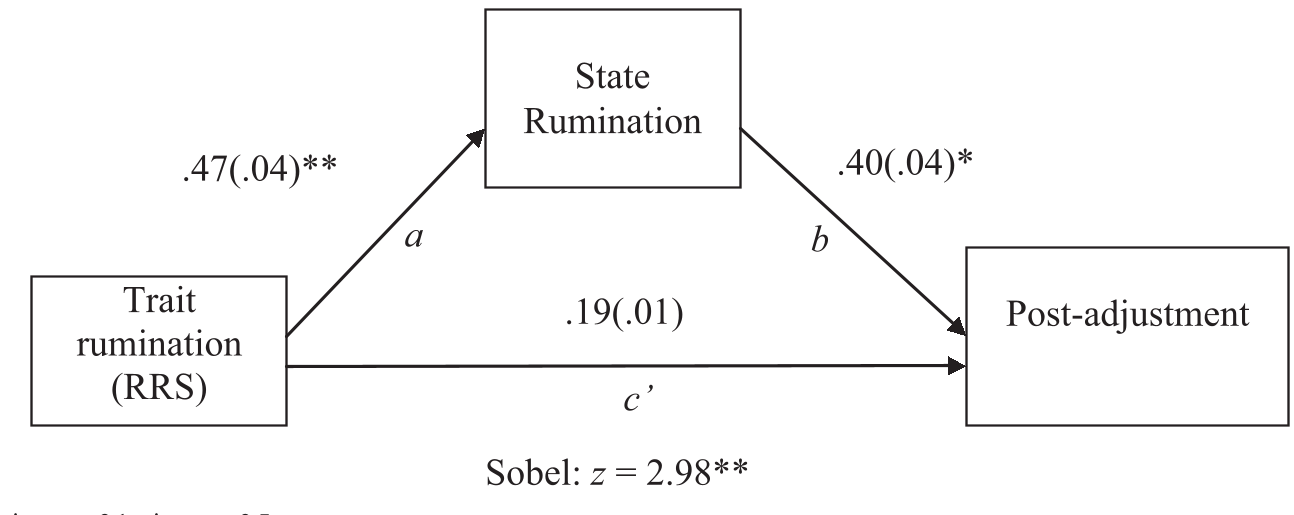 Fig 1: The path showing that trait rumination leads to state rumination, which in turn causes poor adjustment.
Key Findings: It’s the "Surveillance," Not the Time
The results were striking. While trait rumination was correlated with poor adjustment, this relationship disappeared when "State Rumination" was factored in.
- Complete Mediation: State rumination (the act of thinking about the breakup while on the site) was the true driver of distress. Once this was accounted for, the baseline personality trait no longer significantly predicted adjustment.
- The Depth of Engagement: High state ruminators didn't just look at their ex; they were more likely to visit strangers' profiles, upload more photos, and send more messages, indicating a heightened but potentially frantic digital social life.
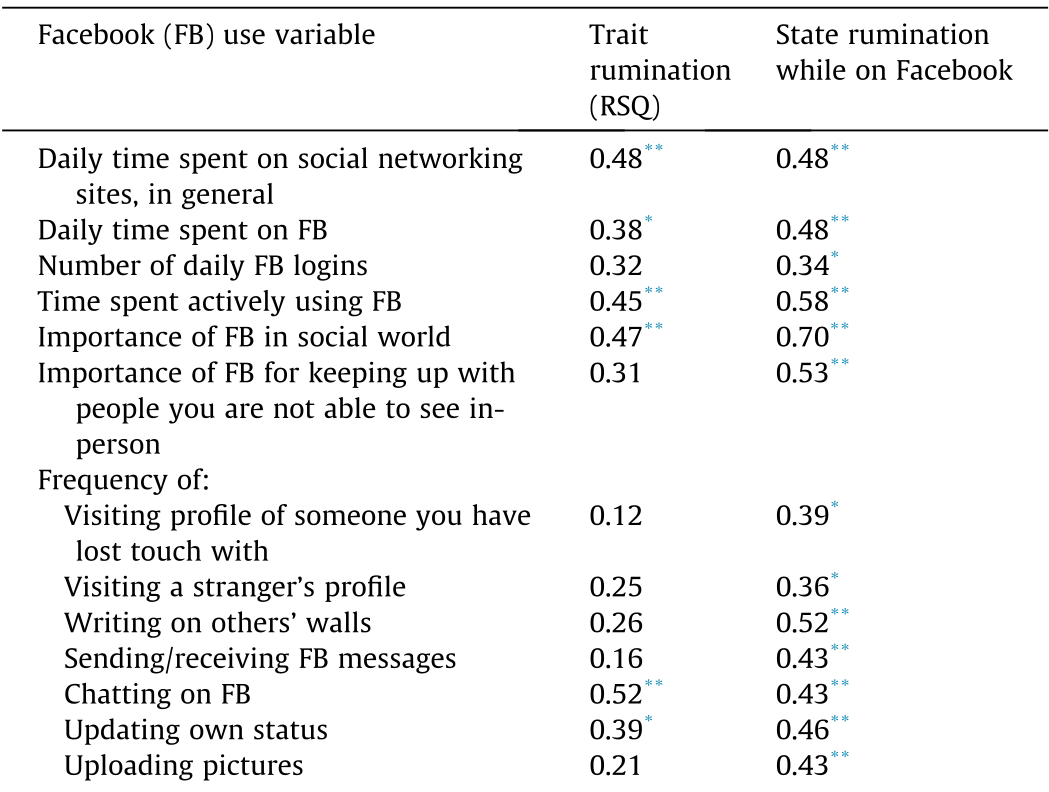 Table 1: Correlations between rumination types and specific Facebook activities. Note the strong link (.70*) between state rumination and the importance of FB in one's social world.*
Critical Analysis: Why This Matters
The most profound takeaway is the importance of Facebook Importance as a mediator. For individuals whose social world is primarily digital, a breakup is amplified because their primary "social square" is also where the source of their pain resides.
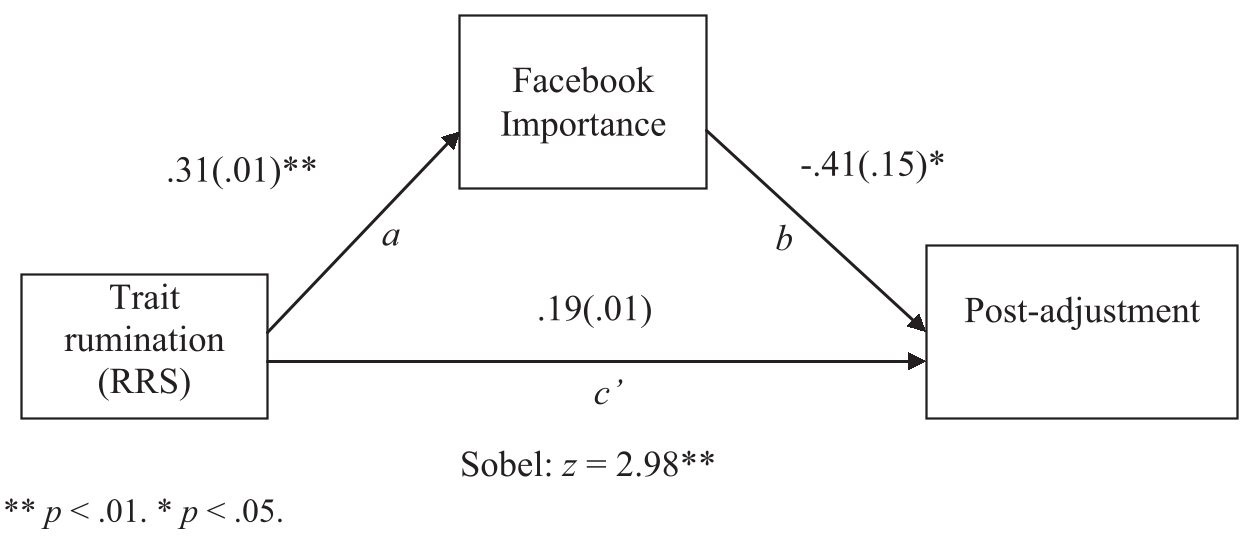 Fig 2: Facebook Importance as a mediator, suggesting that heavy reliance on the platform exacerbates negative outcomes.
Limitations
- Sample Size: With only 37 participants, this is a pilot study; generalizability remains to be proven in larger cohorts.
- Retrospective Bias: Participants recalled their adjustment, which can be distorted by current mood states.
- Correlation vs. Causation: While mediation suggests a path, the cross-sectional design means we cannot definitively say Facebook causes the poor adjustment—it may be that poorly adjusted people simply use Facebook more.
Conclusion: A Research Stepping Stone
This work validates the intuition that social media provides a "ripe environment" for rumination. It suggests that moving forward, "digital detoxes" or targeted interventions regarding social surveillance may be as important as traditional talk therapy for those dealing with interpersonal loss. As Facebook's role evolves into Meta and more immersive spaces, understanding these loops of rumination becomes vital for psychological well-being.