
Facebook as a Virtual Community of Practice: Bridging Social Media and Collaborative Learning
An Exploration of Using Facebook to Build a Virtual Community of Practice
This research explores the integration of Facebook as a platform to facilitate a Virtual Community of Practice (CoP) for higher education. By leveraging Facebook's pervasive social presence, the study examines how its specific features (Groups, Chats, Docs) can support collaborative learning and knowledge building among sub-degree students.
TL;DR
This research investigates whether the world's most popular social network, Facebook, can be transformed into a rigorous academic tool by framing it as a Virtual Community of Practice (VCoP). By utilizing its native Group and collaboration features, the authors demonstrate a model where students move from passive learners to active practitioners within a familiar digital ecosystem.
Problem & Motivation: The Engagement Gap
Most Higher Education institutes struggle with a fundamental paradox: students spend hours daily on social media but feel disconnected from traditional Learning Management Systems (LMS). Traditional platforms often feel like "info-dumps" rather than vibrant communities.
The authors identified that for learning to be effective, it must be situated. Borrowing from the theory of Community of Practice (CoP), they argue that learning is a social process of participation. The pain point is clear: How do we create a virtual space that supports the three pillars of CoP—Domain, Community, and Practice—without the friction of teaching students a new, unintuitive interface?
Methodology: Mapping Social Features to Pedagogical Pillars
The core insight of this paper is the functional mapping of Facebook’s Web 2.0 features to the theoretical requirements of a CoP:
- Domain (The "What"): Using Facebook Groups, students define a specific area of interest (e.g., Cyber Bullying, Smartphone Technology).
- Community (The "Who"): Features like Facebook Chat and the "Wall" allow for synchronous and asynchronous interaction, building the social fabric necessary for trust and help-seeking.
- Practice (The "How"): The (then-current) "Docs" feature and hyperlink sharing allowed students to develop a shared repertoire of resources, effectively acting as a wiki for their projects.
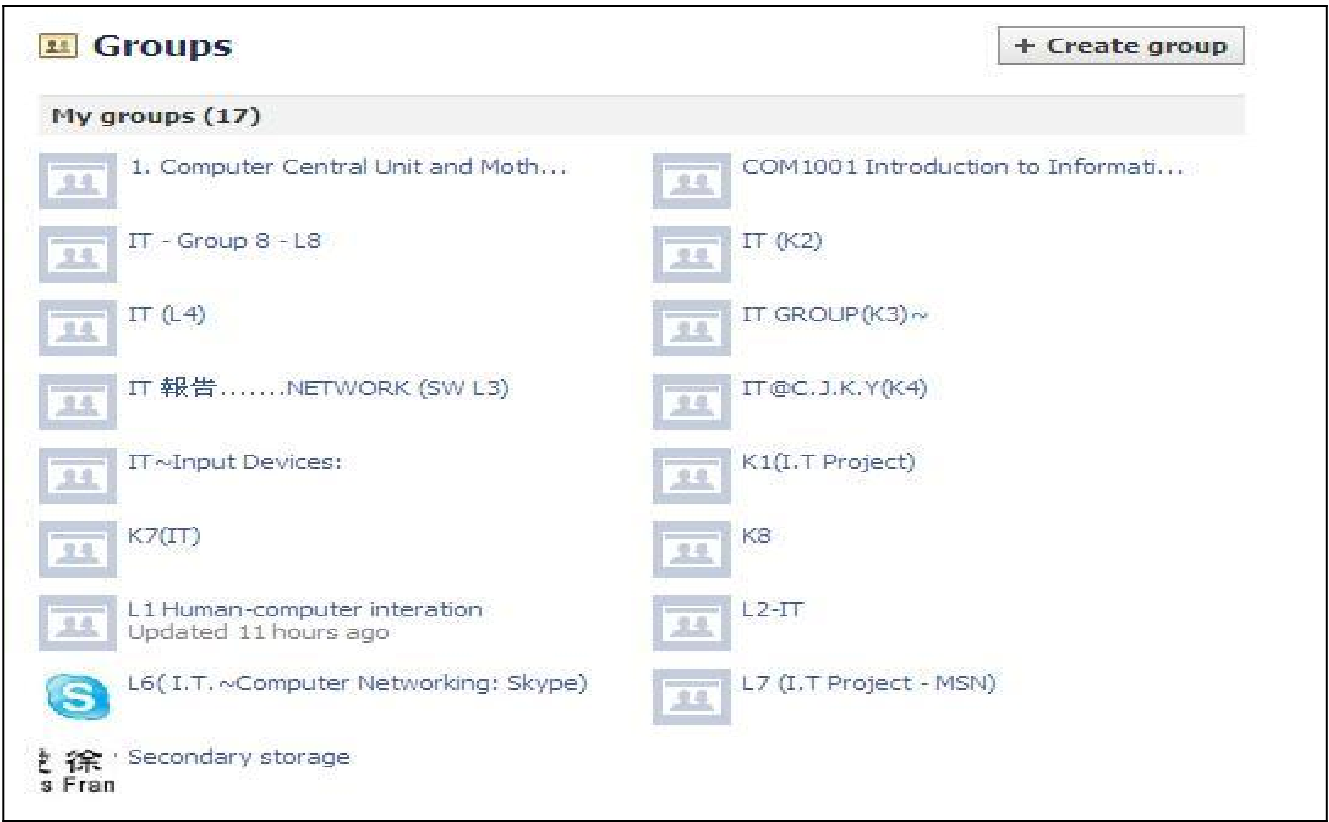 Figure 1: The administrative view of 17 distinct learning groups formed on Facebook.
The Instructor's Role: From Sage to Consultant
Crucially, the methodology shifts the instructor's role. Instead of a distant lecturer, the teacher joins the Facebook group as an "old-timer." Students start as "newcomers" (peripheral participation) and, through the execution of tasks, move toward the center of the community to become "experts."
Experiments & Results
The study monitored two classes of sub-degree IT students. These students were tasked with creating group projects on various IT domains, ranging from hardware components to social aspects like "Cyber Bullying."
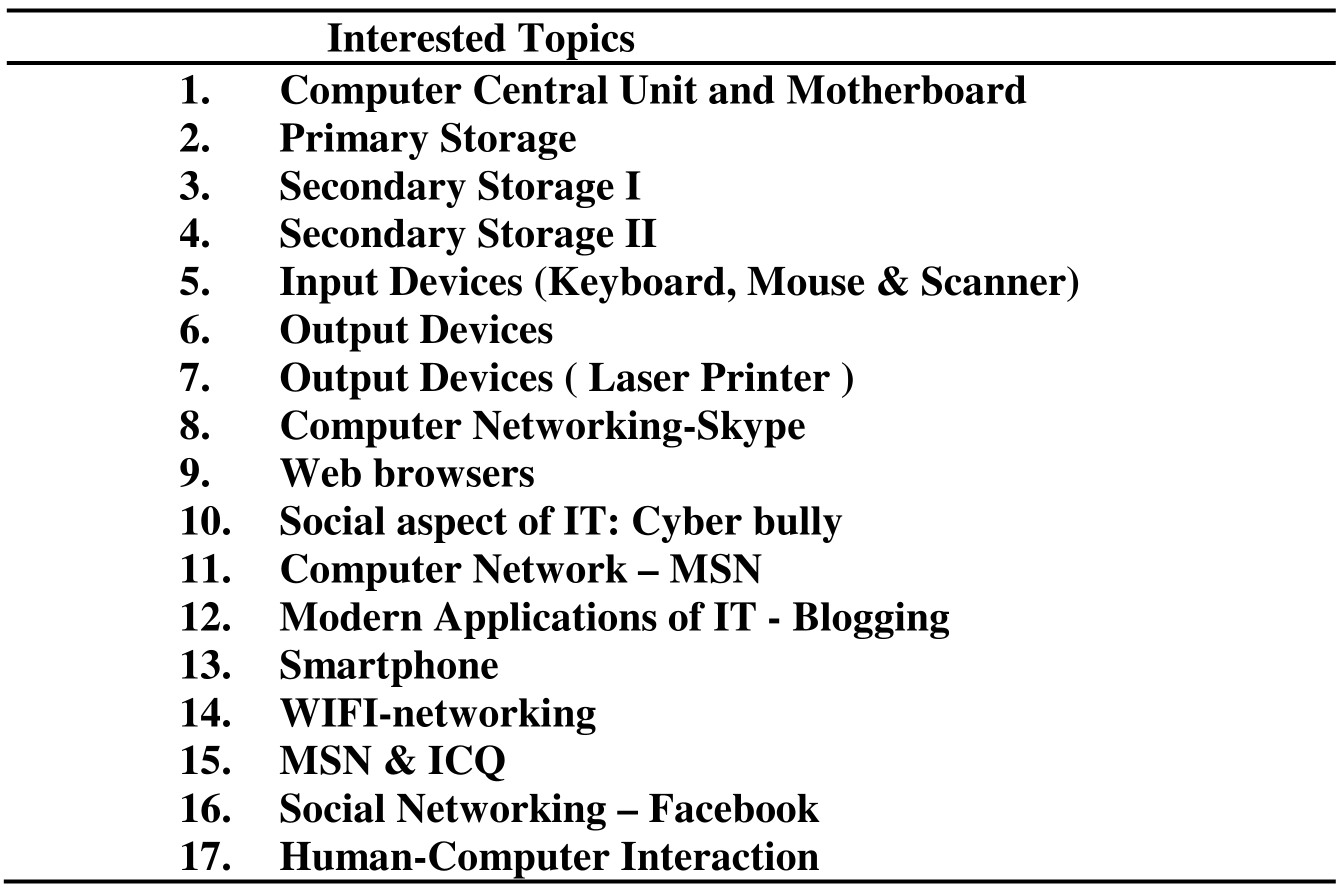 Table 1: The diverse domains explored by the groups, illustrating the 'Domain' aspect of CoP.
Key Findings:
- High Adoption: Because 85% of college students were already Facebook users at the time, the "onboarding" cost was nearly zero.
- Enhanced Interactivity: The use of interactive whiteboards and real-time document editing (via Facebook Docs) fostered a level of collaboration rarely seen in standard discussion forums.
- Automatic Archiving: The "Wall" provided a chronological, transparent record of contribution, making it easier for instructors to assess individual engagement in a group setting.
Depth Insight: Why Social Media Works for CoP
The effectiveness of this approach lies in "Low-Stakes Participation." In a formal LMS, posting a question feels like an "event." In Facebook, posting feels like an "interaction." This lower psychological barrier is the catalyst for the Practice element of CoP—where members share "stories, helpful tools, and ways of handling typical problems" organically.
Conclusion & Future Outlook
The paper successfully argues that Facebook is not just a distraction but a potentially powerful Social Learning Environment.
Limitations: The study acknowledges that while Facebook is great for interaction, it may face challenges regarding privacy and the "blurring" of professional and personal boundaries.
Future Work: As we look toward 2026 and beyond, the evolution of these VCoPs into Metaverse-based learning or AI-integrated social platforms seems like the natural next step. The core principle remains: learning is best achieved when it happens within a community that the learner already calls home.