
FaceChange: Solving the Privacy vs. Utility Paradox in Mobile Social Networks
FaceChange: Attaining Neighbor Node Anonymity in Mobile Opportunistic Social Networks With Fine-Grained Control
This paper introduces FaceChange, a novel privacy-preserving system for Mobile Opportunistic Social Networks (MOSNs) that achieves neighbor node anonymity while supporting the collection of real ID-based encountering information. By combining bilinear pairing, commutative encryption, and a delayed relaying mechanism, it enables nodes to interact anonymously during physical proximity and exchange identity evidence only after disconnection.
TL;DR
In the world of Mobile Opportunistic Social Networks (MOSNs), knowing "who you met" is crucial for routing data, but revealing "who you are" to every passerby is a privacy nightmare. FaceChange is a sophisticated framework that allows mobile devices to communicate anonymously while they are close to each other, only revealing their identities through encrypted "encountering evidence" after they have safely moved apart.
The Core Conflict: Why Anonymity Breaks Social Routing
Mobile Opportunistic Social Networks rely on human mobility. Your phone might pass a message to a stranger's phone because that stranger frequently "meets" the ultimate destination.
- The Utility Trap: To calculate meeting probabilities, nodes must know the real IDs of everyone they encounter.
- The Privacy Trap: If you broadcast your real ID to every neighbor, a malicious node can track your movements, identify you as a high-value target, or launch "central node" attacks.
Prior works either protected profiles (but leaked IDs) or provided pseudonyms that were easily linkable. FaceChange breaks this cycle by asserting a clever physical intuition: A malicious node cannot attack a target it cannot communicate with. By the time a node learns its neighbor’s identity, they are already out of range.
Methodology: The "Collect Later" Architecture
The system's brilliance lies in its three-pillar cryptographic design:
1. Anonymous Interaction & Evidence Creation
When two nodes (Ni and Nj) meet, they don't exchange IDs. Instead, they use Bilinear Pairing to co-create a "commitment." They exchange random numbers to derive an encryption key that even an eavesdropper cannot calculate.
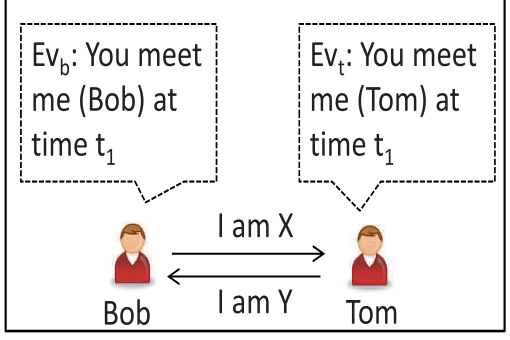 Fig 1: The FaceChange workflow showing anonymous encounter followed by post-separation evidence routing.
2. Fine-Grained Trust Control
Not all encounters are equal. Ni might want to share more routing data with a "trusted" neighbor than a total stranger. FaceChange uses a solution to the Millionaire’s Problem, allowing nodes to calculate "attribute similarity" (e.g., same workplace or high reputation) without ever revealing the actual attributes to each other.
3. The Relaying Scheme
How do you send an ID to someone whose ID you don't know?
- During the encounter, the recipient (Nj) picks a Relay Node (RN) and gives the sender (Ni) an envelope containing Nj's ID, encrypted with the Relay's public key.
- After they separate, Ni routes this evidence to the Relay.
- The Relay decrypts the "inner envelope" and forwards the encounter evidence to Nj.
Experimental Validation
The authors didn't just stay in the realm of theory. They tested FaceChange against real-world traces (MIT Reality and Haggle) and implemented it on physical smartphones.
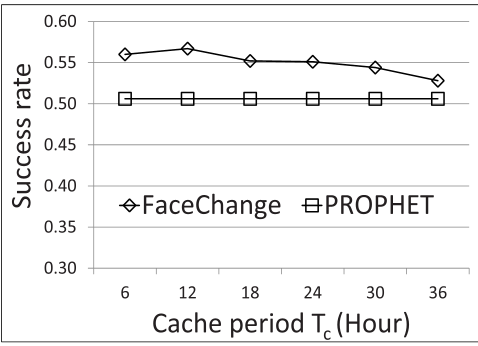 Fig 2: Performance metrics showing high success rates and low hop counts for evidence delivery.
Key Results:
- Routing Accuracy: Surprisingly, FaceChange actually improved routing success rates. By introducing a "cache period" for evidence, it smoothed out the noise of transient contacts, leading to more stable meeting probability calculations.
- Energy Efficiency: Implemented on Windows Phones, the cryptographic overhead was negligible. Using Bluetooth, 50 discovery/encounter cycles consumed only 0.2% of the battery, making it highly practical for daily use.
Critical Insight & Conclusion
FaceChange elegantly utilizes the spatial-temporal gap inherent in opportunistic networks. By delaying identity disclosure until physical proximity is lost, it creates a "security-by-distance" buffer.
However, the system does introduce a "white list" extension for very close friends, recognizing that full anonymity is sometimes unnecessary for high-trust interactions. While the reliance on a Relay Node introduces some latency, the benefits—complete neighbor anonymity without sacrificing the smart routing that makes MOSNs work—is a massive step forward for decentralized mobile privacy.
Takeaway: Future mobile protocols should look at FaceChange as a template for "Privacy-as-a-Latency-Tradeoff," where we trade immediate knowledge for long-term security.