
Faceteq: Pioneering Fourth-Generation VR through EMG-Driven Affective Computing
FACETEQ interface demo for emotion expression in VR
This paper introduces Faceteq v.05, a wearable interface for VR that integrates high-performance dry-sensor Electromyography (EMG) and biometrics to track facial expressions and emotional valence in real-time. By bypassing traditional camera-based limitations, it enables "Fourth Generation" VR interaction with applications in social environments, user-experience analysis, and medical rehabilitation.
TL;DR
Faceteq v.05 is a revolutionary wearable interface that replaces traditional, slow camera-based facial tracking with high-speed Electromyography (EMG) dry sensors. By embedding these sensors directly into the VR headset, the system captures facial muscle activations at 1000Hz, enabling real-time emotion mirroring, intent-driven interaction, and deep biometric analysis for healthcare and gaming.
Beyond the Lens: The Motivation for Muscle-Sensing
While modern VR has mastered head tracking (1st Gen), limb tracking (2nd Gen), and eye tracking (3rd Gen), the "final frontier" is the human face—the primary engine of social emotion.
Current solutions often rely on internal cameras (like those in the Quest Pro), which are limited by frame rates (30-60 fps) and "visible" changes. However, human emotion starts with muscle contractions that occur long before a visible shift in skin position. EMG technology allows us to detect baseline muscle tone and micro-expressions that cameras simply miss. The industrial challenge has always been the "wet" nature of EMG—requiring gels and skin prep—which Faceteq solves using patented dry sensor technology.
Methodology: The Architecture of Emotion
The Faceteq v.05 prototype is designed as an add-on for commercial HMDs (like the Oculus Rift). Its core methodology revolves around three technological pillars:
- Sensory Integration: Dry EMG sensors with 24-bit resolution capturing at 1000 samples/sec, providing a massive increase in temporal resolution over optical methods.
- Multi-Modal Biometrics: The inclusion of a 9DOF IMU and Photoplethysmograph (PPG) allows the system to correlate facial expressions with physical movement and heart rate.
- Real-Time API: A proprietary pipeline streams this raw data into the Unity3D engine, translating muscle voltage into digital avatar movements or UI commands.
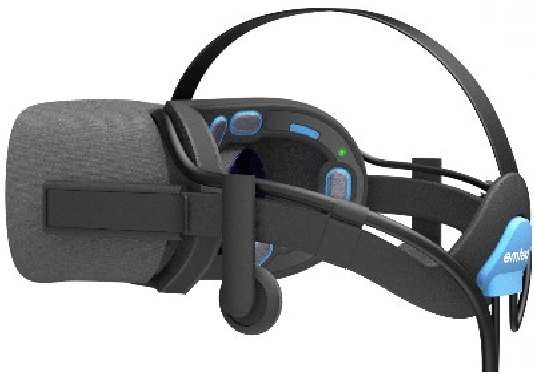 Figure 1: The hardware integration of Faceteq sensors into a standard VR HMD.
Experimental Showcases: Interaction and Analysis
The authors demonstrated the system's efficacy through three distinct VR scenarios:
- Emotional Mirroring: An avatar reflects the user’s smile or frown instantly, creating a sense of "social presence."
- Assistive Modality: Users can select emoticons on a social media-style interface just by making the corresponding face—a breakthrough for accessibility.
- The VR Cinema: A research tool that records a viewer's subconscious reactions to video content, providing "Engagement Analytics" that go far beyond self-reporting surveys.
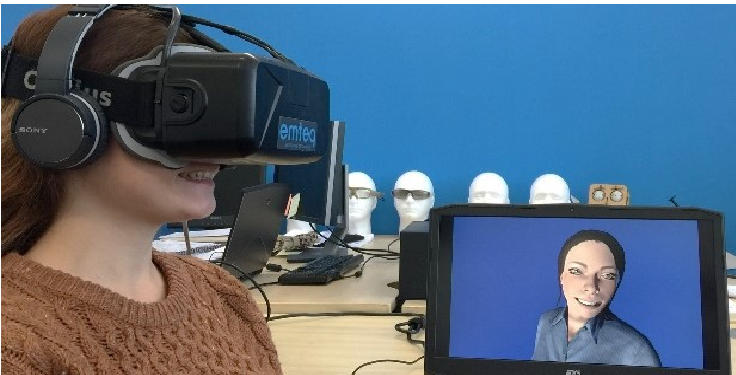 Figure 2: Real-time avatar mirroring using high-speed EMG data.
Deep Insight: Why This Matters
The shift from optical to electrical sensing in VR is a paradigm shift. By moving the sensor into the face-mask padding, the system achieves:
- Zero Occlusion: Works perfectly even in total darkness or with glasses.
- Sub-visual Detection: Captures "pre-emotions" or suppressed emotions through micro-muscle tremors.
- Medical Utility: This isn't just for games. The ability to monitor facial muscle activation is a "holy grail" for treating facial paralysis, autism, and PTSD, where emotional feedback loops are critical for recovery.
Conclusion & Limitations
Faceteq v.05 successfully demonstrates the feasibility of high-fidelity, dry-sensor EMG in VR. However, the system still requires a brief calibration phase for each user, and the current prototype is an "add-on" rather than a fully integrated consumer product.
The future of "Fourth Generation VR" lies in making these sensors invisible and ubiquitous. As we move toward more social "Metaverse" applications, the ability to transmit not just where we are looking, but how we are feeling, will be the differentiator between a mechanical simulation and a true human experience.