
FER Focused on Descriptive Region Segmentation: Efficiency Meets High Accuracy
Abstract-Facial emotion recognition (FER) is useful in many different applications and could offer significant benefit as part of feedback systems to train children with Autism Spectrum Disorder (ASD) who struggle to recognize facial expressions and emotions. This project explores the potential of real time FER based on the use of local regions of interest combined with a machine learning approach. Histogram of Oriented Gradients (HOG) was implemented for feature extraction, along with 3 different classifiers, 2 based on k-Nearest Neighbor and 1 using Support Vector Machine (SVM) classification. Model performance was compared using accuracy of randomly selected validation sets after training on random training sets of the Oulu-CASIA database. Image classes were distributed evenly, and accuracies of up to 98.44% were observed with small variation depending on data distributions. The region selection methodology provided a compromise between accuracy and number of extracted features, and validated the hypothesis a focus on smaller informative regions performs just as well as the entire image
This paper introduces a localized Facial Emotion Recognition (FER) framework that utilizes descriptive region segmentation (focusing on the mouth and eyebrows) to classify emotions. By combining Histogram of Oriented Gradients (HOG) with traditional machine learning classifiers, specifically reaching a 98.44% accuracy on the Oulu-CASIA database, it outperforms several deep learning-based SOTA methods.
TL;DR
Researchers have developed a Facial Emotion Recognition (FER) system specifically designed for potential use in Autism Spectrum Disorder (ASD) therapy. By focusing exclusively on "descriptive regions"—the mouth and eyebrows—and using traditional ML techniques (HOG + KNN), they achieved a staggering 98.44% accuracy on the Oulu-CASIA database, proving that less data (fewer features) can produce SOTA-level results when the data is high-quality.
Background: Why Focus on Regions?
In the context of ASD therapy, real-time feedback is crucial. However, the human face is "noisy" for a machine. Hair, ears, and background elements often clutter the feature space. Prior works have often processed the whole image, which increases computational load. The authors hypothesized that since most emotional expression is concentrated in the mouth and eyes/eyebrows, segmenting these regions would lead to a more efficient and focused model.
Methodology: The Localized Approach
The system follows a pipeline of detection, extraction, and classification:
- Region Detection: Using the Viola-Jones algorithm, the system extracts three specific bounding boxes: the overall Face, the Mouth, and the Left Eyebrow.
- Feature Extraction: Histogram of Oriented Gradients (HOG) captures the shape and orientation of features. The descriptors from the Mouth and Eyebrow are concatenated into a single, compact vector.
- Classification: The study compared K-Nearest Neighbor (KNN) and Support Vector Machines (SVM). Interestingly, the simplest model—EUC1 (1-NN with Euclidean distance)—emerged as the winner.
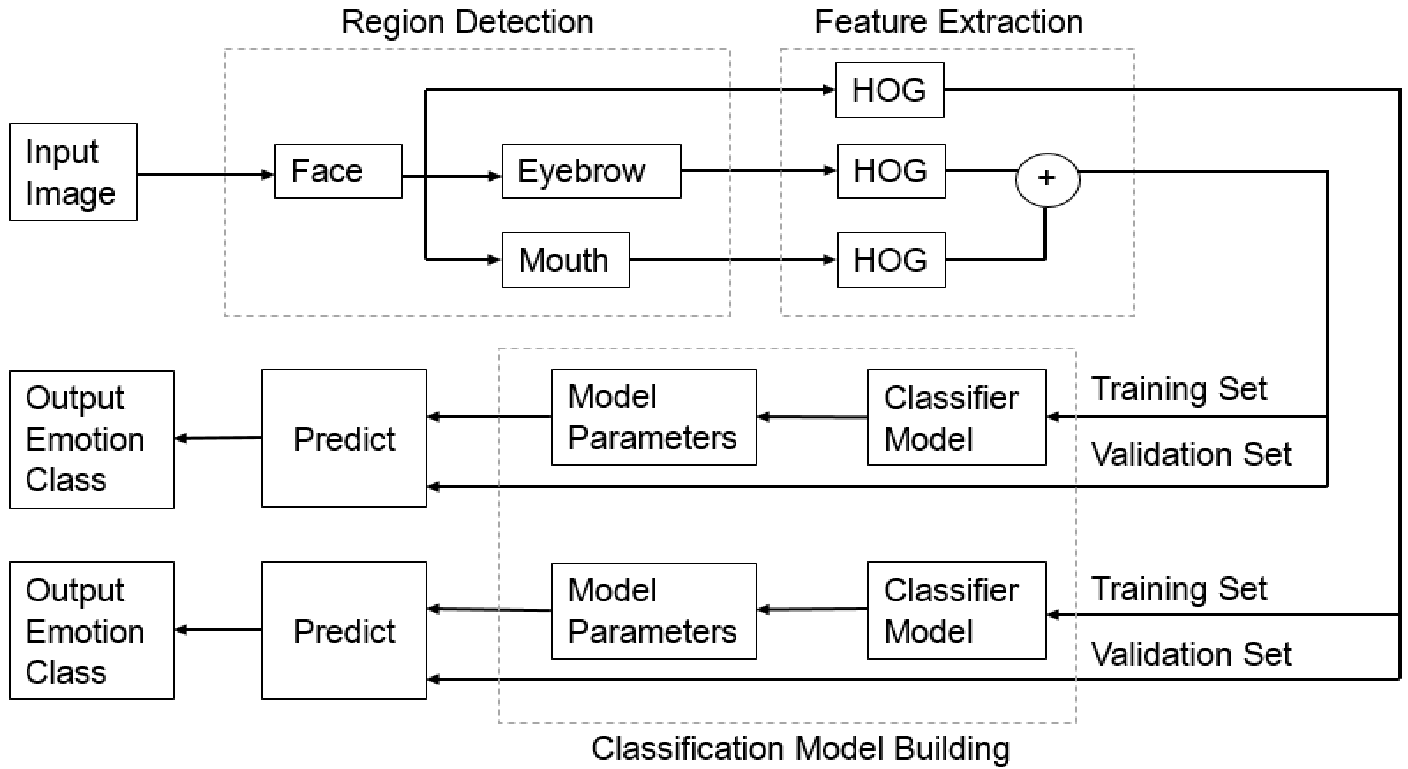 Figure 1: The proposed system outline showing the transition from raw image to segmented regions and final classification.
Experiments and Results
The model was validated using the Oulu-CASIA database, containing six core emotions: Anger, Disgust, Fear, Happiness, Sadness, and Surprise.
Performance Highlights:
- The Power of Local Regions: The "Mouth + Eyebrow" approach achieved 98.44% accuracy, which is statistically comparable to using the entire Face (98.94%).
- Outperforming Deep Learning: Surprisingly, this traditional HOG-based approach outperformed complex neural networks reported in literature (e.g., Jung et al.'s 81.46%).
- Class Specifics: "Happiness" was the most easily recognized emotion (>99% accuracy), while "Anger" and "Surprise" showed slightly higher misclassification rates, though still remaining above 97%.
 Figure 2: Example of segmented descriptive regions from the Oulu-CASIA database.
The Robustness Challenge
When the model was tested on the JAFFE database (Japanese female subjects), the accuracy plummeted to ~39%. This highlights a classic problem in FER: Domain Shift. Models trained on specific demographics or lighting conditions often struggle to generalize to vastly different ethnic or environmental datasets without further tuning.
Critical Analysis & Takeaways
The core value of this research lies in its Inductive Bias. By manually enforcing a focus on the mouth and eyebrows, the researchers successfully filtered out background noise that even deep learning models sometimes struggle to ignore.
- Efficiency: Using fewer features makes the system ideal for mobile devices or low-powered hardware used in clinical gaming platforms for ASD.
- Key Takeaway: Localized regions are sufficient for emotion recognition. The eyebrows and mouth provide a high-frequency signal for emotional states, and capturing these specifically can lead to simpler, faster, and more accurate models.
- Future Direction: To address the robustness issues seen with the JAFFE dataset, future work should involve more diverse training sets and perhaps leverage "Transfer Learning" to bridge the gap between different facial structures and cultures.
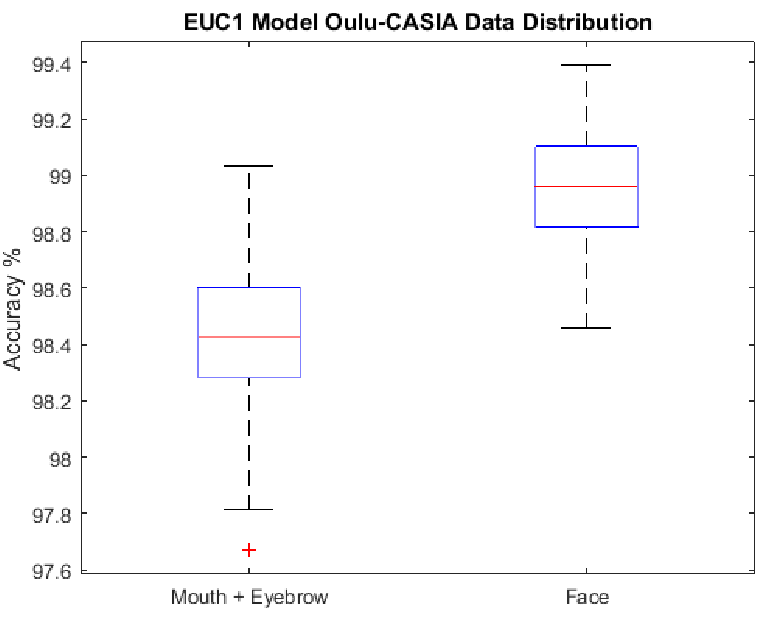 Figure 3: Accuracy distribution for both Full Face and localized regions, showing high stability and minimal outliers.
Conclusion
By proving that small, informative regions perform just as well as full-face analysis, this study sets a benchmark for efficient FER system design. It paves the way for accessible, real-time diagnostic tools that could significantly impact the social development of children with ASD.