
The Tug-of-War Between Local Roots and Global Reach: Why We Switch SNS
What causes users to switch from a local to a global social network site? The cultural, social, economic, and motivational factors of Facebook’s globalization
This study investigates the determinants of user migration from domestic Social Network Sites (SNS), such as South Korea’s CyWorld, to the global platform Facebook. Using a multifaceted prediction model, it identifies that expected benefits and entertainment motives drive switching, while Western cultural values and sunk costs act as primary barriers.
TL;DR
Why did South Koreans, historically loyal to local ICT giants, eventually migrate from the once-dominant CyWorld to Facebook? This study reveals that while the "allure of the new" (expected benefits/entertainment) pulls users toward global platforms, a powerful anchor of Western cultural dissonance and past behavioral investments (sunk costs) holds them back.
Background: The Defeat of the First-Mover
In the early 2010s, South Korea was a unique battlefield. While the rest of the world succumbed to global tech giants, Korea remained a fortress for local services like Naver and CyWorld. However, the tide eventually turned. This research explores the "Why" and "How" of this transition, positioning it as a case study of digital globalization vs. cultural localization.
The Resistance: Why Globalization Isn't Seamless
The authors argue that SNS platforms are not culturally neutral. They identify two major "friction" points:
- Cultural Values: Facebook’s architecture is "Low-Context" and "Individualistic"—it encourages direct, bold friend requests and public displays of social reach. This often clashes with the "High-Context," collectivistic Korean culture where such directness can be perceived as intrusive or socially embarrassing.
- The Sunk Cost Fallacy: Users who spent years building a digital "home" on CyWorld—accumulating photos, reputation, and friends—felt a "retrospective cost" that made switching feel like a loss of identity.
Methodology: The Four-Pillar Model
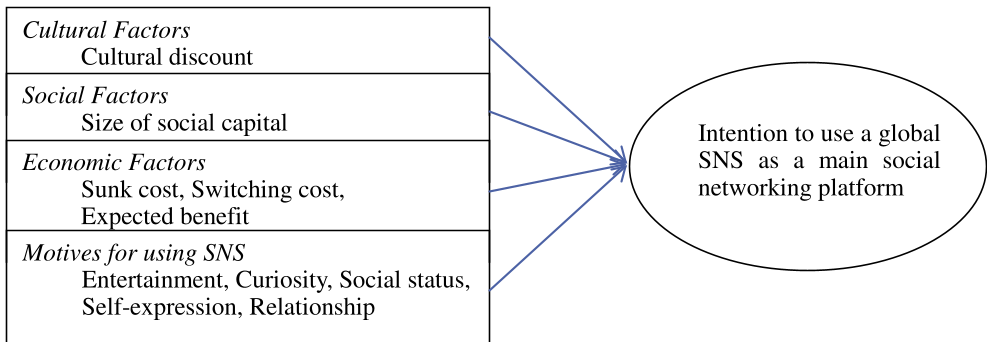
The study utilizes a hierarchical regression to weigh different factors:
- Cultural: Language, privacy policies, and individualist vs. collectivist values.
- Social: The scale of bonding and bridging social capital.
- Economic: Switching costs (learning new UI) vs. Sunk costs (prior history).
- Motivational: Use and Gratification (Information, Entertainment, Self-expression).
Core Insights: What Actually Drives the Switch?
The results provide a fascinating look at user psychology:
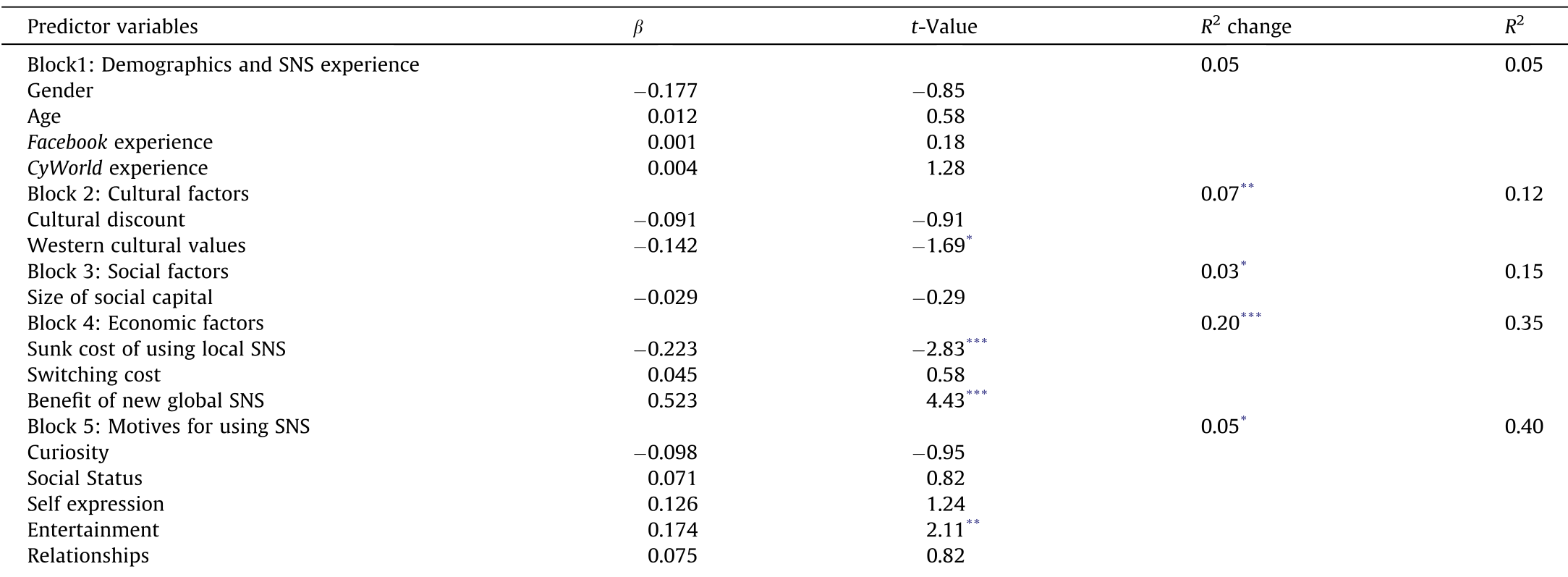
- The Power of Utility: "Expected Benefits" was the single most powerful predictor. If a user perceived Facebook as more useful for mobile access or global networking, they migrated regardless of the learning curve.
- Entertainment as the Gateway: Interestingly, Facebook’s "Open API" strategy—allowing third-party games like Farmville—served as a primary psychological hook that local platforms like CyWorld lacked.
- Social Capital Paradox: Surprisingly, the size of a user's network didn't predict the switch. It wasn't about having more friends; it was about the quality of the benefits derived from those connections.
Critical Analysis & Conclusion
This research highlights the Inductive Bias inherent in software design. When a platform like Facebook "standardizes" its interface, it implicitly forces Western social norms onto global users.
Takeaways for the Future:
- For Global Players: Total "anti-localization" is risky. Clashes with local high-context communication styles can lead to account deletions and privacy backlashes.
- For Local Defenders: Sunk costs eventually evaporate. To compete with global giants, local services must match the "Expected Benefits" (especially mobile-first utility) while doubling down on cultural nuances that global platforms ignore.
While Facebook may have won the battle of globalization in Korea, this study serves as a reminder that culture is the ultimate gatekeeper of digital loyalty.