
The Perception Paradox: Why Bangladesh’s Graduates Are Struggling to Find Work
Analyzing the Factors Contributing to Graduate Unemployment
This study investigates the persistent paradox of high graduate unemployment in Bangladesh despite a growing digital economy. Using surveys collected via Facebook and analyzed through Tableau BI, the research quantifies the discrepancy between graduates' self-perceptions and employers' expectations across six core professional competencies.
TL;DR
Despite high academic credentials, university graduates in Bangladesh face an alarming unemployment rate of nearly 21%. This research utilizes data mining and BI (Business Intelligence) analysis to reveal a stark "perception gap": graduates believe they are highly skilled professionals, while employers find them significantly lacking in critical thinking, time management, and workplace ethics.
The Misalignment Crisis
The economic narrative in Bangladesh presents a striking contradiction. On one hand, the digital revolution promises growth; on the other, the unemployment rate for those with advanced degrees is actually increasing. This paper moves beyond anecdotal complaints to find out why. The authors identify that the issue isn't a lack of diplomas, but a fundamental misalignment between the perceived value of a degree and the actual requirements of the modern workplace.
Methodology: Bridging Social Media and Business Intelligence
To extract objective insights from subjective opinions, the researchers conducted an extensive survey on Facebook.
- Data Acquisition: Using Typeform to minimize bias and Tableau to clean "noisy" survey data.
- The Estimators: Both groups were asked to rate six key competencies: Communication, Critical Thinking, Teamwork, Time Management, Technology Knowledge, and Professionalism.
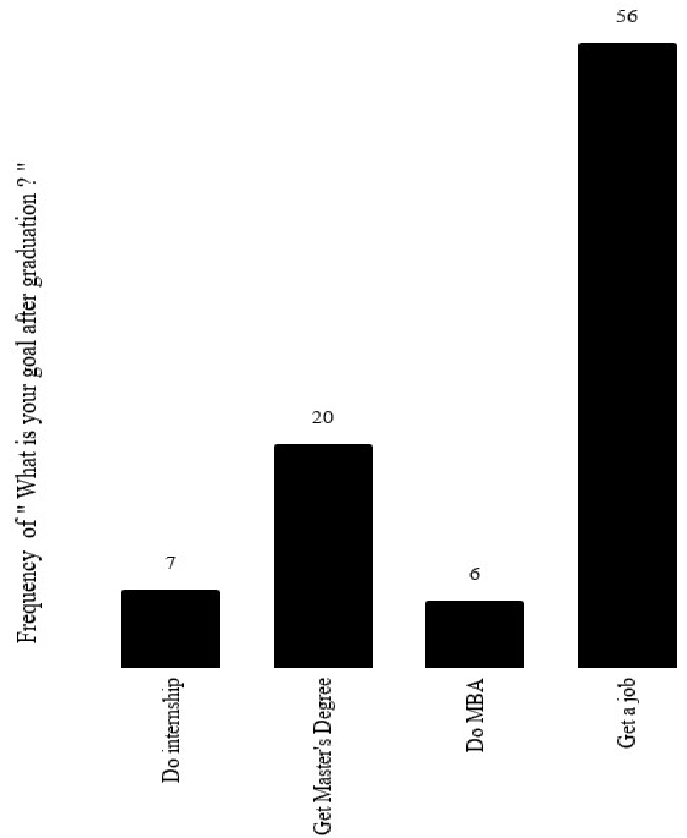 Fig 1. Even though "Getting a Job" is the primary goal for 62% of students, the path remains obstructed by skill deficits.
The Core Finding: The "Presumptuousness" Gap
The most illuminating part of the study is the comparative rating between students and employers. The data shows that students are consistently "presumptuous" about their readiness.
1. The Professionalism Plummet
Students rated themselves a high 8.72 in professionalism. Employers, seeing the reality on the ground, rated them a 7.22. This indicates a lack of understanding of workplace etiquette and work ethics.
2. Time Management: The Greatest Weakness
The widest gap occurred in Time Management. Graduates gave themselves an 8.24, but employers awarded them a dismal 6.84. In a fast-paced corporate environment, this 1.4-point deficit represents a critical failure in operational efficiency.
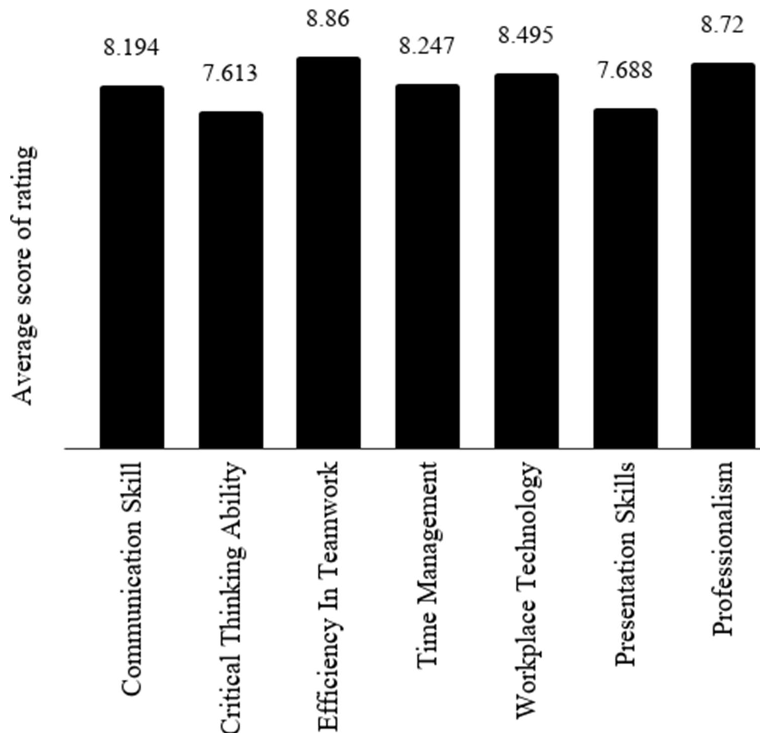 Fig 2. Students' self-evaluations (above) show a consistent skew toward high proficiency compared to employer ratings.
Why Academic Training is Failing
The study also looked at where students learn. Surprisingly, Online Courses were cited as the least effective resource, while "Real Life Experience" and "Project Work" were the most valued. This suggests that the traditional, lecture-heavy academic model is not translating into career-ready skills. Furthermore, 25% of graduates end up abandoning their major entirely, suggesting that academic specialization is often disconnected from market demand.
Critical Analysis & Conclusion
Takeaway
The "Graduate Unemployment" crisis in Bangladesh is a Soft Skills Crisis. The industry is not looking for more certificates; it is looking for "minimal qualified people" who can think critically and manage their time.
Limitations
While the use of Tableau provides a clean visualization of trends, the sample size (n=150) is relatively small for a national-level economic conclusion. Additionally, using Facebook as a primary source may exclude graduates from lower socio-economic backgrounds who lack consistent internet access.
Future Outlook
For Bangladesh to meet its Sustainable Development Goals (SDG 8), the education system must move beyond the "degree factory" model. There is a massive opportunity for Applied Learning Modules—short-term, project-based certifications that focus specifically on the soft-skill "estimators" identified in this paper.