
The Facebook Privacy Paradox: Why We Overshare Despite the Risks
2529_Factors that Influence the Choice of Privacy Settings on Facebook Freshmen's View at a South African University.
This study investigates the "Privacy Paradox" on Facebook, specifically identifying the psychological and social factors that influence users' choices of privacy settings. Using a mixed-methods approach (questionnaires, observations, and interviews) among South African university students, it concludes that while users claim high privacy concerns, their actual disclosure behavior is driven by a need for social validation and peer connectivity.
TL;DR
Despite the headlines about data breaches and identity theft, why do we still leave our digital front doors wide open? This research dives into the South African context to uncover the psychological tug-of-war between the need for social validation and the fear of cyber-attacks. It reveals that "Awareness" is the ultimate lever: once users truly understand their visibility, they move from "Completely Open" to "Strictly Private" almost instantly.
The Hidden Conflict: Motivation vs. Caution
In the world of social networking, there is a glaring contradiction known as the Privacy Paradox. Users frequently state they are "highly concerned" about their privacy, yet a quick scroll through Facebook reveals birth dates, home addresses, and phone numbers.
The authors argue that existing research often misses the "Why." Why do we choose permissive defaults?
- The Social Cost of Privacy: Being private often means being invisible.
- The "Not a Target" Fallacy: A belief that one is too "unimportant" to be hacked.
Methodology: Peeking Behind the Profile
To solve this puzzle, the researchers didn't just ask questions; they watched. They performed a three-stage clinical investigation:
- Reporting: Surveying 111 students about their perceived risks.
- Observation: Checking the actual public visibility of those same students' profiles.
- Intervention: Interviewing the "over-sharers" to see if realizations changed their behavior.
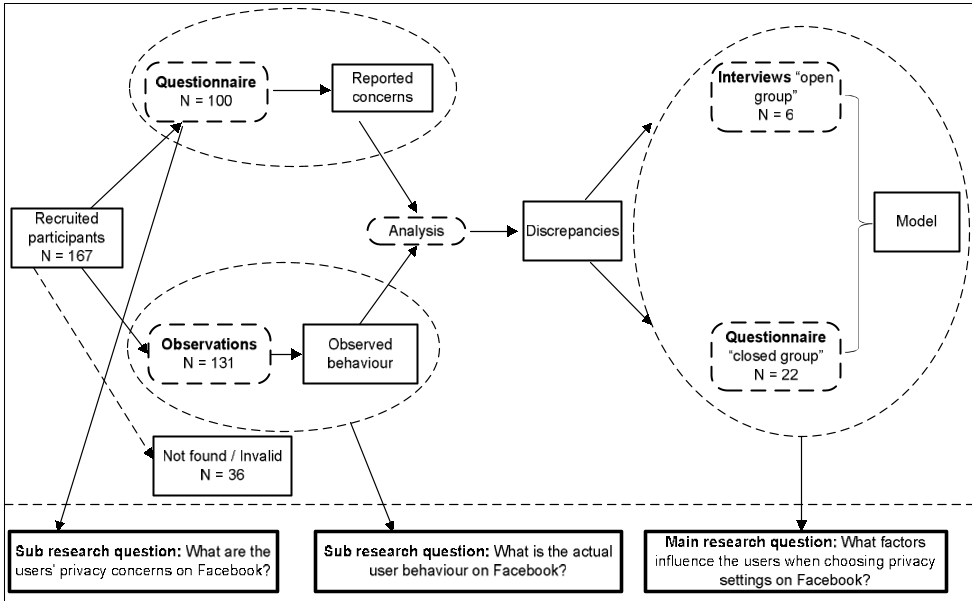 Figure 1: The multi-stage research workflow combining surveys, observations, and interviews.
Why We Share: The "Negative" Influencers
The study identified several factors that decrease privacy-seeking behavior:
- The Need to be Known: A fundamental desire to be contactable by past acquaintances.
- Social Appreciation: Disclosing birth dates specifically to receive "Happy Birthday" messages (social validation).
- Lack of Awareness: Users often do not realize that "Friends of Friends" or "Public" actually means "Strangers."
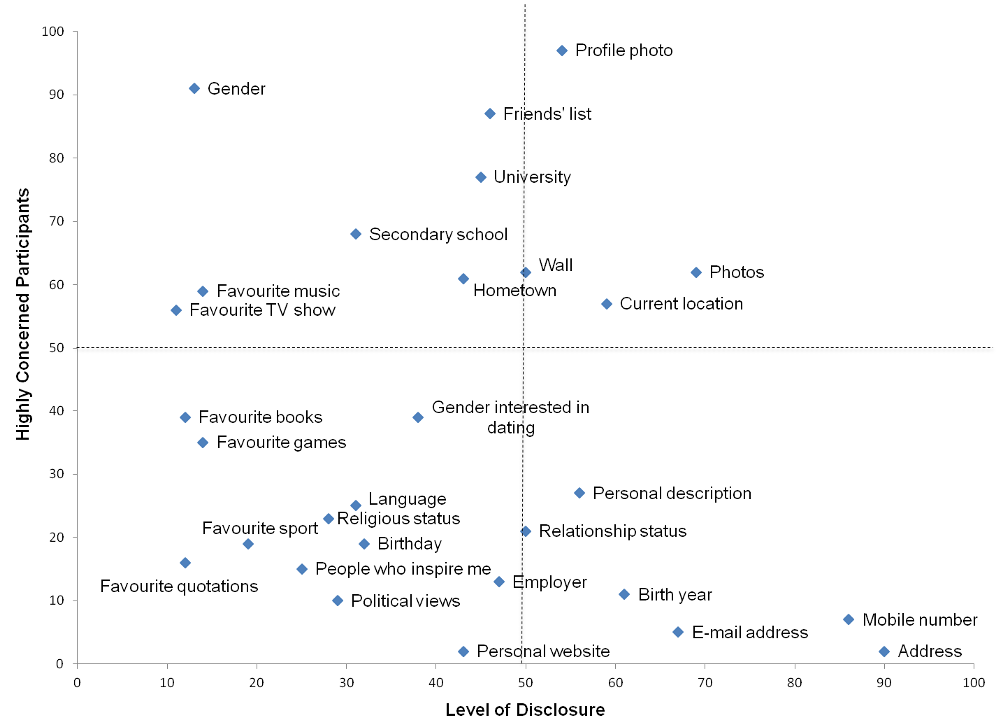 Figure 2: The disconnect between high concern (reported) and high disclosure (observed) across different Facebook components.
The "First-Hand Experience" Catalyst
Interestingly, the study found a few things that actually increase privacy:
- Profile Hacking: Users who had been previously hacked (73%) were far more likely to have strict settings.
- The "Interview Effect": After being asked why they shared so much during the interviews, 5 out of 6 participants went back and closed their profiles. This suggests that the paradox isn't about apathy—it's about a lack of active reflection.
A New Model for Privacy Behavior
The authors propose a comprehensive model (Figure 3) that categorizes influences into General Factors (News, Friends, Personal Decisions) and Facebook-specific factors (Previous harassment, awareness of tagging).
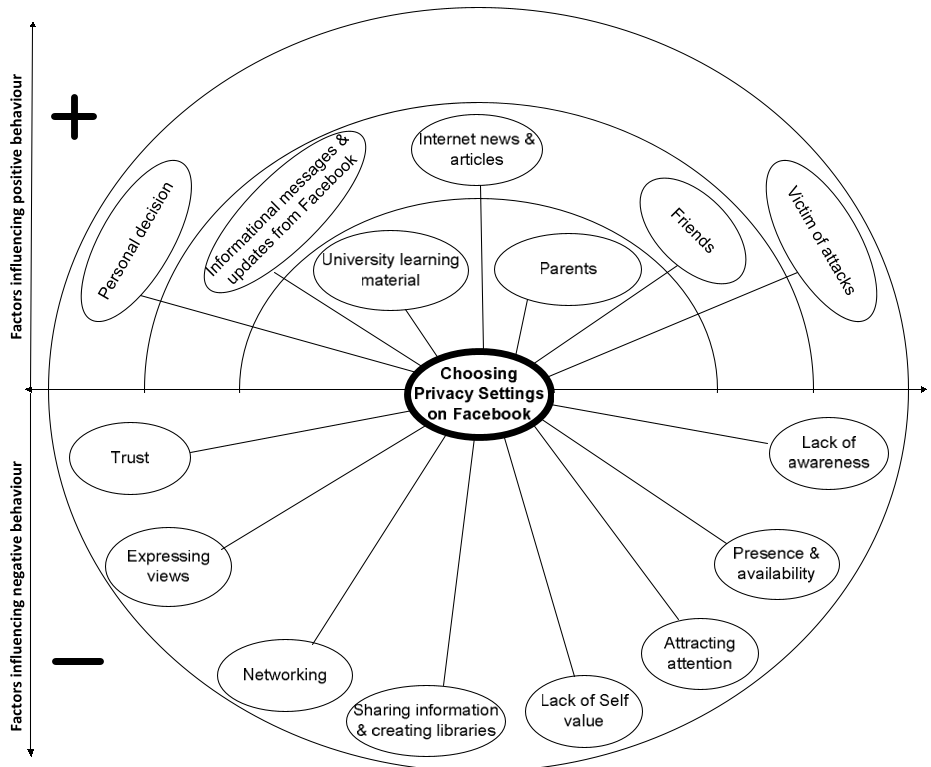 Figure 3: A conceptual model of the drivers behind privacy setting choices.
Academic Insight & Future Outlook
This work highlights that Education, not just Encryption, is the key to digital safety. The authors suggest that Universities should integrate "online privacy literacy" into their core curricula. For developers, the takeaway is clear: the current "Opt-out" system for privacy exploit's the user's social desires.
Limitations
The study focused on a specific demographic—South African "IS" (Information Systems) students. While these students might be more tech-savvy than the average user, their behavior still reflected the common paradox, suggesting that knowledge of how technology works doesn't necessarily protect one from social impulses.
Takeaway: Your privacy settings are a reflection of your social priorities. Are you sharing because you want to be safe, or because you want to be liked?