
Decoding the Echo: Why Some Social Questions Get Answered While Others Die in Silence
Factors Influencing the Response Rate in Social Question &Answering Behavior
This study investigates the extrinsic factors influencing response rates in Social Question and Answering (Q&A) on microblogging platforms. By analyzing 10,000+ questions from Sina Weibo, the authors identify eight significant predictors of engagement, providing a framework to optimize social information seeking.
TL;DR
Why do some questions on social media spark vibrant discussions while others receive zero replies? This study analyzes 13,818 questions from Sina Weibo to identify the "extrinsic" levers—like follower counts, emoticons, and timing—that predict whether you'll get the help you need. The results challenge common myths about hashtags and celebrity mentions.
The Social Q&A Paradox
We live in an age of "Social Search," where we trust our friends more than a Google algorithm. Yet, the statistics are grim: only about 23% to 33% of questions posted on social networks receive a response. This is significantly lower than professional sites like StackOverflow or Yahoo! Answers. The culprit? Information overload and a lack of guaranteed visibility.
The 11 Factors: What Truly Moves the Needle?
The researchers identified 11 potential influencers and put them to the test. Their intuition was simple: if we can identify the external "triggers" of a reply, we can design better social tools.
The "Influencer" Logic
- Follower Count: Unsurprisingly, more followers equal more eyeballs. The study confirms a linear growth in response rates as followers increase.
- Posting Frequency: There is a "Goldilocks Zone." Post too little, and you are forgotten; post more than 9 times a day, and "Information Fatigue Syndrome" sets in, causing followers to tune you out.
The "Attention" Mechanics
- @Mentions: Directly tagging users works, but there's a catch. Tagging Verified Accounts (Celebrities) actually reduced the average response rate. Why? Because users often tag experts randomly, and these experts lack the bandwidth to reply, while the "Celebrity Endorsement" only works if they actually retweet you (which only happened in 6.6% of cases).
- Hashtags: In a surprising twist, hashtags had a negative impact. The authors hypothesize that in the context of Q&A, hashtags are often perceived as "spammy" or annoying, leading potential answerers to skip the post.
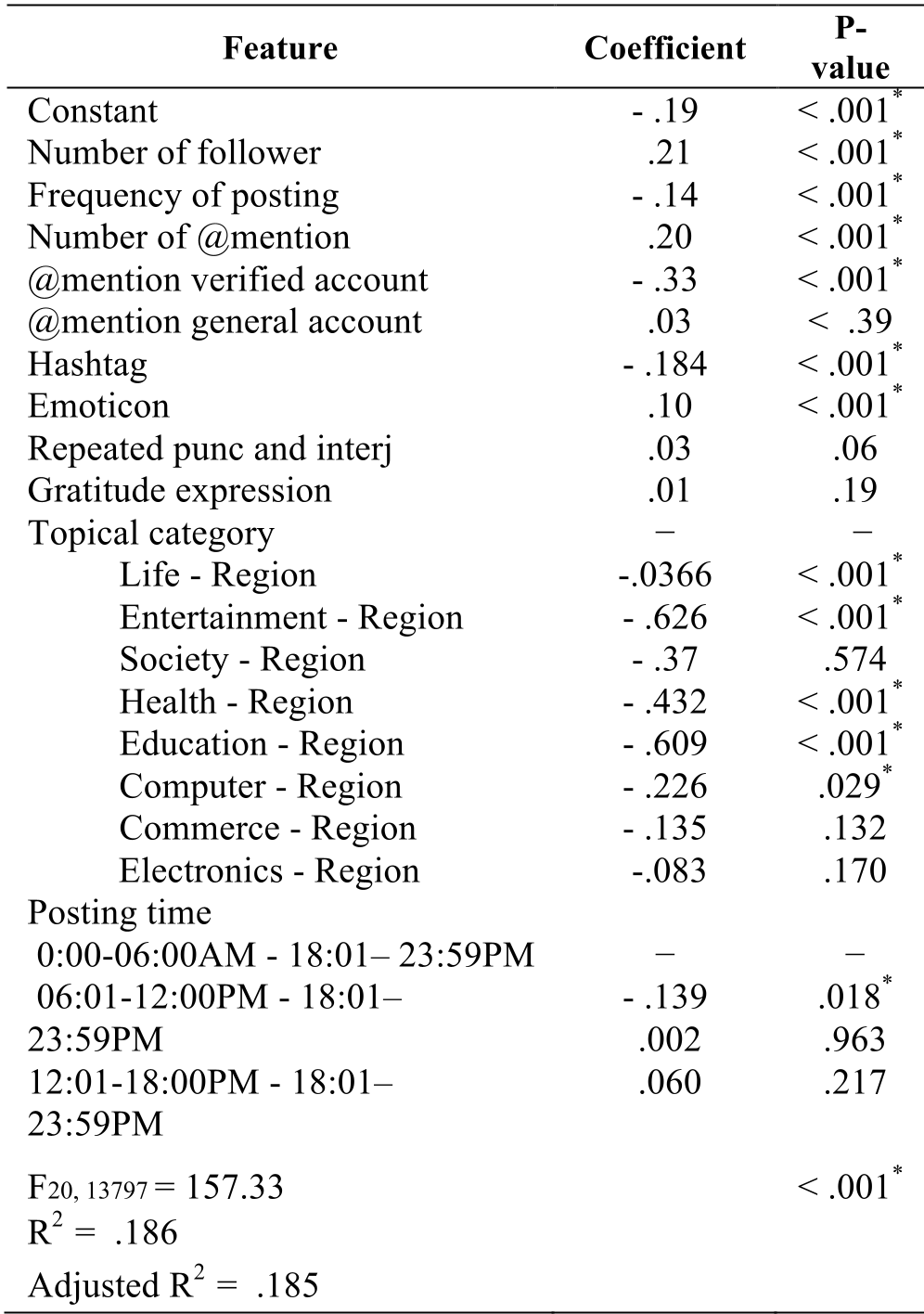 Table 1: Multiple Regression Model showing the significance and coefficients of various factors.
Methodology: Tapping into the "Almighty Weibo"
The study utilized Sina Weibo data, specifically searching for terms like "Almighty Weibo" (万能的微博)—a common Chinese phrase used when seeking urgent help.
The researchers used a Multiple Linear Regression model, which allowed them to isolate the effect of one factor (like timing) while holding others (like follower count) constant. To categorize topics, they fed questions into Baidu Zhidao’s API to automatically label them into fields like "Life," "Education," or "Computer."
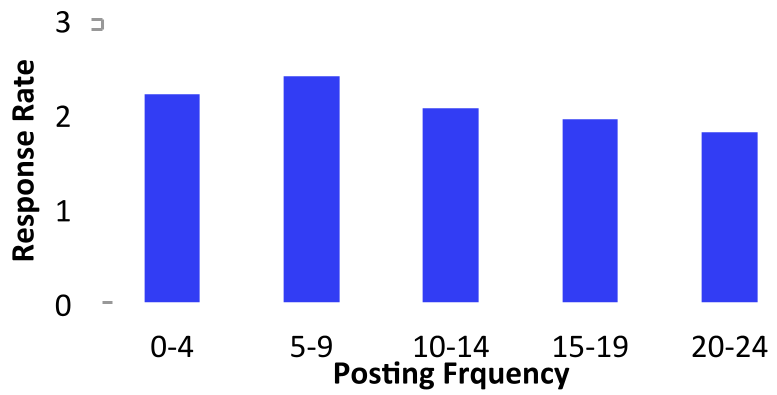 Figure 1: The decline in engagement as posting frequency exceeds the "Sweet Spot."
Key Findings & Visual Evidence
- The Long Tail of Silence: Most questions (84%) receive 5 or fewer responses, creating a classic "long tail" distribution.
- Emoticons Matter: Questions with emoticons received significantly more engagement. They act as social non-verbal cues, increasing the "Social Presence" of the asker.
- Timing is Everything: Questions posted in the evening (18:00 - 00:00) saw the highest volume, while those posted after midnight (00:00 - 06:00) were the least likely to be answered.
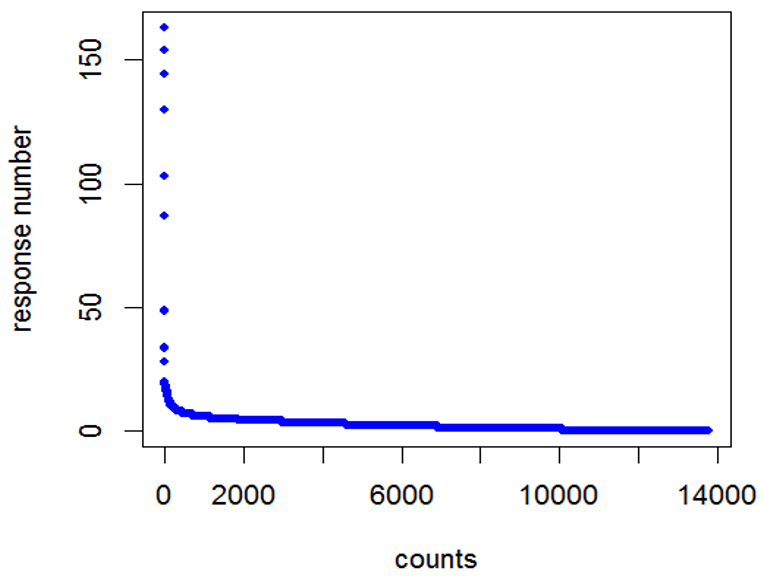 Figure 2: The "Long Tail" of Social Q&A responses.
Critical Insight: The Need for Question Routing
The most profound takeaway isn't just about how many followers you have; it's about routing. The study found that users often do not know who to ask. They randomly tag celebrities like @wangxiaoshan, hoping for a "miracle" retweet.
The failure of hashtags and the limited success of verified mentions suggest that the next generation of social networks needs Expert Recommendation Engines. Instead of broadcasting into the void, the system should identify "who knows what" and route the question to them privately or via a specialized feed.
Conclusion
If you want your question answered today:
- Don't over-spam your feed (keep it under 9 posts/day).
- Do use emoticons to humanize your request.
- Don't rely on hashtags; they might make you look like a bot.
- Do tag specific general accounts rather than high-profile celebrities.
For developers, the message is clear: the future of Social Q&A lies in reducing the "noise" of hashtags and replacing it with the "signal" of intelligent question-to-expert matching.