
Social Capital vs. Privacy: Why We Share on Social Networks Even When Worried
Factors affecting privacy disclosure on social network sites: an integrated model
This paper proposes an integrated model combining the Theory of Planned Behavior (TPB) and the Privacy Calculus model to explain user self-disclosure on Social Network Sites (SNSs). The study identifies that perceived benefit and privacy concern are the dual drivers of disclosure behavior, with the former showing a significantly stronger influence.
TL;DR
This research addresses a fundamental paradox: why do social network users continue to disclose personal information despite rising privacy concerns? By integrating the Theory of Planned Behavior (TPB) and Privacy Calculus, the study reveals that the drive for "social capital"—the need to belong and connect—far outweighs the perceived risks of data misuse. In fact, on platforms like SNSs, the social benefits are nearly ten times more influential on behavior than privacy fears.
Background: Beyond the E-commerce Lens
Historically, online privacy research was rooted in E-commerce. If you shared data, you expected a discount or a free service. However, Social Network Sites (SNSs) like Facebook or Renren changed the equation. On SNSs, users don't disclose information for coupons; they do it to be "found" and to build a sense of community. The authors argue that we must reposition our technical and psychological models to prioritize social rewards over transactional ones.
The "Integrated Model" Methodology
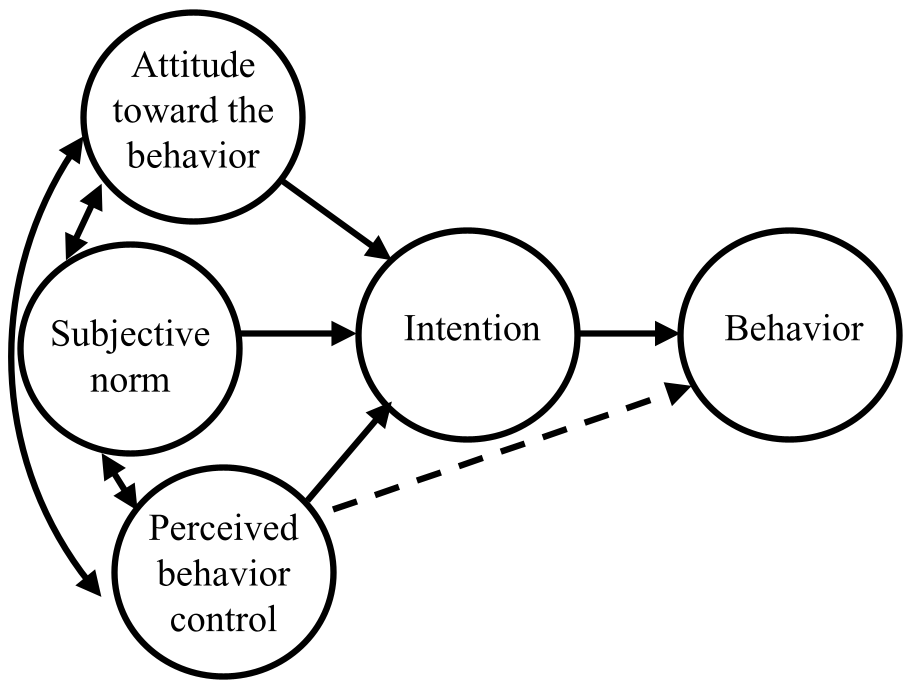
The authors combined two heavyweights of behavioral theory:
- Theory of Planned Behavior (TPB): Focused on internal attitudes and perceived control.
- Privacy Calculus: Focused on the rational "Risk vs. Reward" trade-off.
They optimized these for SNSs by redefining Perceived Benefit as "Community Attachment" (the sense of belonging) and "Social Capital" (access to resources through relationships). They also simplified Information Sensitivity, noting that SNSs rarely ask for credit card numbers, focusing instead on demographic "identity" data.
Key Findings: The Power of Social Stakes
The results from a Structural Equation Model (SEM) study of 171 active SNS users provided several counter-intuitive insights:
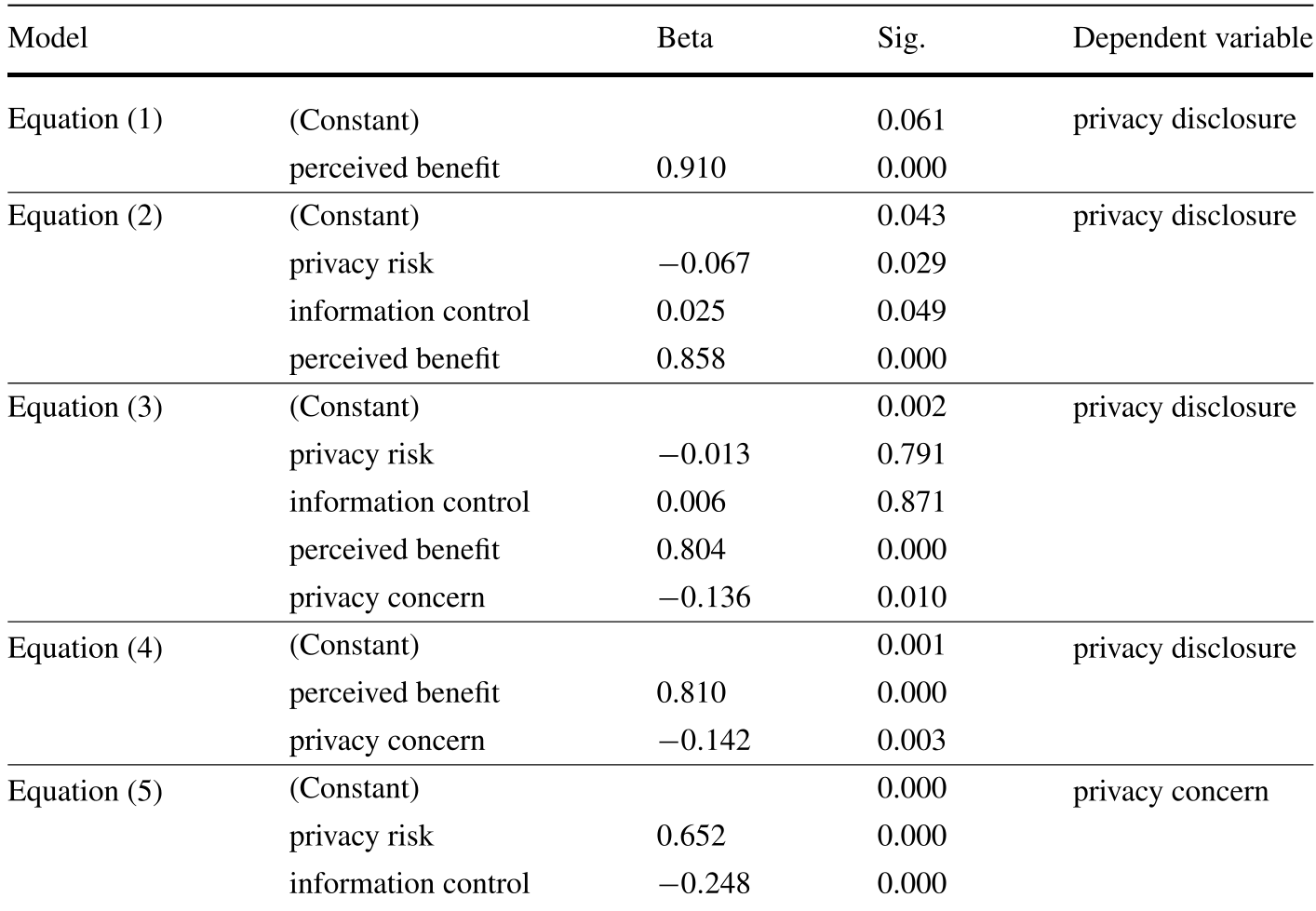
- Perceived Benefit is King: The positive path from perceived benefit to disclosure (t=11.39) was the strongest finding. This confirms that for SNS users, the risk of "social exclusion" or "invisibility" is more frightening than the risk of data leakage.
- Risk and Control Mediate Concern: Perceived risk increases privacy concern, while a sense of "Information Control" (believing you can manage your settings) significantly decreases it.
- The Subjective Norm Failure: Interestingly, the study found that what others think about privacy (subjective norms) didn't significantly impact an individual's concern levels on SNSs, suggesting privacy decisions are becoming more individualized or utilitarian.
Critical Insight: Community Attachment as "Stickiness"
The most profound takeaway is that Information Control and Perceived Risk are fully mediated by Privacy Concern before they hit the final "disclosure" decision. This means that if a platform can make a user feel in control—for example, through robust-looking privacy settings—the actual disclosure will increase, even if the underlying risk remains high.
Furthermore, social "stickiness" is built on the willingness of others to participate. As the network grows, the social capital grows, making the cost of not sharing even higher.
Summary & Future Outlook
This paper proves that privacy is not just a technical problem of "data protection," but a social negotiation.
- Takeaway for Developers: To increase user engagement, focus on features that maximize community identification and the visible rewards of social participation.
- Limitations: The study was conducted on a university student population in China (Renren users). Future research should explore if these social motivations hold true for older demographics or in cultures with different perceptions of collective vs. individual privacy.
Despite its age, this paper’s focus on the social return on investment (SROI) remains a cornerstone for understanding why we can't stop posting, even in an era of constant data breaches.