
Beyond the "Stupid Post": Understanding Failures in Social Data Sharing
Failures in sharing personal data on social networking sites
This research-article investigates "social sharing failures" in Personal Informatics (PI), identifying three primary failure modes: inaccurate activity reflection, negative self-portrayal, and unintentional data exposure. The authors propose high-level design shifts from automatic to curated sharing to protect user privacy and social reputation.
TL;DR
In the world of Personal Informatics (PI), we often celebrate the "quantified self"—the ability to track our steps, sleep, and heart rate. However, as Epstein et al. reveal in this UbiComp '14 paper, the bridge between private data and social networks is fraught with "failures" that can lead to social embarrassment, loss of trust, and massive privacy leaks. The paper argues for a paradigm shift: we need to stop treating sharing as a viral marketing tool and start treating it as a curated social performance.
The Core Conflict: Automation vs. Accuracy
The researchers identify a fundamental tension in PI design. Developers want automatic sharing because it's effortless for the user and creates high-volume content for social media. Users, however, want curated sharing because their social reputation is on the line. When these goals clash, we see three specific types of failures.
1. When Data Lies (Inaccurate Reflections)
One of the most jarring findings is that apps often share data before the user has a chance to correct it.
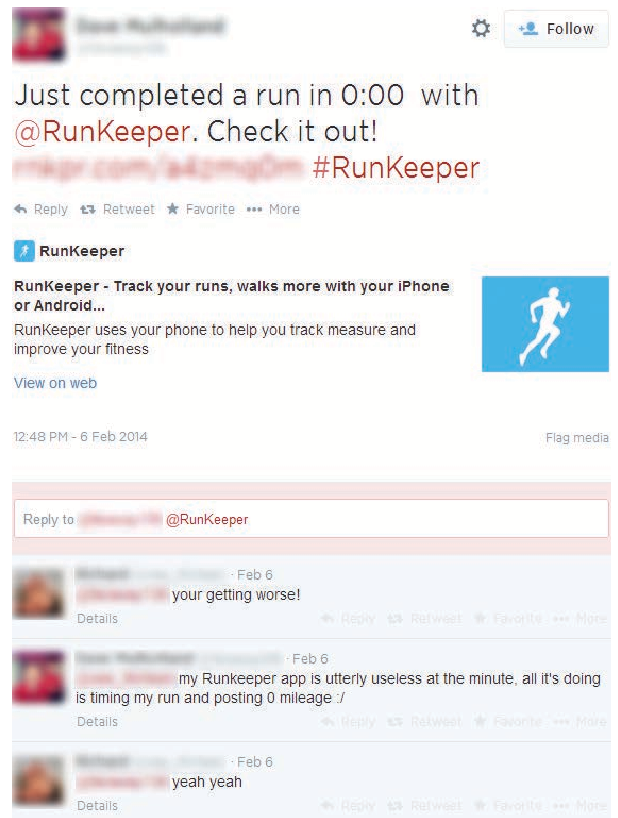
- The "Zero Minute" Run: The authors found that 3.12% of sampled RunKeeper tweets reported activities of 0 minutes and 0 seconds.
- The Result: Instead of receiving encouragement, users were met with sarcasm ("Hardcore!") and ridicule.
2. The Negative Spotlight
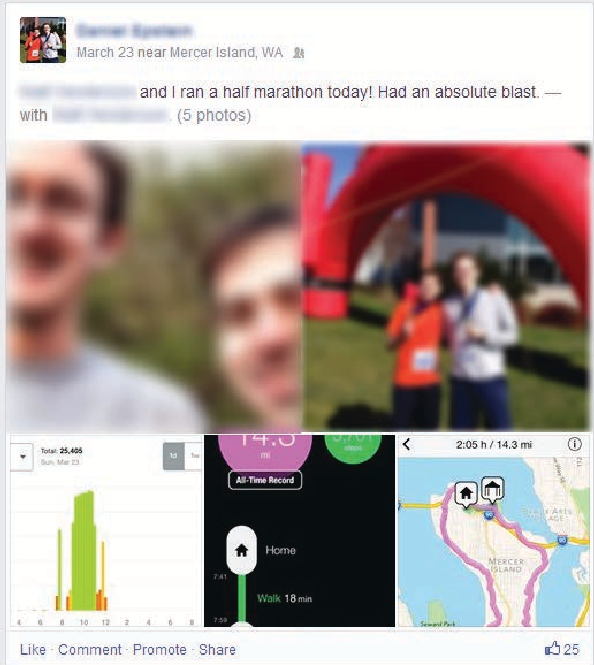
Not all "true" data is "good" data for social media. Sharing every single activity leads to "audience wince"—where friends feel spammed by trivial or boastful updates.
- The Boastfulness Trap: Users often opt-out of sharing entirely because they don't want to seem like they are "bragging" about a daily walk.
- The Fix: Systems should pivot to recommending sharing only for major milestones (e.g., a personal record or a summary of a month), rather than every micro-event.
3. Accidental Disclosures: The Fitbit Scandal
The most severe failure is the unintentional exposure of sensitive life patterns.
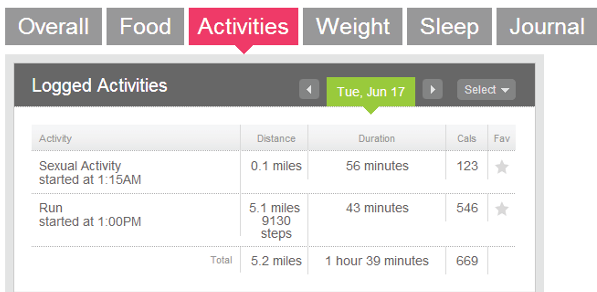
- The "Sex Stats" Leak: In 2011, Fitbit's default settings made all logged activities—including sexual activity—searchable on the web.
- The Privacy violation: Users were horrified to find their private logs tied to their real names in Google search results.
- The Counter-Productive Result: When users fear disclosure, they stop tracking. They leave their devices at home or skip logs, which destroys the very "integrity of the record" that PI is supposed to provide.
Deep Insight: Is "Absence of Data" also Data?
The authors raise a profound philosophical point for future designers: Trust vs. Privacy. If a user shares their budget every month and then suddenly stops, their audience might infer they overspent or hit financial trouble. This "inference of absence" remains a major challenge. How do we allow users to hide data without making the "gap" in their timeline look suspicious?
Critical Analysis & Conclusion
This paper serves as a sober reminder that automatic does not mean better.
- Takeaway: Designers must implement "human-in-the-loop" systems. Users need a "staging area" to review and edit data before it hits the public feed.
- Limitations: While the paper identifies the problems well, it acknowledges that "filtering" is a burden. Future research must find a way to make curation as low-effort as automation (perhaps through AI-suggested summaries).
- Future Outlook: As we move into an era of even more intimate data (mental health, glucose monitoring), the lessons from these 2014 "failures" are more relevant than ever.
Final Thought: If a tracking tool forces you to "leave your Fitbit at home" to protect your privacy, the tool has failed.