
FACES: Maximizing IoT Energy Success through Fairness-Aware Scheduling
Fairness-Aware Crowdsourcing of IoT Energy Services
The paper introduces FACES (Fairness-Aware Crowdsourcing of Energy Services), a framework for provisioning wirelessly shared IoT energy in microcells. It leverages a spatiotemporal composition of IoT energy services to maximize green energy utilization while ensuring distributive fairness among multiple concurrent requests.
TL;DR
As IoT devices become ubiquitous, wireless "energy crowdsharing" is emerging as a green alternative to power banks. However, when many users compete for limited energy in a coffee shop or museum, traditional "first-come-first-served" methods fail. This paper proposes FACES, a framework that treats energy as a service and uses temporal slicing to ensure every requester gets a fair share, reducing energy waste by nearly 40%.
Background: The Microcell Energy Gap
In a smart city, "microcells" (confined areas like cafes) become hubs for energy exchange. While a wearable device might have spare battery to share, the supply is often lower than the demand.
- The Conflict: Prioritizing the first user leads to empty batteries for the rest.
- The Technical Hurdle: Energy requests have strict time constraints (e.g., "I'm only here for 20 minutes"), making static allocation impossible.
Methodology: How FACES Balances the Load
The FACES framework moves away from sequential scheduling. It aggregates all available energy and views requests as overlapping time segments.
1. Temporal Slicing
The system identifies every "arrival" and "departure" event to create discrete time chunks. This allows the scheduler to preemptively adjust the flow of energy.
2. The Fairness Engine
Instead of just checking if a request is "done," FACES calculates a Satisfaction Score () based on:
- The amount of energy received.
- The total available energy in the market. It then uses Information Entropy to minimize the "disorder" (inequality) between users.
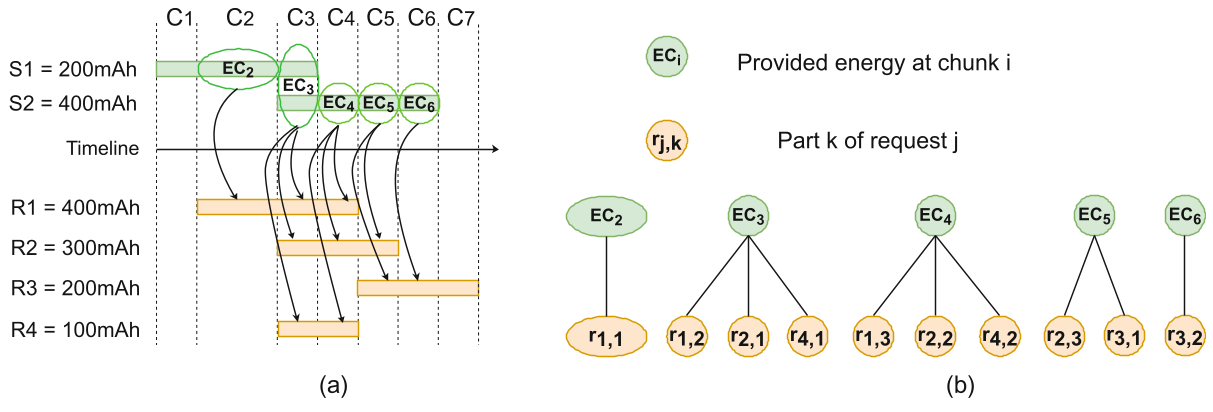 Figure 1: The FACES system architecture, highlighting the Temporal Slicing and Fairness Estimation modules.
Experiments & Real-World Impact
Using real-world transaction data from IBM coffee shop records in NYC, the researchers simulated high-density IoT environments.
Key Metrics:
- Energy Utilization: FACES reached 90% utilization of available green energy, whereas standard FCFS wasted nearly half of the supply.
- Fairness Stability: As the number of requests increased, FACES maintained a significantly lower standard deviation in satisfaction compared to traditional algorithms like Round Robin (RR).
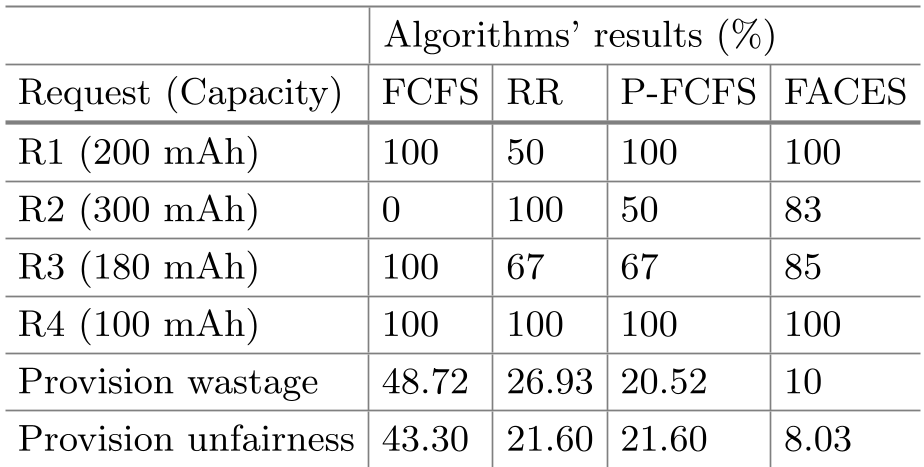 Table 1: Comparison of FCFS, RR, and FACES. FACES achieved the lowest wastage (10%) and the best fairness score (8.03).
Critical Insight: Why Fairness Matters
The most striking takeaway is that Fairness is Functional. In most systems, fairness is a constraint that slows things down. In crowdsourced IoT, fairness is the engine—if users feel the system is rigged, they stop sharing. By using entropy-based scheduling, FACES ensures the ecosystem remains self-sustaining.
Conclusion & Future Outlook
FACES represents a shift from "High Throughput" to "High Satisfaction" in edge computing. While current models assume providers are stationary, the next step is applying this fairness logic to dynamic mobility, where providers and consumers are constantly moving between microcells.
Takeaway for Engineers: When building P2P resource networks, your scheduling algorithm is your most important "trust" mechanism.