
Fake It or Make It: Navigating the Selfie Paradox in Modern Branding
“Fake It or Make It” – Selfies in Corporate Social Media Campaigns
This study explores the integration of selfies into corporate social media campaigns through interviews with marketing professionals. It defines three distinct selfie types—"classic," "polished," and "faked"—and categorizes campaign strategies based on the level of agency control and user empowerment.
TL;DR
Is that "candid" selfie in your feed actually a professional production? This study dives into the world of marketing agencies to reveal how they weaponize the "selfie" trend. By categorizing selfies into classic, polished, and faked, the research explains how brands struggle to balance the raw authenticity users crave with the polished control corporations demand.
The Authenticity Paradox
In an era of "Consumer Initiated Communication" (CIC), the traditional top-down marketing model is dying. Consumers are no longer passive; they are creators. However, this creates a massive headache for brands.
The core problem is Authenticity. Research shows that high perceived authenticity leads to higher brand equity and a willingness to pay a price premium. Yet, the moment a corporation tries to "manage" a selfie campaign, they risk looking "fake" or overly commercial. This paper explores how agencies walk this tightrope.
Methodology: Decoding the Selfie Types
The authors interviewed 9 agency experts and analyzed 11 branding campaigns to define a new taxonomy of social media imagery.
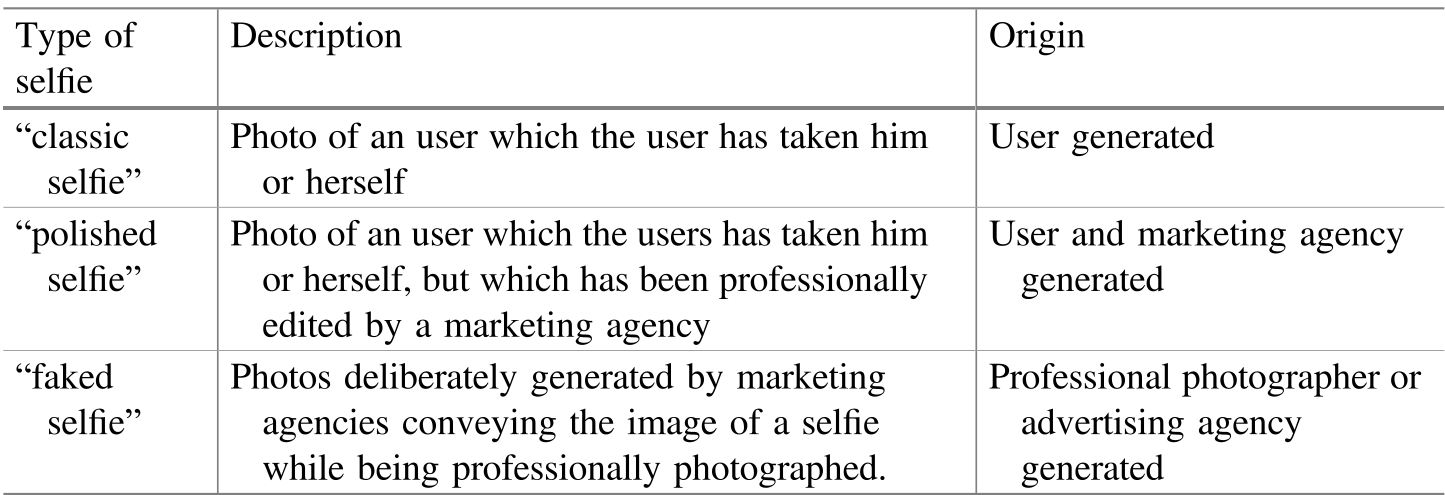
The Three Faces of the Selfie
- Classic Selfie: 100% User-generated. It’s raw, improvised, and captures a "here and now" moment.
- Polished Selfie: Started by the user, but finished by the pro. These are edited for better lighting, framing, or brand alignment before being used on official channels.
- Faked Selfie: Professionally photographed models in "selfie style." It mimics the aesthetic of a selfie (the "iconic authenticity") but is entirely manufactured.
Strategy: How Agencies Deploy the Trend
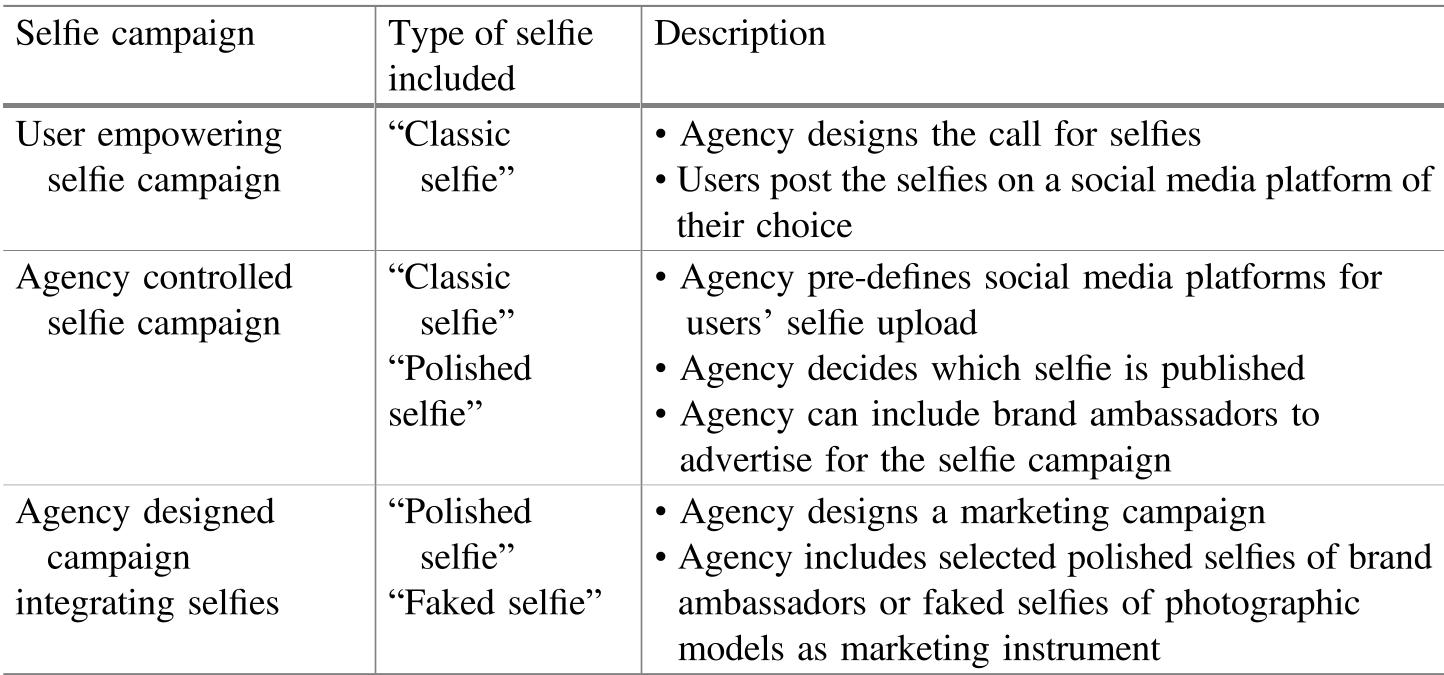
The research breaks down selfie campaigns into three strategic levels of engagement:
1. User Empowering: Let the Crowd Lead
Agencies create a hashtag and a reward, then step back.
- Why it works: Massive content volume at low cost and high "trust" factor.
- The Catch: Zero control. One "bad" selfie can derail the brand aesthetic.
2. Agency Controlled: The Filtered Approach
Users upload to a specific platform (like a contest site), and the agency acts as the gatekeeper, selecting only the best "classic" or "polished" shots.
- Tactics: Often uses "Brand Ambassadors" or influencers to spark the movement.
3. Agency Designed: Full Manufactured Magic
The agency creates the entire campaign using "faked selfies."
- The Insight: Even though it’s not a real user, the style of a selfie feels more approachable than a traditional studio shot. It satisfies Corporate Identity (CI) regulations while nodding to modern trends.
Deep Insight: "The Aesthetic vs. The Real"
The most fascinating takeaway is the "Situational Conflict" agencies face. Clients (the brands) want professional management and safety, but the medium (social media) demands the "messy" and "unprofessional."
The study reveals that agencies frequently lean toward "Polished" or "Faked" selfies because the risk of "Classic" selfies being off-brand is too high for many corporate clients. However, there is a looming danger: as consumers become more savvy, they may reject "Faked" selfies as manipulative, leading to a "backfire effect."
Critical Analysis & Future Outlook
Takeaway: The selfie is no longer just a photo; it is a visual dialect. Brands that speak it fluently—recognizing when to be raw and when to be polished—will dominate social engagement.
Limitations: The study’s sample is small (9 experts in Austria), and it focuses on the provider side. We still need more data on how consumers react when they discover a selfie is "faked."
Future Work: As AI-generated imagery (like Midjourney or DALL-E) becomes indistinguishable from real photos, the "Faked Selfie" will reach a whole new level. The next frontier of research will likely be "AI-Selfies" and whether "Authenticity" can exist without a human behind the lens.