
Fake It or Make It: Navigating the Selfie Paradox in Corporate Branding
“Fake It or Make It” – Selfies in Corporate Social Media Campaigns
The study explores the integration of selfies in corporate social media campaigns through interviews with marketing professionals. It defines three distinct selfie types—"classic," "polished," and "faked"—and identifies three strategic approaches (User Empowering, Agency Controlled, and Agency Designed) that balance user interaction with brand control.
TL;DR
As social media shifts from passive consumption to active creation, the "selfie" has emerged as a potent tool for brand authenticity. This study analyzes how marketing agencies navigate the tension between organic user expression and corporate control, identifying three types of selfies—Classic, Polished, and Faked—and the strategic frameworks used to deploy them in modern campaigns.
The Authenticity Paradox
In a marketplace saturated with high-gloss advertisements, consumers are increasingly seeking "the real." Research shows that brand authenticity leads to higher purchase intent and brand equity. However, professional marketing is intrinsically "staged," creating a conflict:
- Consumers want unmediated, peer-to-peer experiences.
- Brands want high-quality visuals, consistent messaging, and risk management.
The "Selfie" represents the ultimate bridge—or battleground—between these two desires.
Methodology: Insights from the Experts
The authors interviewed senior professionals from marketing agencies to understand the "behind-the-scenes" of selfie integration. By analyzing 11 different campaigns, they moved beyond the dictionary definition of a selfie to uncover how the industry actually uses the medium.
The Taxonomy of the Modern Selfie
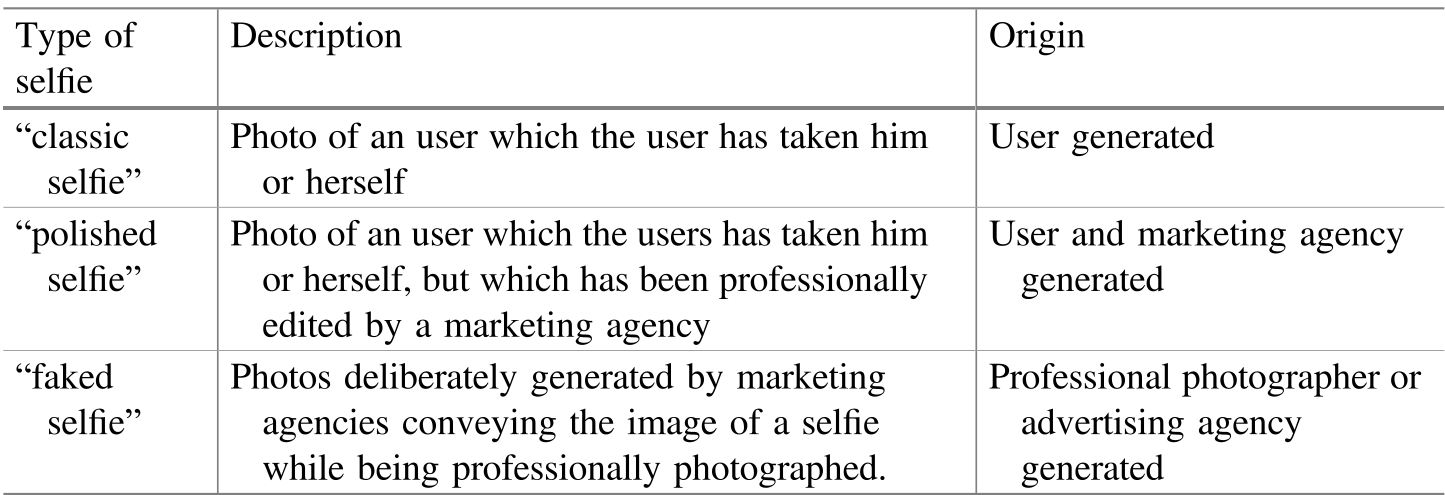
One of the paper’s core contributions is the breakdown of what constitutes a "selfie" in a professional context:
| Type of Selfie | Description | Origin |
|---|---|---|
| Classic Selfie | Spontaneous photo taken by the user. | User Generated |
| Polished Selfie | User-taken photo professionally edited by an agency. | Hybrid |
| Faked Selfie | Professionally staged photo designed to look like a selfie. | Agency Generated |
Three Strategic Campaign Models
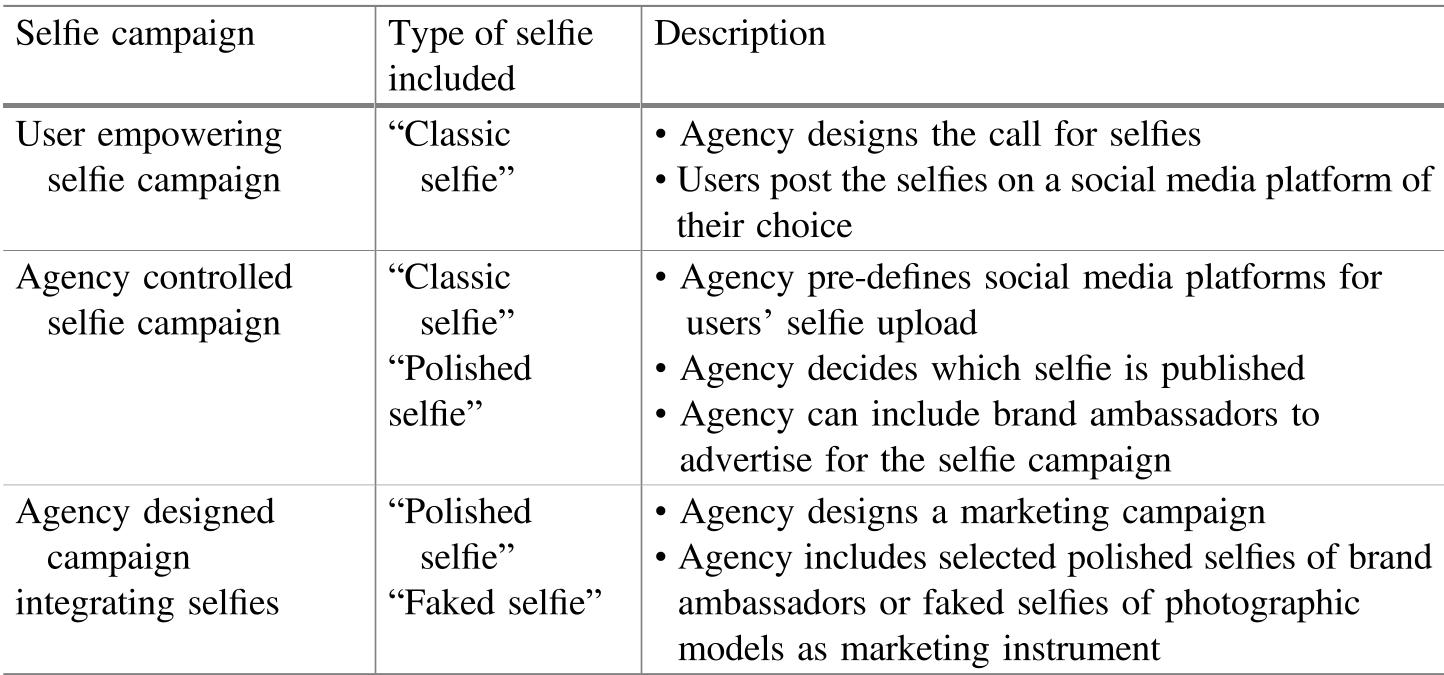
The study identifies a spectrum of agency involvement, ranging from total user empowerment to total agency design.
1. User Empowering Campaigns
Agencies act as "infrastructure providers." Users post classic selfies with specific hashtags to their own profiles.
- The Logic: High volume, fast distribution, and maximum authenticity.
- The Risk: Zero control over content quality or brand safety.
2. Agency Controlled Campaigns
The agency acts as a "curator." Users upload photos to a specific platform (e.g., a microsite), and the agency filters which ones become public.
- The Logic: Balances user connection with brand image. Often uses "polished selfies" to enhance visual appeal.
3. Agency Designed Campaigns
The agency acts as the "creator." They use professional models to produce "faked selfies" that mimic the trend's aesthetic.
- The Logic: Ensures 100% compliance with corporate identity and legal regulations while still appearing "on-trend."
Critical Analysis: Is "Faked" Still Authentic?
The research highlights that Ad Authenticity is not about the photo being "real" in a literal sense, but about it conveying the "illusion of the reality of ordinary life."
Marketing agencies essentially provide a "mimetic" experience. By using "faked selfies," they leverage the cultural code of the selfie—its casualness and intimacy—to bypass the consumer's traditional ad-filtering defenses.
Limitations and Future Outlook
While the study provides an excellent framework for agency strategy, it relies on a small sample of professionals. The next frontier for this research is consumer perception: Do users feel deceived when they discover a "selfie" was professionally staged? As AI-generated influencers and deep-fake aesthetics become more common, the line between "making it" and "faking it" will only grow thinner.
Conclusion
For brands, the selfie is more than a photo; it is a communication style. Successful campaigns succeed not just by collecting user content, but by carefully choosing the level of intervention that matches their brand's "authenticity core."