
Beyond the Lab: Smarter Fall Detection Using Real-World Elderly Kinematics
14319_Fall detection algorithms for real-world falls harvested from lumbar sensors in the elderly population A machine learning approach.
This paper presents a machine learning-based fall detection system using L5 lumbar-mounted tri-axial accelerometers and gyroscopes, validated on a rare dataset of 89 real-world elderly falls from the FARSEEING project. The best-performing C4.5 decision tree algorithm utilizes 10 kinematic features to achieve a sensitivity of 0.88 and a specificity of 0.87 in distinguishing falls from activities of daily living (ADL).
TL;DR
Researchers have moved past "scripted" laboratory falls to develop a machine learning algorithm trained on 89 actual real-world falls from the elderly. By placing a tri-axial accelerometer and gyroscope at the L5 lumbar position and focusing on the descent phase (velocity and displacement) rather than just the impact, the team achieved a robust 88% sensitivity and 99% overall specificity, marking a significant step toward reliable home-monitoring technology.
Background: The "Simulated Data" Trap
For years, fall detection research has suffered from a lack of ecological validity. Young students "falling" onto mats in a lab do not move like an 80-year-old losing balance at home. In fact, a staggering 93% of existing studies do not use real-world data. This paper leverages the FARSEEING project’s database—one of the largest authentic fall repositories—to solve the problem of false alarms and missed events in the elderly population.
Methodology: Capturing the Physics of a Fall
The study utilizes a sensor located at the L5 (fifth lumbar spine), which is near the body’s center of gravity—the ideal spot for tracking whole-body kinematics.
1. Feature Engineering
Instead of relying on a single threshold, the authors extracted 12 distinct "signatures" of a fall:
- Impact Profile: Upper Peak Value (UPV) and Lower Peak Value (LPV) of acceleration.
- Posture Shift: Changes in waist angle calculated via dot-product and numerical differentiation.
- Dynamic Integration: Using a quaternion-based strap-down method to calculate Global Vertical Velocity and Displacement.
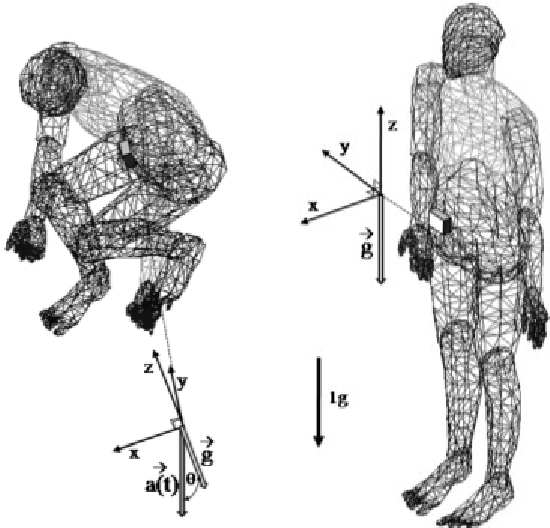 Figure 1: Computing posture angle by comparing the upright reference vector with daily activity signals.
2. The Machine Learning Edge
The researchers used a C4.5 Decision Tree classifier. To combat the scarcity of fall data (89 falls vs. thousands of daily activities), they applied SMOTE (Synthetic Minority Over-sampling Technique) to balance the training set, ensuring the model didn't become biased toward "non-fall" classifications.
Results: Why "Descent" Matters More Than "Impact"
The core insight of the study is that the descent phase—the moment a person starts to drop before hitting the floor—is a more reliable indicator than the impact itself. Impact signals can be "noisier" and easily confused with sitting down heavily or jumping.
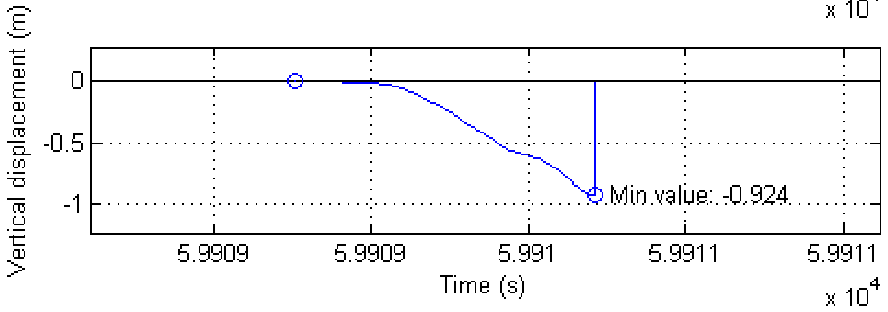 Figure 2: Real-world fall profiles showing the distinct vertical velocity and displacement signatures during the descent.
Performance Metrics:
- Best Algorithm: 10 Features (UPV, LPV, Posture, Velocity, Displacement, and Gyroscope data).
- Sensitivity: 0.88 (Correctly identifying 88% of falls).
- Overall Specificity: 0.99 (Extremely low false alarm rate in a continuous real-world environment).
Critical Analysis & Conclusion
Takeaway
The inclusion of Global Velocity and Displacement significantly improves the model's ability to distinguish between high-impact ADLs (like sitting quickly) and actual falls. This confirms that multi-modal sensing (Accel + Gyro) is superior to accelerometer-only solutions.
Limitations & Future Work
While 89 falls is a massive improvement over lab data, it is still a small sample size for moving toward more complex architectures like Deep Learning. Furthermore, the L5 position—while scientifically accurate—may face compliance issues compared to wrist-worn devices. Future research will likely explore how these "descent-focused" algorithms can be ported to smartwatches without sacrificing the high specificity achieved here at the lumbar level.
The FARSEEING study proves that by looking at the physics of the fall before it happens, we can provide elderly individuals with a safety net that is both accurate and trustworthy.