
WeChat vs. Facebook: Why Cultural Connectedness Trumps Utility for Global Users
Family, Friends, and Cultural Connectedness: A Comparison Between WeChat and Facebook User Motivation, Experience and NPS Among Chinese People Living Overseas
This empirical study compares the user experience, motivation, and Net Promoter Score (NPS) of WeChat and Facebook among Chinese people living overseas. Through a mixed-methods approach involving 423 surveys and 10 interviews, it identifies WeChat as the dominant platform for this demographic due to its deep integration with Chinese cultural values and social structures.
TL;DR
This study investigates why WeChat outperforms Facebook in engagement and loyalty (NPS) among overseas Chinese users. The secret lies not in technical superiority, but in "Cultural Connectedness." By digitizing traditional rituals like "Red Packets" (Hongbao) and facilitating "Filial Piety," WeChat has transformed from a mere tool into a vital emotional link to home, achieving an NPS of +46 while Facebook lags at -21.
Contextual Positioning
While most UX studies treat users as "universal actors," this research places culture at the center of the Human-Computer Interaction (HCI) coordinate system. It explores the friction between a global giant (Facebook) and a culturally-tailored incumbent (WeChat) within a specific diaspora.
The Problem: The "Generic UX" Fallacy
Standard UX metrics often focus on Usability (can I do it?) and Utility (is it useful?). However, for migrants and displaced populations, these metrics fail to capture the Emotional and Ideological Pleasures (Jordan, 2002). Prior work has shown that Facebook users often take "breaks" from the platform, whereas WeChat users show high daily stickiness. The authors suggest this is because Facebook is viewed as an information source, while WeChat serves as a social lifeblood.
Methodology: Beyond the Interface
The researchers used a mixed-methods approach to dissect the "Why" behind the "What":
- NPS Analysis: Measuring the "Net Promoter Score" to quantify word-of-mouth.
- The Three-Layer Motivation Model: Analyzing Sociality, Entertainment, and Information.
- Qualitative Deep-Dives: 10 interviews to understand the symbolic meaning of features like "Moments" and "Red Packets."
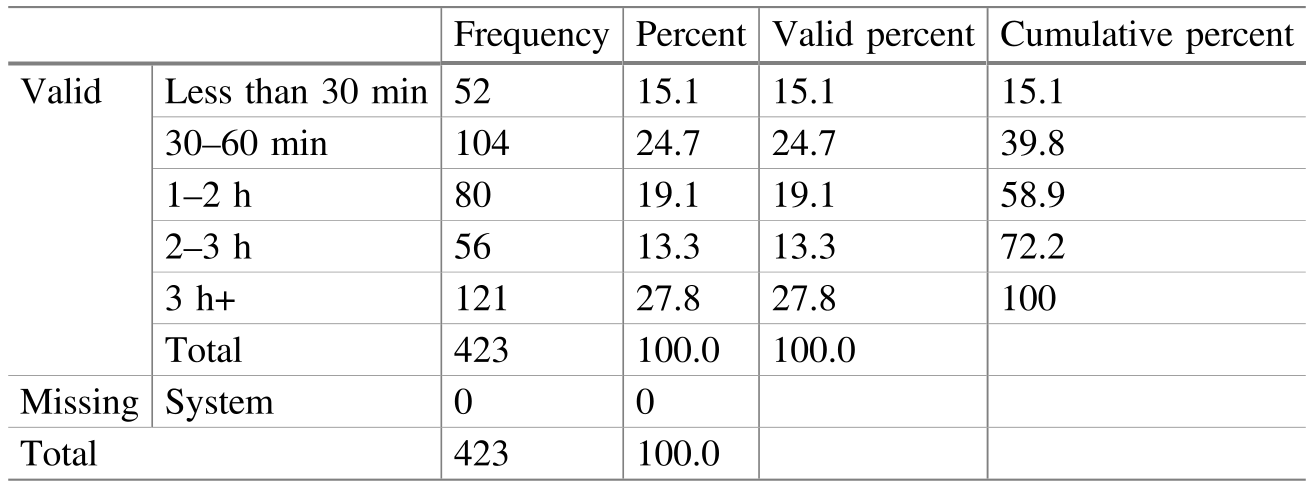 Table 1: Daily time spent on WeChat shows a massive lead in "Power Users" (3+ hours).
Core Insight: The Digital Red Packet & Online Collectivism
The study highlights how WeChat successfully translated the "Inner Layer" of culture (thought and spirit) into the "Surface Layer" (UI features).
- Red Packets (Hongbao): Beyond a money transfer, this is an "ice-breaker" and a "reciprocal greeting." It manifests the traditional value of social harmony and hierarchy (senior to junior).
- Filial Piety: Participants used WeChat to fulfill the Confucian virtue of respecting elders, feeling "less guilty" about living abroad by maintaining daily, low-cost contact with parents.
- Online Collectivism: The study found users are more likely to share and help within the "Moments" feed compared to Facebook, mirroring the collectivist tendency toward group support.
Results: A Landslide Victory for WeChat
The quantitative gap is staggering:
- Engagement: 60% of WeChat users spend 1+ hour/day on the app; only 12% do so on Facebook.
- Satisfaction: 87% favor WeChat; only 42% favor Facebook.
- Correlations: NPS was most strongly correlated with Sociality (r = .687) and Cultural Connectedness (r = .523), followed only then by entertainment and information.
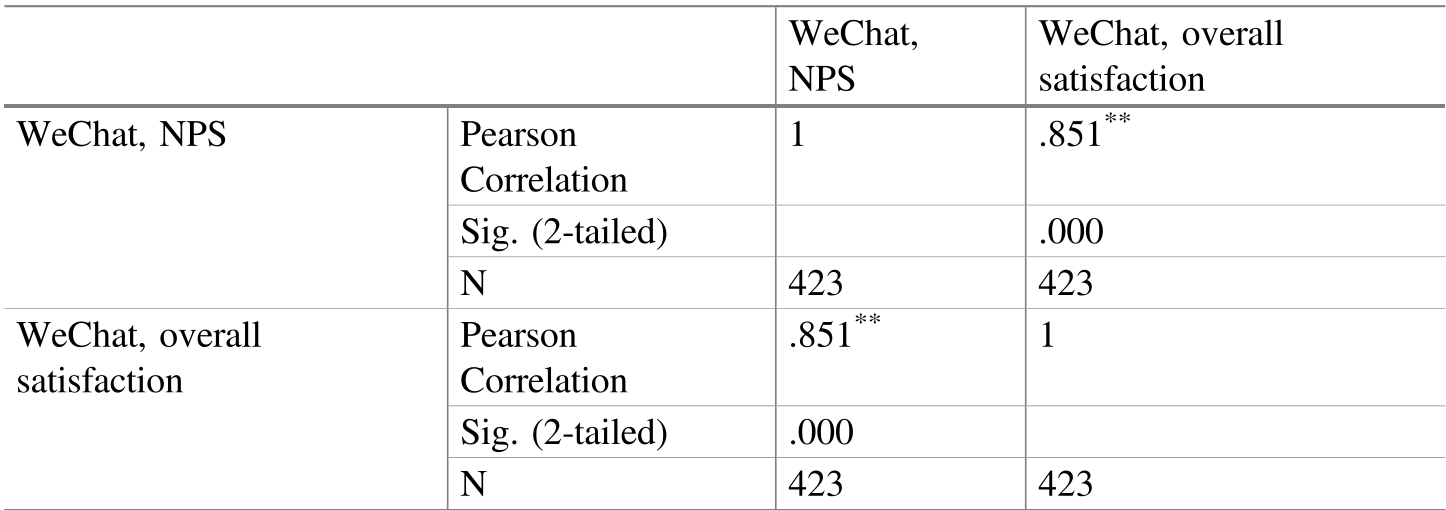 Table 2: The high Pearson correlation (0.851) proves that for this group, recommending a platform is synonymous with overall life satisfaction.
Critical Analysis & Takeaways
Summary: The study reinforces that localized social context is the "moat" that protects platforms from global competitors. Facebook’s failure to capture this demographic's loyalty stems from its perception as a "broadcast/news" tool rather than a "communal space."
Limitations:
- Sampling Bias: The use of snowball sampling resulted in a high concentration of Millennials (83%), who may have stronger ties to China than second-generation immigrants.
- Platform Nature: Facebook is blocked in China, creating a "forced" social context where users must use WeChat to talk to family, potentially inflating its scores.
Future Outlook: As "Super-Apps" attempt to go global, the lesson is clear: Success isn't just about adding more features; it's about finding the digital equivalent of a culture's most meaningful physical rituals.