
Beyond One-Size-Fits-All: The Power of Family-Specific Random Forest Models in Binding Affinity Prediction
A comparative study of family-specific protein–ligand complex affinity prediction based on random forest approach
The paper introduces a family-specific protein–ligand binding affinity prediction method using a Random Forest (RF) approach. By constructing specialized models for HIV-1 protease, trypsin, and carbonic anhydrase, the authors achieved superior performance over generic models, reaching Pearson correlation coefficients (Rp) up to 0.874 on independent test sets.
TL;DR
Predicting how strongly a drug candidate (ligand) binds to a target protein is the "Holy Grail" of computational drug discovery. While generic machine learning models aim for universality, this study proves that specialization is key. By building tailored Random Forest models for specific protein families—HIV-1 protease, trypsin, and carbonic anhydrase—researchers achieved a massive jump in predictive accuracy (Rp up to 0.874) compared to broad, generic scoring functions.
Background: The Limits of Genericity
In the world of structure-based drug design, "Generic Models" are the industry standard. These models are trained on diverse datasets like PDBbind to predict affinity for any protein. However, proteins aren't uniform; a protease "sees" the world differently than a kinase. This study argues that by forcing a single model to learn everything, we dilute its ability to master the specific "language" of a particular protein family.
Methodology: A Holistic Feature Strategy
The researchers didn't just look at the contact points between the protein and the ligand. They broke the complex down into four descriptive "blocks":
- Protein Sequence: Physicochemical features derived from amino acids.
- Binding Pocket: 3D geometric and electrostatic descriptors of the active site.
- Ligand Structure: Extensive fingerprints and structural properties (over 6,000 descriptors).
- Intermolecular Interaction: Direct contact counts (atom-pair distances).
To handle the "curse of dimensionality" (7,268 initial features), they applied Principal Component Analysis (PCA) to distill the most relevant information before feeding it into a Random Forest regressor.
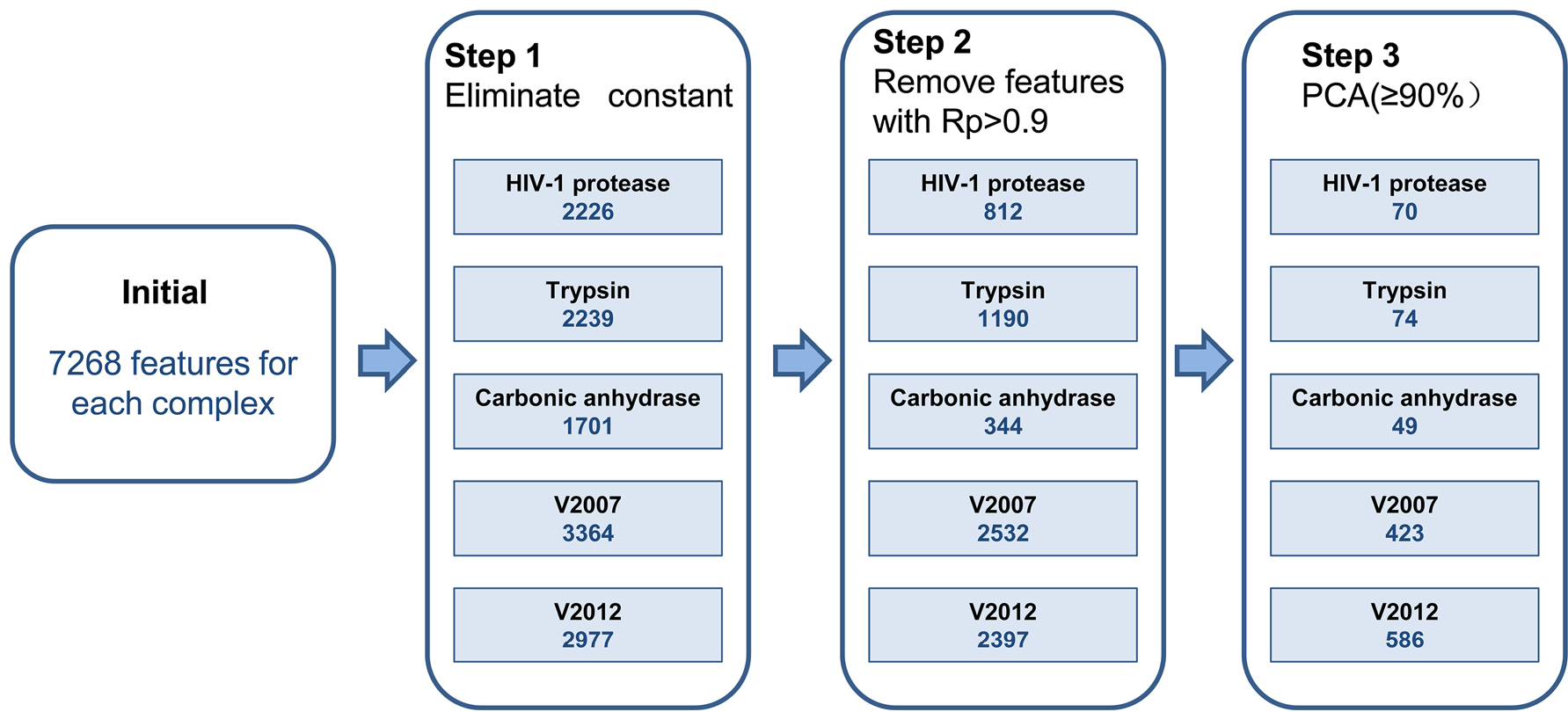 Figure 1: The workflow of feature extraction, PCA compression, and Random Forest modeling.
Key Insight: What Matters to Which Protein?
One of the most profound findings was the variable importance analysis. The model revealed that different features drive affinity in different families:
- HIV-1 Protease: Ligand structure features were dominant, likely because its inhibitors are often peptide-like and unique.
- Carbonic Anhydrase: Intermolecular interaction features (like hydrogen bonds) were the primary predictors.
- Trypsin: Binding pocket descriptors played a far more critical role than in other families.
Experimental Results: Specialization Wins
The results were clear: the family-specific models significantly outperformed generic ones. In a head-to-head comparison with RF-Score (a popular ML-based scoring function), the author's family-specific approach showed a marked advantage.
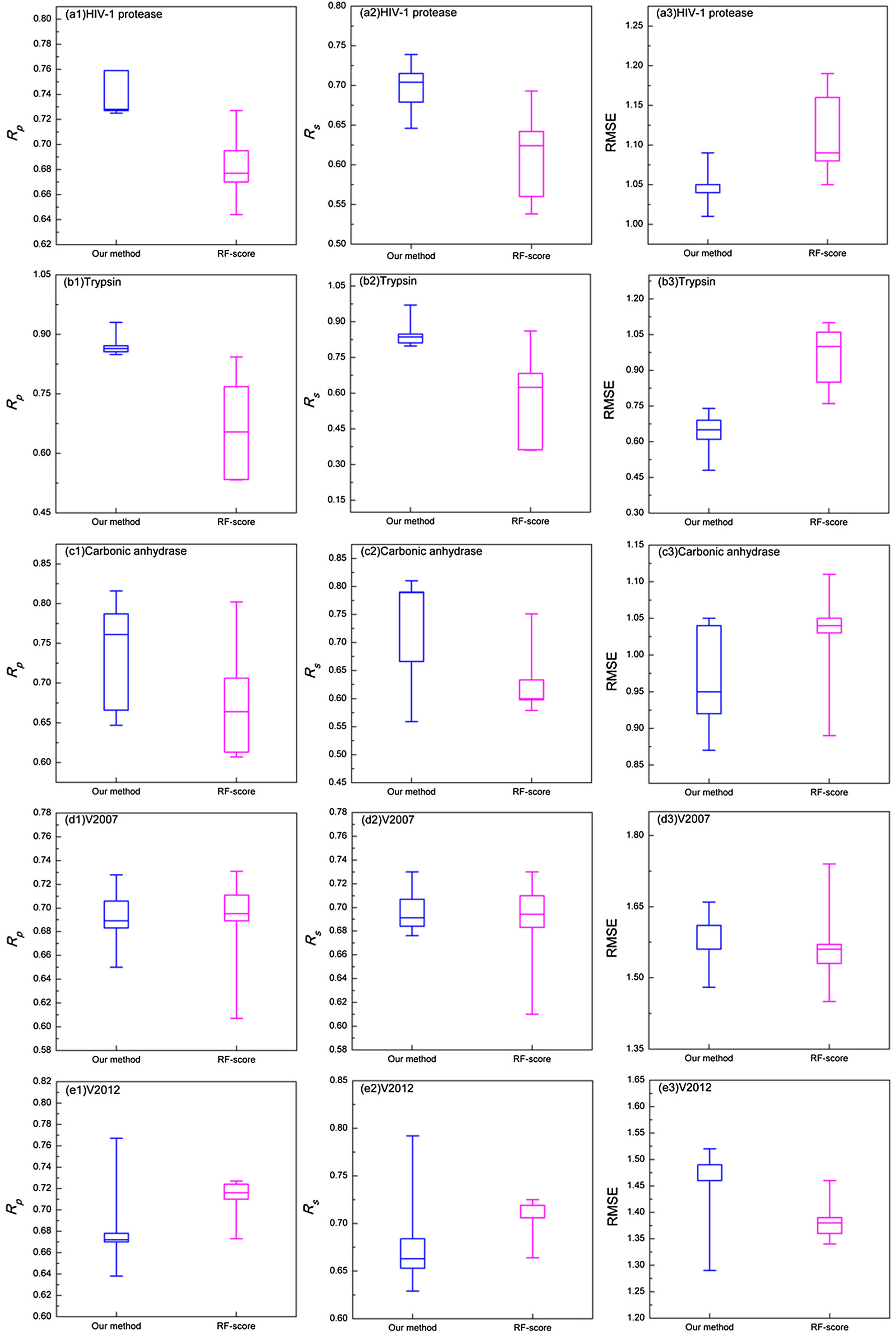 Figure 2: Performance metrics (Rp, Rs, RMSE) demonstrating the superiority of family-specific models over generic configurations.
As shown in the data, while a generic model might achieve an Rp of ~0.69 on V2012, building a specific model for Trypsin pushes that correlation to 0.87. This is the difference between a "rough guess" and a "reliable prediction."
Critical Analysis & Conclusion
This paper serves as a critical reminder that Inductive Bias matters. By restricting the problem space to a specific protein family, the Random Forest algorithm can find deeper, non-linear patterns that are otherwise masked by the "noise" of unrelated protein structures.
Limitations: The primary bottleneck is data availability. To build a specific model, you need a critical mass of crystal structures and known affinities for that specific family. For "orphan" receptors or rare targets, generic models remain the only option.
Future Outlook: The future likely lies in "Transfer Learning"—pre-training a generic model on all available protein-ligand data and then fine-tuning it on specific families, combining the breadth of global data with the precision of family-specific insights.